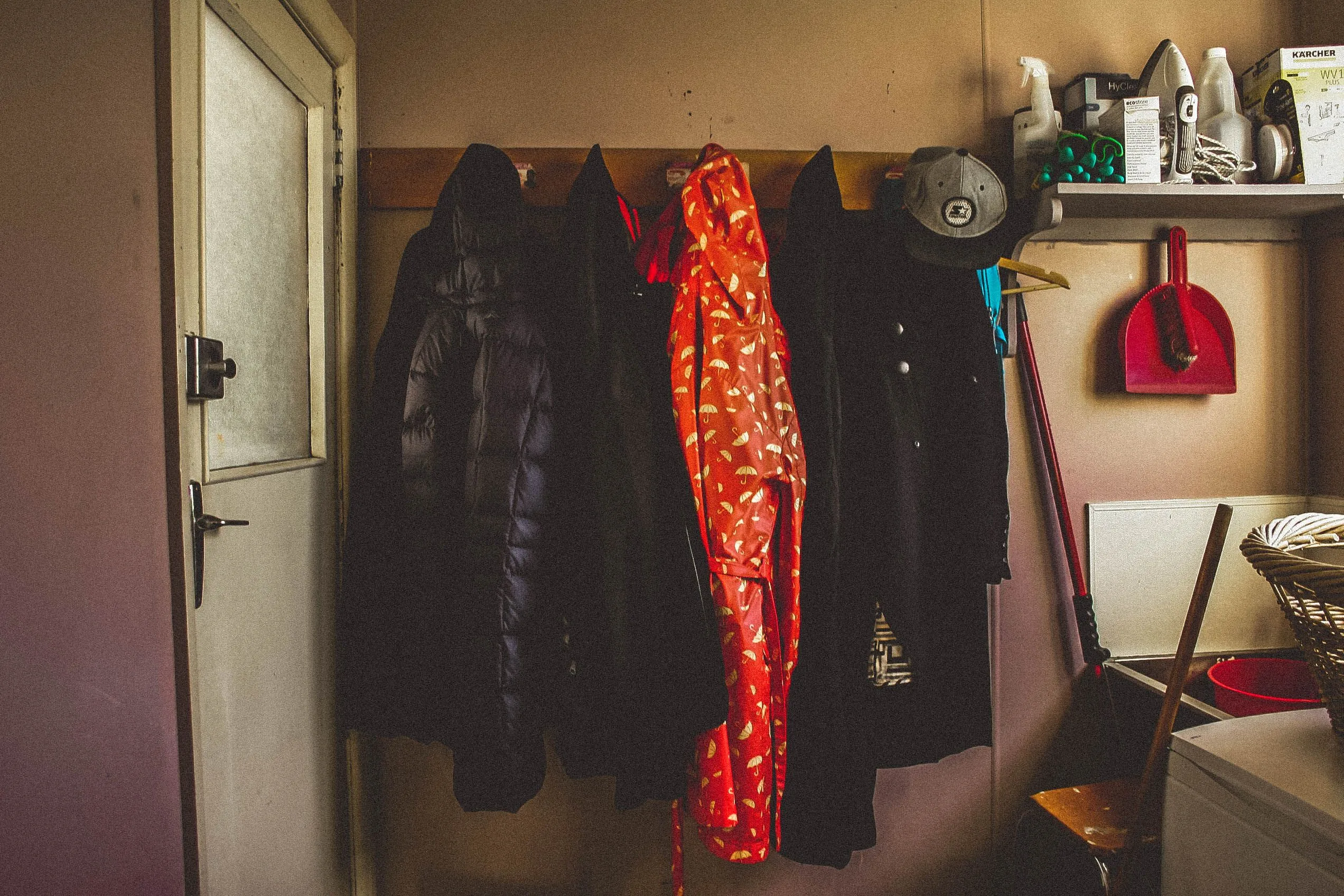
A mudroom has one important job: catch the everyday mess before it spreads throughout the house. Shoes, coats, backpacks, sports equipment, umbrellas, pet supplies, and shopping bags all need somewhere to go.
The best mudrooms are not necessarily the largest ones. They are carefully planned around how a household actually enters, leaves, stores, cleans, and organizes things. Recent design guidance continues to emphasize dedicated drop zones, durable surfaces, benches, hooks, cubbies, and a mix of open and closed storage.
Whether you have a spacious dedicated room, a narrow hallway, a garage entrance, or only a small corner beside the kitchen, these 15 mudroom upgrades can make daily routines considerably easier.
1. Build a Dedicated Drop Zone
The most useful mudroom upgrade is creating a clearly defined place where everyday belongings can land when people walk through the door.

Instead of allowing shoes, bags, jackets, and keys to migrate across the house, give each category its own location. This simple change can make the entire entry routine feel more automatic.
Designers frequently use mudrooms as transition zones that contain clutter before it reaches the rest of the home.
Make it work better
Think about what your household actually drops at the door rather than designing storage around an idealized version of your lifestyle.
If backpacks are always on the floor, prioritize backpack hooks. If shoes are the problem, dedicate more accessible storage to footwear.
2. Add a Built-In Storage Bench
A bench does much more than provide somewhere to sit while putting on shoes. The space beneath it can become valuable storage for footwear, baskets, sports equipment, or seasonal accessories.

A built-in bench also creates a visual anchor for the room and gives you a natural location for hooks and upper storage. Designers commonly combine benches with drawers, cubbies, or baskets to make the area more functional.

Upgrade it further
Choose a durable bench top that can handle everyday use. A washable cushion can add comfort, but avoid delicate fabrics if the space regularly encounters wet coats, muddy shoes, or pets.
3. Install Individual Hooks for Everyone
One oversized coat rack can quickly become a tangled collection of jackets and bags. Individual hooks create a much clearer system.

Give each household member a designated section, and consider assigning lower hooks to children so they can manage their own belongings.

Hooks are particularly useful because they keep everyday items visible and easy to grab rather than hiding frequently used belongings inside cabinets.
A useful trick
Install hooks for the things that are used daily and reserve cabinets or shelves for less frequently accessed items.
This prevents the room from becoming visually overloaded while keeping essential belongings within reach.
4. Create Closed Cabinets for Visual Calm
Open cubbies are convenient, but too much open storage can make even an organized mudroom look busy.

Tall cabinets or locker-style doors can hide bulky coats, seasonal equipment, cleaning supplies, and other items that do not need to remain visible.

A combination of open and closed storage is increasingly favored because it provides accessibility without leaving every possession on display.
The best combination
Keep everyday items open and accessible while placing seasonal or visually bulky belongings behind doors.
This gives you the convenience of open storage with the cleaner appearance of cabinetry.
5. Give Every Family Member a Cubbie
If several people use the mudroom, individual cubbies can eliminate the constant question of where things belong.

Each person can have a designated compartment for shoes, backpacks, hats, gloves, sports equipment, or other daily essentials.

This system works particularly well for families because it turns organization into a repeatable routine rather than something that requires constant tidying.
Make the cubbies flexible
Use removable baskets or adjustable shelves so the storage can change as your household’s needs change.
Children may need backpack and sports storage today, while older children may eventually need more room for shoes and larger bags.
6. Upgrade to Easy-Clean Flooring
Mudrooms experience more abuse than most decorative rooms. Wet shoes, dirt, salt, muddy paws, and water can quickly damage flooring that was chosen primarily for appearance.

Choose a floor that can tolerate moisture and frequent cleaning. Porcelain tile, suitable luxury vinyl products, and other durable flooring options can be practical choices depending on the installation and household needs.

Choose pattern strategically
Medium-tone flooring and subtle patterns can be forgiving when dirt appears between cleanings.
Large-format tiles can also reduce grout lines, while textured surfaces can provide additional visual interest.
7. Add a Proper Boot and Shoe Station
Shoes are often the biggest source of mudroom clutter because they arrive in pairs but rarely remain neatly paired.

Create dedicated shoe storage beneath the bench or inside low cabinets. Include enough open space for frequently worn footwear so family members do not have to open a cabinet every time they come home.
Don’t forget wet footwear
A washable boot tray provides a designated place for muddy or wet shoes.
For homes with rainy or snowy weather, allow sufficient ventilation around wet footwear rather than immediately sealing damp shoes inside an enclosed cabinet.
8. Install a Dedicated Pet Station
If you have a dog or another pet that regularly goes outside, the mudroom can become the perfect location for pet supplies.

Create a small zone for leashes, towels, food containers, grooming supplies, and outdoor accessories. A few strategically placed hooks can keep everything visible without taking over the room.
Pet-friendly mudrooms can even incorporate a dedicated kennel or resting area as part of the overall cabinetry.
A practical addition
Keep washable towels close to the exterior door. This makes it much easier to clean muddy paws before your pet heads into the main living areas.
9. Create a Laundry-Mudroom Combination
If space is limited, combining the mudroom with a laundry area can make excellent use of a high-function zone.

The room can handle dirty shoes and outerwear on one side while providing laundry storage, hampers, and utility functions on the other.

Mudrooms are often combined with laundry rooms, garages, or entryways because these spaces already sit along everyday traffic routes.
Keep the zones separate
Use cabinetry, flooring changes, or a counter to visually distinguish the laundry function from the entry function.
That makes the room feel intentional rather than like several unrelated tasks were squeezed together.
10. Add a Mail and Key Station
Keys and mail have a habit of becoming clutter because they are small, frequent, and easy to drop anywhere.

A dedicated wall-mounted organizer, shallow drawer, or small shelf near the entrance can solve this problem.
Entryway organization experts consistently recommend assigning specific locations to everyday items rather than relying on a general-purpose surface.
Keep it small
You do not need an entire wall for this feature. A narrow shelf with hooks beneath it can be enough for keys, incoming mail, sunglasses, and other small essentials.
11. Make Vertical Storage Work Harder
When floor space is limited, look upward. Tall cabinets, upper cubbies, floating shelves, and wall-mounted hooks can dramatically increase usable storage without making the room wider.

Vertical storage is particularly useful in small mudrooms where every inch of floor area is valuable.

Store by frequency
Place daily-use items between waist and eye level. Move seasonal items, spare supplies, and rarely used equipment into higher cabinets.
A step stool can be stored nearby if upper cabinets are difficult to reach.
12. Add a Charging Drawer or Tech Shelf
Modern households often bring phones, tablets, headphones, watches, and other electronics through the entryway.

A charging drawer or concealed shelf gives these devices a designated home while reducing the number of cables visible around the room.

Designers are increasingly incorporating charging shelves and small command centers into practical mudroom layouts.
Safety first
Electrical work should be installed according to local requirements. Keep charging equipment away from wet footwear, sinks, and areas where water can accumulate.
13. Create a Wet-Gear Drying Area
If your household regularly deals with rain, snow, sports, or outdoor activities, wet gear needs somewhere to dry.
A ventilated section with hooks, a durable floor, and enough clearance between hanging items can prevent wet coats and equipment from being dumped around the house.

Mudrooms are particularly useful as buffers between outdoor moisture and the home’s cleaner interior spaces.
Improve airflow
Avoid packing damp coats tightly together. Good airflow helps items dry more effectively and keeps the storage area from becoming musty.
14. Use Baskets to Control Small Clutter
Baskets are one of the easiest ways to make open mudroom storage look organized.

Use individual baskets for hats, gloves, scarves, dog accessories, sports equipment, or seasonal items. They allow small belongings to be grouped together without requiring a separate drawer for everything.
Label when necessary
Labels can be particularly useful for families. Instead of asking where something belongs, everyone can immediately identify the appropriate basket.
Use simple labels that describe the category rather than individual items.
15. Design the Mudroom Around Your Actual Routine
The final upgrade is not a product or piece of furniture. It is designing the entire room around the way your household really behaves.

If everyone enters through the garage, put the primary drop zone there. If children leave through the back door for school, put backpacks and shoes along that route.
A beautiful mudroom that nobody uses correctly is less valuable than a simple one that makes daily habits easier.

Before remodeling, observe what currently accumulates near your entrance for a week. Those piles are essentially a free blueprint showing you exactly what your mudroom needs to store.
How to Plan a Mudroom That Actually Stays Organized
Start by making a list of everything that enters your home through the mudroom. Include coats, shoes, bags, keys, mail, sports equipment, umbrellas, pet supplies, cleaning items, and seasonal accessories.
Then divide everything into three groups: daily-use items, occasional items, and rarely used items. Keep the first group easiest to reach and hide the third group in higher or closed storage.
This approach prevents one of the most common mudroom mistakes: creating plenty of storage but putting the wrong things in the easiest locations.
Open vs. Closed Mudroom Storage
Open storage is excellent for items that need to be grabbed quickly. Hooks, cubbies, shelves, and baskets make everyday routines faster.
Closed cabinets are better for bulky, seasonal, or visually distracting belongings. Combining both approaches can keep a busy mudroom functional without making it look permanently cluttered.
Best Mudroom Materials for a Busy Household
Durability should be a priority because the mudroom is a hardworking transition space. Choose flooring, cabinetry, hardware, and wall finishes that can tolerate frequent use and cleaning.
For walls, practical options such as washable paint, durable paneling, or suitable tile can make maintenance easier. For cabinetry, consider finishes that do not show every fingerprint or scuff.
Small Mudroom? Use Every Inch
You do not need a separate room to create a functional mudroom. A narrow hallway, laundry-room corner, garage wall, or unused closet can become an effective drop zone.
A bench, a row of hooks, a slim shoe cabinet, and a few baskets can provide many of the functions of a full-size mudroom.
Vertical storage is especially valuable in small spaces because it adds capacity without taking away precious walking area.
The Biggest Mudroom Design Mistake to Avoid
The biggest mistake is designing storage around appearances instead of habits.
A row of beautiful cabinets will not solve clutter if the things your family uses every day are difficult to access. Similarly, an oversized bench may waste valuable space if nobody actually needs seating.
Design the room around frequency, accessibility, durability, and routine first. Then add decorative details.
Final Thoughts
A well-designed mudroom can make a surprisingly large difference in how organized an entire house feels. It acts as a buffer between outdoor mess and indoor living while giving everyday belongings a predictable home.
The most useful upgrades are not necessarily the most expensive. Individual hooks, a practical bench, durable flooring, shoe storage, baskets, and a small key station can transform even a modest entryway.
For larger renovations, consider built-in lockers, closed cabinetry, charging stations, pet zones, wet-gear storage, and laundry integration.
The goal is simple: make the right place for everything so putting things away becomes easier than leaving them out.
When storage follows your family’s real routines, a mudroom stops being just an entryway and becomes one of the hardest-working spaces in the home.