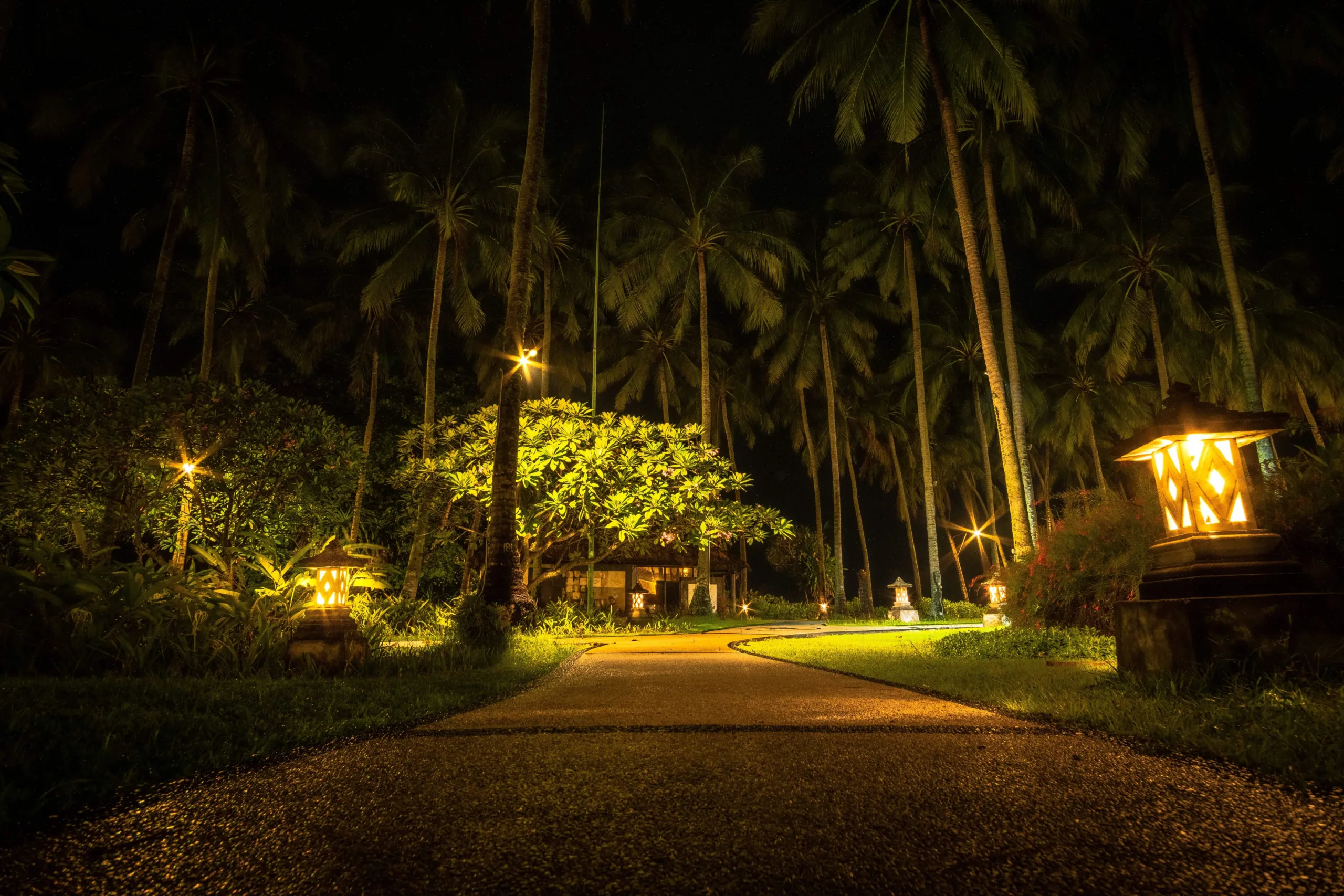
Winter can make a home’s exterior feel darker, colder, and less inviting, but the right outdoor lighting can completely change that. Thoughtfully placed fixtures add warmth, improve visibility, and make your home look polished even on the shortest days.
The best winter outdoor lighting ideas do more than simply brighten a walkway. They highlight architectural details, create depth around the landscape, improve safety, and give your home an inviting glow from the street.
If you want better curb appeal without a major exterior renovation, these 15 outdoor lighting ideas for winter are practical, stylish, and easy to adapt to different home styles.
1. Frame the Front Door With Warm Wall Lights
Your front door should be the visual focal point of your exterior, especially during winter when surrounding landscaping may look bare. Install matching wall sconces on both sides of the entry for balanced illumination.

Choose warm-white bulbs around 2700K–3000K for a welcoming glow rather than harsh blue-toned light. Dark bronze, matte black, and aged brass fixtures work particularly well against winter-neutral exteriors.

For extra impact, select fixtures that complement your door hardware and exterior architecture. The result feels intentional rather than like lighting was simply added for visibility.
2. Illuminate the Front Walkway
A dark walkway can make a beautiful home feel less inviting while also creating a potential trip hazard. Low pathway lights provide a practical solution while adding a beautiful illuminated border.

Instead of placing identical lights in a perfectly straight line, slightly stagger them along both sides of the path. This creates a more natural appearance and distributes light more evenly.

Keep fixtures low enough that they illuminate the ground without shining directly into visitors’ eyes. Shielded designs are especially useful for creating comfortable nighttime visibility.
3. Highlight Evergreen Trees and Shrubs
Winter landscaping often relies heavily on evergreen plants because they retain structure when flowers and deciduous leaves disappear. Use small spotlights to highlight these plants after sunset.

Aim the light upward through branches rather than directly at the foliage. This creates interesting shadows and gives shrubs and trees more dimension.
Evergreen trees, boxwoods, junipers, and ornamental grasses can all become dramatic winter features with carefully positioned uplighting.
4. Add Uplighting to the Home’s Architecture
Architectural uplighting is one of the easiest ways to make a home look more sophisticated at night. Place adjustable spotlights near the foundation and aim them toward interesting architectural features.

Columns, stonework, textured siding, dormers, arches, and rooflines can all benefit from this technique. The light creates vertical dimension that ordinary porch lighting often misses.

Avoid illuminating every section of the facade equally. Highlighting only the most attractive architectural features creates a more expensive-looking effect.
5. Use Lanterns for a Cozy Winter Entrance
Lantern-style lighting instantly creates a seasonal feeling without requiring holiday decorations. Place matching lanterns near the front door, garage, porch steps, or entry columns.

For a traditional home, look for black metal or aged bronze lanterns with clear or seeded glass. Contemporary homes can benefit from simple geometric lanterns with clean lines.

Use warm bulbs inside the lanterns to create a soft glow that feels especially inviting against a dark winter evening.
6. Light the Driveway Edges

Driveway lighting can make a major difference when winter nights arrive early. Small bollards or low-profile fixtures can define the driveway without overwhelming the exterior.

Position fixtures far enough from the driving surface to avoid accidental damage from vehicles or snow-clearing equipment. Keep the lighting consistent with your walkway and entry fixtures.
This approach also creates a visual pathway from the street toward the front entrance, making the entire property feel more organized.
7. Install Step Lights for Safer Stairs
Exterior stairs become especially important to illuminate during winter. Recessed step lights or small surface-mounted fixtures can provide subtle illumination without making the staircase look overly bright.

Install the lights so they wash across each tread instead of shining directly toward approaching guests. This reduces glare and makes changes in elevation easier to see.

For a modern exterior, slim integrated LED fixtures are particularly attractive because they provide useful light while remaining visually discreet.
8. Highlight the House Number
Your house number is both decorative and functional, so winter is an excellent time to make it easier to see. A small directional light above the number can create a polished focal point.

Backlit numbers are another stylish option, especially for contemporary homes. They create a soft halo effect that looks elegant against darker exterior materials.

Keep the number readable from the street without making it excessively bright. Good address lighting should be noticeable but never distracting.
9. Add Lighting Beneath Porch Railings
Porch railing lights create a subtle layer of illumination that works beautifully during winter. Small LED strips or discreet fixtures can illuminate the edges of railings without dominating the design.

This technique is particularly useful for covered porches because it adds ambient light without requiring large ceiling fixtures.

Choose warm lighting and hide the light source whenever possible. The goal is to see the glow rather than the hardware.
10. Use Downlighting From Trees
If you have mature trees near your home, use them as natural lighting structures. Mount carefully positioned fixtures high in suitable branches to create a soft moonlight effect.

The light should fall naturally across pathways, planting beds, and portions of the lawn. This creates shadows and highlights that make the landscape appear deeper.

Professional installation may be preferable for fixtures mounted high in trees. Avoid damaging healthy branches or creating unnecessary maintenance issues.
11. Create a Glowing Window Effect
Windows can become part of your exterior lighting design even when you are not using decorative holiday lights. Warm interior lighting naturally makes windows appear welcoming from outside.

For a stronger effect, combine warm lamps, curtains, and strategically placed accent lighting indoors. The result creates the impression of a warm home against the darker winter landscape.

Exterior sconces placed near windows can reinforce this effect while adding another layer of architectural lighting.
12. Add Subtle Lighting to Garden Beds
Winter garden beds may have fewer flowers, but they can still provide structure and visual interest. Use low-voltage landscape fixtures to highlight ornamental grasses, evergreen plants, branches, and decorative stones.

Rather than lighting the entire bed, choose two or three focal points. This keeps the design sophisticated and prevents the yard from looking overly illuminated.

Soft shadows are particularly attractive during winter because they add texture to otherwise simple landscapes.
13. Try Modern Bollard Lights
Bollard lights are ideal for homeowners who want a clean, contemporary outdoor lighting scheme. Their vertical shape provides both pathway illumination and architectural structure.

Place them along walkways, garden borders, or driveway edges while maintaining consistent spacing. Avoid placing too many close together because excessive fixtures can make the landscape feel cluttered.

Choose fixtures with downward-facing or shielded light sources for better comfort and reduced glare.
14. Illuminate the Garage Exterior
The garage often occupies a large portion of the front facade, making it important to the overall curb appeal. Wall-mounted fixtures beside the garage door can make this area feel more connected to the rest of the home.

For a balanced look, match the garage lighting style with the front-door fixtures. If the garage is set farther from the entry, slightly stronger illumination can help visually connect the two areas.

Avoid placing extremely bright lights directly above the garage door because they can create harsh shadows and excessive glare.
15. Layer Several Types of Outdoor Lighting
The most attractive winter exteriors rarely depend on a single type of fixture. Instead, combine ambient, pathway, accent, and architectural lighting to create depth.

For example, use warm wall sconces at the entrance, pathway lights along the walkway, uplights beneath trees, and subtle accent lights around planting beds.

Layering allows you to control what people notice first, second, and third. It also makes the exterior feel more sophisticated than simply increasing the brightness of every fixture.
How to Choose the Right Outdoor Lighting for Winter
When choosing outdoor lighting, consider more than appearance. Fixtures should be rated for outdoor use and selected according to the conditions they will experience throughout winter.
Look for durable materials, weather-resistant construction, and properly sealed electrical components. LED fixtures are particularly useful because they consume relatively little energy and typically have long operating lives.
Choose Warm Light for Better Curb Appeal
For residential exteriors, warm-white lighting generally creates a more comfortable atmosphere than extremely cool lighting. A color temperature around 2700K–3000K is a useful starting point.
Cooler light can work beautifully for some contemporary designs, but using it throughout a traditional or cozy exterior can make the property feel colder during winter.
Avoid Overlighting Your Exterior
More light does not automatically mean better curb appeal. Excessive brightness can flatten architectural details, create glare, and make neighboring properties appear unusually dark.
Instead, use lighting strategically to create contrast. Highlight the entrance, pathways, trees, and architectural features while allowing some areas to remain naturally shadowed.
Use Timers or Smart Controls
Winter sunsets arrive early, so manually switching exterior lights on and off can quickly become inconvenient. Timers and smart controls allow your lighting to operate automatically according to your schedule.
Motion sensors can also be useful for pathways and side entrances. For decorative lighting, scheduled operation usually creates a more consistent appearance.
Consider Snow and Winter Maintenance
If you live in an area that receives snow or ice, think about maintenance before installing fixtures. Avoid placing delicate fixtures where snow shovels, plows, or heavy foot traffic could damage them.
Pathway fixtures should also be positioned so they remain visible after snowfall. Durable low-voltage systems are often a practical choice for seasonal outdoor lighting.
Final Thoughts
Great winter curb appeal is not about making your home as bright as possible. It is about using carefully positioned light to create warmth, depth, safety, and architectural interest.
From glowing pathways and illuminated evergreens to elegant entry sconces and subtle garden lighting, even a few strategic changes can transform a dark winter exterior.
The best approach is to start with the entrance and walkway, then gradually add accent lighting where it improves the architecture or landscape. With the right balance, your home can look warm and inviting long after the sun goes down.