Moving into your first apartment feels huge, doesn’t it? But if you stick to the basics, it’s way less overwhelming.
Focus on the must-haves that let you sleep, eat, clean, and feel safe right away. Start with a bed, basic kitchen tools, cleaning supplies, and something to lock up your space—those four things get you through day one.
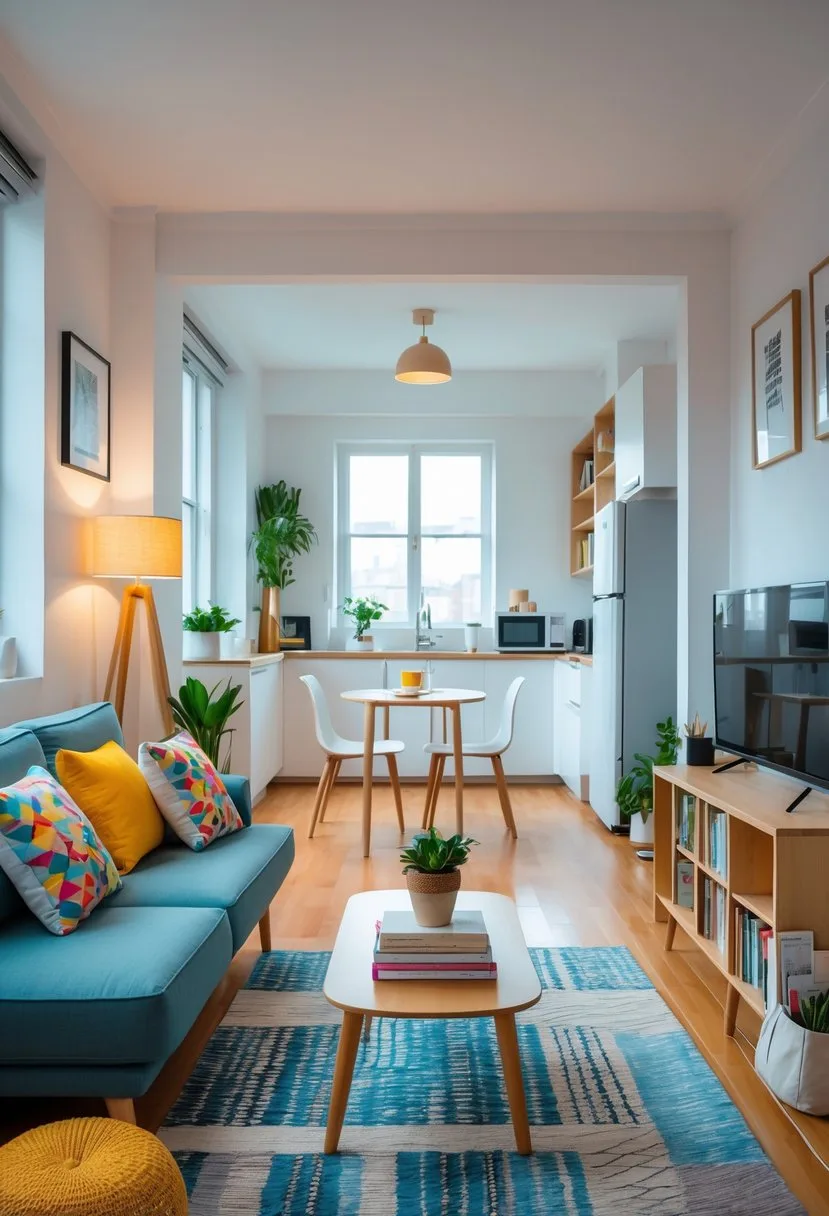
You don’t need every gadget or piece of decor right away. Prioritize sturdy furniture, a few reliable cooking tools, bathroom basics, and simple storage.
Tackle one room at a time. Buy extras as you settle in and realize what you actually use.
Key Takeaways
- Cover sleep, food, cleaning, and security first.
- Buy durable basics and add extras over time.
- Organize by room to avoid overwhelm.
Essential Furniture Checklist
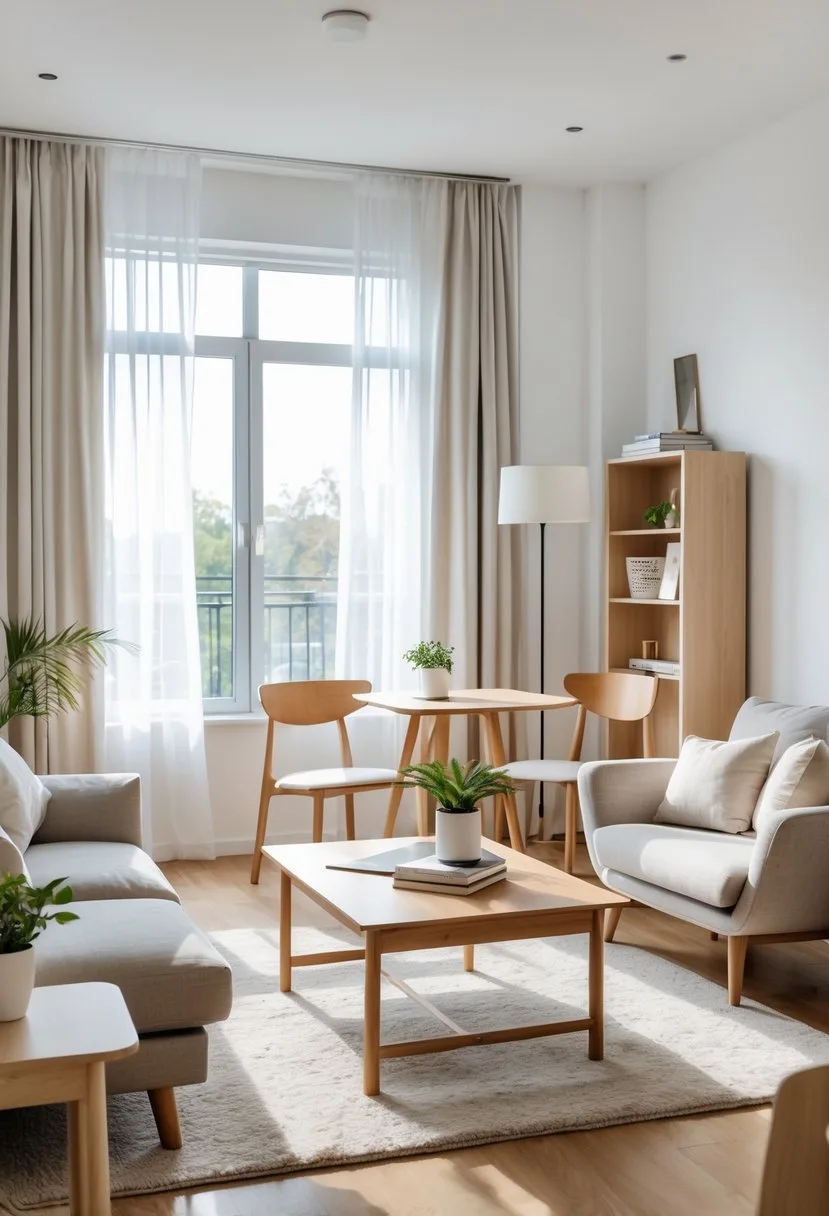
You only need a handful of sturdy, multiuse pieces. Sleep, seating, storage, and eating—cover those and you’re set.
Pick items that fit your space, budget, and storage needs. Don’t overthink it.
Bedroom Basics
Start with a bed frame and a mattress that fits your room. Medium-firm mattresses usually work for most people.
A frame with storage or space underneath is a lifesaver if your closet is tiny. Add a dresser or a set of drawers for folded clothes.
If floor space is tight, go for a tall chest instead of a wide dresser. At least one bedside table is handy for a lamp, your phone, and maybe a glass of water.
Lighting matters—a bedside lamp and some kind of overhead or floor lamp will make mornings and late nights easier. Toss in a full-length mirror and a small laundry hamper, and you’re good.
Living Room Essentials
Start with a sofa that fits your space and seats at least two people. If you expect guests or have a tiny place, a sleeper sofa or loveseat with removable cushions is smart.
You’ll want a central surface—maybe a coffee table or an ottoman that doubles as storage. Use an entertainment stand or media console that’s the right size for your TV and has shelves for routers, consoles, or boxes.
Add at least one extra seat: an accent chair, a small bench, or a floor pouf. If you eat on the couch, pick easy-to-clean fabrics.
A basic shelving unit or bookcase is useful for books, plants, and baskets. Don’t stress about filling every corner.
Dining Area Must-Haves
If you’ve got a dining nook, pick a table that fits without crowding. A small rectangular or round table for two to four people covers most needs.
Chairs that stack or tuck under the table save space. For really tight spots, a counter-height table with stools that slide underneath works great.
A small sideboard or storage cart gives you extra surface space or a spot for dishes and pantry items. Toss in a placemat and a basic tableware set, and that’s your dining setup.
Kitchen Supplies for Your First Apartment
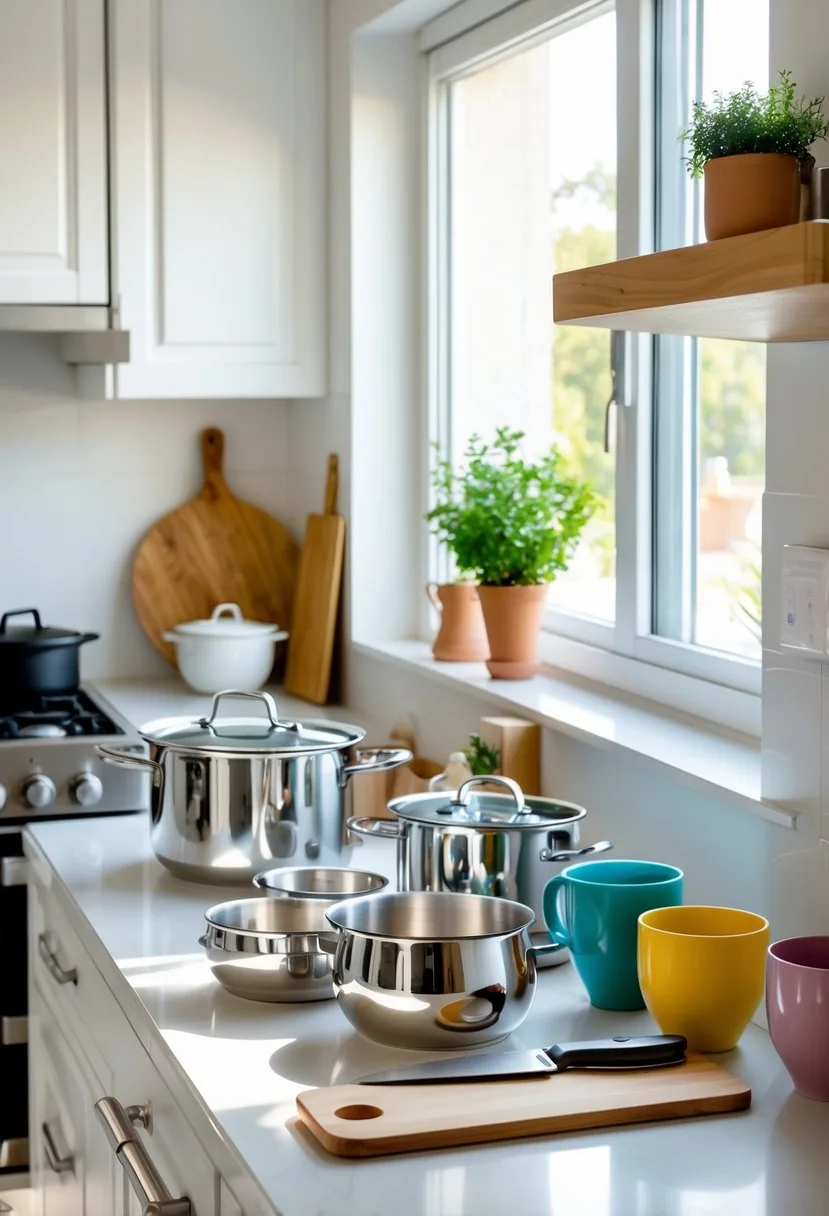
Stock up on things that let you cook basic meals, stash leftovers, and eat without clutter. Focus on a few durable tools, a small set of plates and glasses, and airtight containers.
Cookware and Utensils
Go for a small set that covers frying, boiling, and baking. Get a 10–12 inch nonstick skillet, a 2–3 quart saucepan with a lid, and a 5–6 quart pot for pasta or soup.
A baking sheet and a 9×13 baking dish are handy if you like to roast or bake. Keep utensils simple: a wooden or silicone spatula, slotted spoon, ladle, tongs, and a whisk.
Buy a chef’s knife, a paring knife, and a cutting board. Add a can opener, bottle opener, veggie peeler, and kitchen shears.
Pick items that clean up easily. If you’re short on space, stackable pots or a multi-use pan are your friends.
Dinnerware and Glassware
Start with four to six place settings. Include dinner plates, salad plates or bowls, and some shallow bowls for cereal or pasta.
Ceramic or melamine works; ceramic tends to last longer if you’re a bit clumsy. For drinks, get four glasses (12–16 oz) and a couple of coffee mugs.
If you don’t entertain much, two wine glasses are plenty. Dishwasher-safe pieces save time and headaches.
Add basic flatware for four. A small serving bowl and a simple serving spoon or salad tongs help when friends drop by.
Food Storage Solutions
Get airtight containers in a few sizes: one big, two medium, and a few small. Glass containers with lids are great for reheating and last longer.
Label containers with masking tape or a marker so you know what’s inside. Grab some reusable zip-top bags for snacks or freezing.
You’ll want a roll of foil, plastic wrap, and wax paper for covering dishes or lining pans. Clear canisters for flour, sugar, rice, and pasta make pantry storage simple.
A small bin for lids and wraps keeps things from getting messy. A compact food scale or measuring cups and spoons are useful if you cook from scratch.
Cleaning and Maintenance Supplies
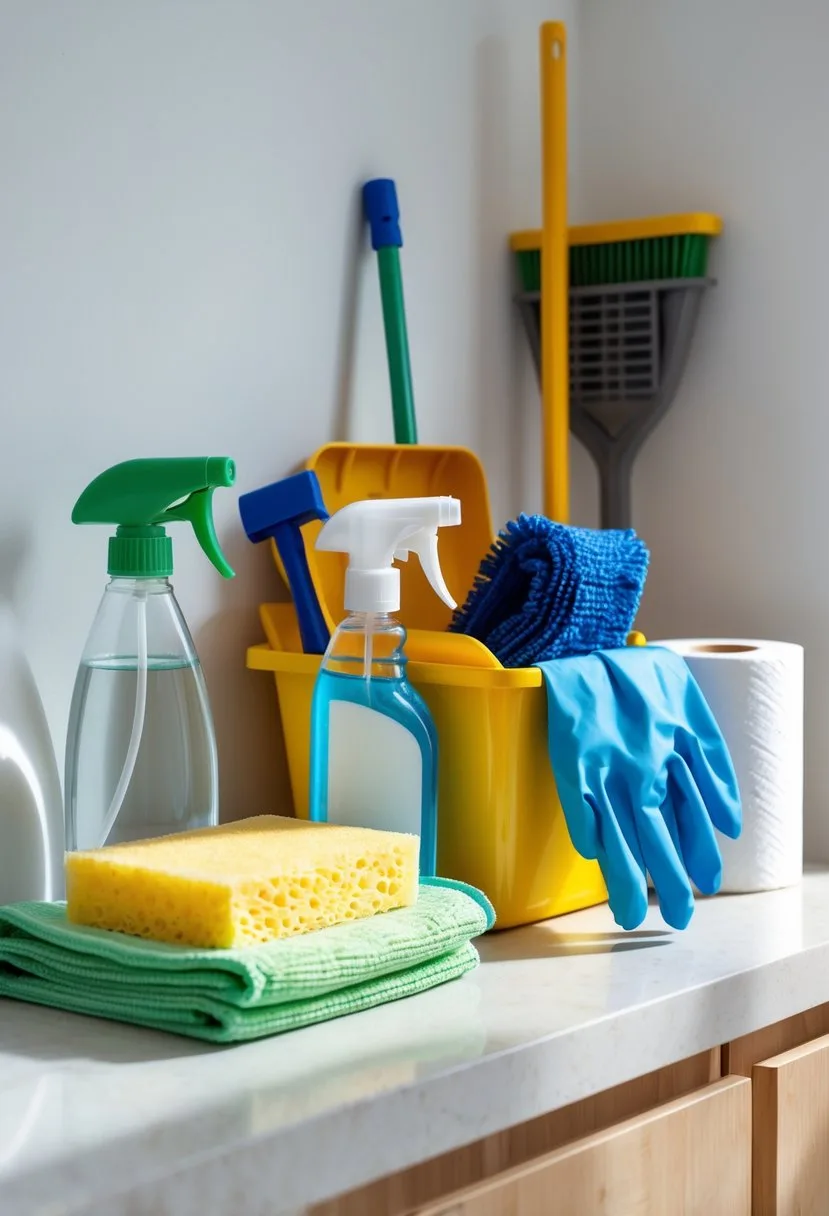
Stick with cleaning supplies that handle daily mess, laundry, and trash. Pick what fits your space and routine so cleaning doesn’t feel like a chore.
Everyday Cleaning Products
Keep a set of multipurpose cleaners for most surfaces. You’ll want an all-purpose spray, a bathroom cleaner with mildew control, and a glass cleaner.
For floors, a small bottle of floor cleaner for wood or tile works, or a bagless vacuum for carpet. Grab a pack of microfiber cloths, a sponge with a scrub side, a soft-bristle brush, and a small dustpan and broom.
Disposable disinfectant wipes are a lifesaver for quick kitchen or high-touch cleanups. Store cleaners on a low shelf, away from heat and pets.
Laundry Essentials
Start with a compact laundry kit. Buy liquid or pod detergent, a stain remover, and fabric softener or dryer sheets if you like soft clothes.
A small mesh laundry bag for delicates and a portable stain brush for pre-treating are useful. You’ll need a collapsible laundry basket or tote and a foldable drying rack for air-dry items.
A sewing kit for quick fixes comes in handy. If you use a laundromat, keep a coin or card holder and a reusable tote for hauling loads.
Trash and Recycling Items
Choose bins that fit your layout. Get a kitchen trash can with a lid (8–13 gallon) and a smaller bathroom waste bin.
Use sturdy trash bags that fit your cans. Set up recycling with a separate bin or divided kitchen can for paper, cans, and bottles.
Keep a small liner for recyclables to prevent leaks. Place a deodorizer or charcoal pouch in the trash area to control odors.
Store extra bags and liners under the sink or in a closet.
Bathroom Necessities
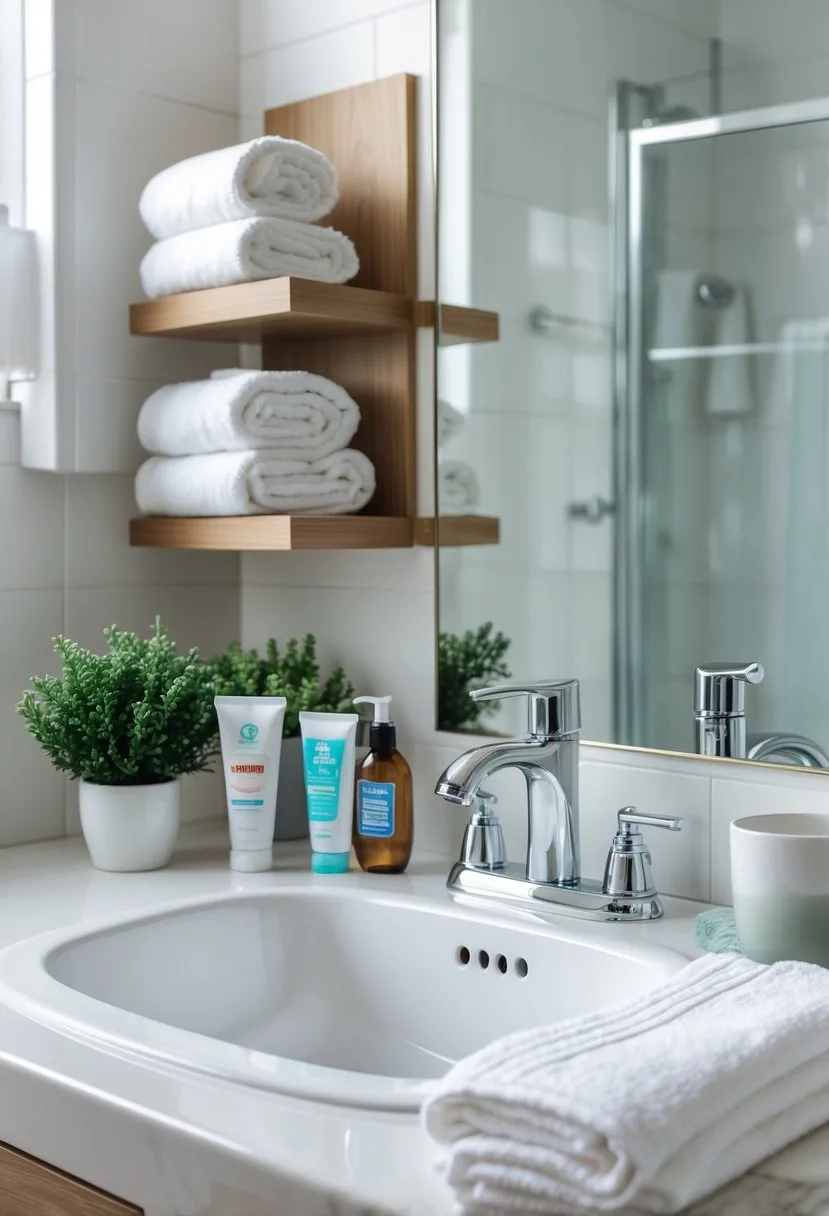
You only need a few reliable items to keep the bathroom running and safe. Focus on shower gear, daily toiletries, storage, absorbent towels, and a non-slip mat.
Shower and Bath Items
Start with a sturdy shower curtain or sliding-door liner. Go for mildew-resistant if you can.
Buy rust-proof rings or a tension rod if needed. Add a shower caddy or suction shelf to keep soap, shampoo, and razors off the floor.
A non-slip shower mat or adhesive strips inside the tub help prevent slips. If you deal with hard water, a handheld sprayer or water-softening showerhead cuts down on soap scum.
A small squeegee for glass doors and tile keeps mildew down. If you have space, a bath pillow or shower stool is a nice bonus.
Toiletries and Storage
Stock your basics: toothbrush, toothpaste, floss, shampoo, conditioner, body wash, bar soap, deodorant, and a razor with extra blades. Add a small first-aid kit with bandages and pain relievers.
Store things in clear or labeled bins under the sink. A medicine cabinet or wall shelf keeps meds and skincare at eye level.
A small drawer organizer for cotton swabs, pads, and hair ties keeps chaos at bay. Keep extra toilet paper, hand soap, and feminine products in a closed bin or cabinet.
Mount a towel hook or over-the-door organizer for hair tools to keep counters clear.
Towels and Bath Mats
Buy at least two bath towels per person and two hand towels for guests. Cotton towels with a GSM around 500–600 are a good balance—absorbent but not slow to dry.
A washable, non-slip bath mat outside the tub protects floors. If you have space, add a small mat for the sink area.
Replace mats every year or sooner if they start to smell. A labeled laundry basket in or near the bathroom makes it easy to toss damp towels.
Rotate towels so one set dries between uses. Wash towels weekly to keep things fresh.
Home Organization Solutions
Go for small, specific storage pieces that fit your space. The goal? Save floor space, protect your stuff, and speed up daily routines.
Closet and Clothing Storage
Use vertical space first. Hang a fabric organizer or double rod to get more room for shirts and pants.
Slim, non-slip hangers keep clothes neat and save space. Store seasonal stuff in clear plastic bins under the bed or on top shelves.
Label each bin so you’re not digging for winter hats in July. A garment bag protects suits or dresses from dust.
For folded clothes, a small dresser or cube shelf does the trick. Fold sweaters vertically so you can see them all at once.
A laundry basket with a lid in the closet keeps dirty clothes out of sight.
Entryway Organization
Set up a compact landing zone near the door. A narrow table or wall shelf works.
Keep a tray for keys, a bowl for spare change, and a mail sorter to avoid paper piles. Install wall hooks at two heights—one for coats, one for bags.
A pegboard or slim hanging organizer holds masks, umbrellas, or shopping bags. Add a low shoe rack or a bench with shoe storage to keep shoes tidy.
A small basket for sunglasses and water bottles is handy. Toss down a washable mat to catch dirt and make cleanup easy.
Safety and Home Security
Check your locks and doors first. Make sure deadbolts work and the door frame feels solid.
If the locks seem old, ask your landlord to change them or get permission to rekey. Don’t skip this—old locks are just asking for trouble.
Install basic security items you can actually afford. A doorstop alarm, window locks, and a peephole go a long way.
Stash your important documents and meds in a small safe or lockbox. It’s not overkill—just peace of mind.
Use lighting to scare off would-be troublemakers. Keep entryways and hallways lit with motion-sensor bulbs.
Set up outside lights or a lamp on a timer so your place looks lived in when you’re out. It’s a simple trick, but it works.
Learn the emergency procedures for your building. Find the fire exits, know where the extinguishers are, and have your emergency contacts handy.
Post escape routes near doors and actually practice them once. It feels silly, but you’ll be glad you did.
Consider adding a simple smart device for monitoring. A video doorbell or plug-in camera gives extra eyes on your space.
Check the privacy settings and look for devices with solid security reviews. No need to invite hackers to the party.
Keep valuables out of sight from windows. Lock up bikes and electronics, and mark your stuff with an ID number or photo.
Never share security codes or spare-key spots with casual acquaintances. That’s just asking for drama.
Meet your neighbors and exchange emergency contacts. A nearby ally can watch your place when you’re away.
Security checklist (quick)
- Change or rekey locks
- Add window locks and a peephole
- Use timers or motion lights
- Keep an emergency contact list
- Secure valuables and use a small safe
Tech and Connectivity Essentials
Get reliable internet, enough outlets, and the gadgets that keep your day running. Focus on speed, coverage, safe power, and backup options.
Internet Setup
Pick a provider that offers service to your building. Match your plan to how you use the internet.
If you stream 4K, game online, or work from home, aim for at least 200–500 Mbps. For basic browsing and video calls, 100–200 Mbps usually does the trick.
Decide if you want to rent the modem and router from your ISP or buy your own. Buying can save money long-term and usually gives better performance.
Put your router in a central, elevated spot—keep it away from thick walls for the best coverage.
If you’ve got dead zones, add a mesh Wi‑Fi system or a wired access point. Use Ethernet for desktop PCs or consoles to cut lag.
Keep your ISP info, Wi‑Fi password, and backup contacts in a safe spot. You’ll thank yourself when you need them.
Charging and Power Solutions
Count your devices and plan outlets accordingly. Bedside charging, a living room hub, and a workstation setup for your laptop or monitor make life easier.
Buy a surge protector with multiple outlets, at least one USB-A, and one USB-C port. In the living room, a power strip with a long cord hides behind furniture and cuts down on cable mess.
For the bedroom, a small bedside charger or wireless pad keeps your phone topped up overnight. No more crawling under the bed for a cord.
Consider a UPS (battery backup) for your desktop or modem if you can’t risk sudden power loss. Label cords and use cable ties to keep cables neat and safe.
Personal Comfort and Décor
Pick things that make your space feel calm and actually work for daily life. Think bedding that helps you sleep, lighting for each task, and a few decor pieces that don’t crowd your surfaces.
Bedding and Linens
Choose a mattress and sheets that fit how you sleep. If you like firm support, go for medium-firm; if you want softness, try plush or memory foam.
Buy a mattress protector to keep it clean and help it last longer. You don’t want to skip this step.
Aim for two sets of sheets so you can swap them out easily. Look for thread counts around 200–400 for softness and breathability.
Get a duvet with a washable cover, one or two pillows with different fills (one firm, one soft), and at least two pillowcases per pillow.
Keep towels simple: two bath towels, two hand towels, and two washcloths to start. Toss in a small throw blanket and a washable rug next to the bed for a cozy landing spot.
Lighting Choices
Layer your lighting for function and mood. Start with a central ceiling light for overall brightness.
Add a floor lamp or table lamp near seating for reading, and a bedside lamp for night-time use. It’s all about options.
Pick bulbs with color temperatures that fit the room. Go for 2700K–3000K (warm) in bedrooms and living areas, 3500K–4100K (neutral) for workspaces and kitchens.
Use LED bulbs for energy savings and longer life. It’s a no-brainer.
Include a task light for reading, desk work, or cooking. Dimmers or lamps with multiple brightness settings let you control the vibe.
Add a few small decor accents—a plant, framed photo, or wall print. Keep it personal, not cluttered.
Important Documents and Supplies
Keep a small folder or binder for your apartment paperwork. Drop in your lease, renter’s insurance, landlord contact, and move-in inspection notes.
Store digital copies on your phone or in the cloud. Scan or snap photos of key documents like your ID, social security card, and utility account numbers.
Label your files so you can find them fast. Nothing’s worse than digging for paperwork in a pinch.
Have a basic stationery kit for quick fixes and notes. Pens, a stapler, scissors, tape, and a notepad come in handy for everything from signing receipts to labeling boxes.
Buy or print a checklist of important account numbers and passwords. Keep one physical copy in your folder and an encrypted digital copy for backup.
Keep emergency supplies where you can grab them. A small flashlight, extra batteries, basic first-aid kit, and a multi-tool cover most situations.
Pack a moving box labeled “Essentials.” Throw in your important documents, a set of keys, phone chargers, and a few basic toiletries. You’ll want that box on your first night.
Moving Day Preparation
Move with a clear plan and the right gear so the day stays quick and low-stress. Sturdy boxes, clear labels, and a small tool kit make life easier.
Packing Materials
Buy a mix of box sizes: small for books, medium for kitchenware, large for linens. Use specialty boxes for dishes and clothes—dish pack boxes with dividers and wardrobe boxes with a hanging bar save time and protect fragile stuff.
Pack heavy items in small boxes so they don’t tear. Label each box on two sides with the room name and a few key contents.
Mark fragile boxes clearly and write “OPEN FIRST” on the box with toiletries, chargers, a pillow, and a change of clothes. Use bubble wrap, packing paper, or towels for glass and electronics.
Keep a roll of strong tape, a dispenser, and a permanent marker in a “moving day” tote you carry with you.
Basic Tools and Supplies
Bring a basic tool kit: screwdriver set (Phillips and flat), adjustable wrench, hammer, pliers, and a utility knife. You’ll need these for tightening bolts, assembling furniture, and opening boxes.
Add a measuring tape and a level to place furniture and hang art right the first time. Fasteners like screws, picture hooks, and wall anchors rated for drywall are a must.
Pack a flashlight, extra batteries, a power strip, and a phone charger in your essentials tote. Cleaning supplies—multi-surface spray, paper towels, trash bags, and a broom—help with quick touch-ups before you unpack.
Frequently Asked Questions
You’ll find clear lists of must-have items, money-saving tips, often-missed purchases, required paperwork, safety gear, and a simple saving target. Each answer gives practical steps you can use the day you sign a lease or move in.
What are the essential items for a first apartment checklist?
Start with basics you use every day: a mattress and bedding, a table or desk, at least one chair, and basic lighting.
In the kitchen, get a frying pan, saucepan, spatula, knife, cutting board, plates, bowls, cups, silverware, and a dish soap sponge.
For cleaning and laundry, buy a broom, dustpan, mop or microfiber cloths, multi-surface cleaner, trash bags, laundry detergent, and a laundry basket.
Bathroom essentials include a shower curtain (if needed), bath mat, towels, toilet brush, plunger, hand soap, and a small first-aid kit.
How can one create a first apartment checklist on a budget?
Prioritize what you need to sleep, cook simple meals, and stay clean. Buy those first and delay nonessentials like extra decor or specialty kitchen gadgets.
Shop at thrift stores, discount outlets, and online marketplaces for furniture and kitchenware. Ask friends or family for hand-me-downs to cut costs.
Look for bundle deals (sheet sets, dinnerware sets) and check local community groups for free items. You don’t have to buy everything new.
What unexpected items are often overlooked when moving into a new apartment?
You might forget small but crucial items like a power strip, outlet adapters, surge protector, and batteries. Keep a basic toolbox with a screwdriver, hammer, nails, and measuring tape.
Pack hooks or Command strips for hanging things without drilling. Don’t forget a shower curtain liner, doorstop, and extra light bulbs—they’re easy to miss but super useful right away.
What documents are typically required for an apartment application?
Most landlords ask for a government ID, recent pay stubs or proof of income, and bank statements. They’ll probably want references and contact info for previous landlords, too.
You may need a completed rental application form, a credit score or report, and the application fee. International renters might need a visa or extra identity documents.
What are some safety essentials to consider for a new apartment?
Test smoke and carbon monoxide detectors on move-in day and replace batteries if needed. Keep a fire extinguisher rated for home use in the kitchen and know where exits and stairs are.
Buy a small first-aid kit, a flashlight with extra batteries, and a door peephole or chain if the door doesn’t have one. Consider renter’s insurance to protect your stuff.
How much should you ideally save before renting your first apartment?
Try to save up enough for three months of living expenses. That usually means first month’s rent, last month’s rent if the landlord asks, and a security deposit.
You’ll probably need an extra $300–$800 right away for basics—think furniture, kitchen stuff, the little things you forget about until you move in.
On top of all that, stash away at least one month’s rent as an emergency fund. That way, if something unexpected comes up, you’re not scrambling.

Laurie Neel Hamilton is a creative DIY expert and the author behind the charming home décor content on Vivyro.com. Passionate about empowering women to craft beautiful, personalized spaces on a budget, she shares inspiring DIY projects, inventive décor ideas, and easy-to-follow tutorials that bring warmth and style to any home.
As a proud Gigi to five beautiful grandchildren and the heart of her creative community, Laurie infuses her work with joy, creativity, and family-inspired touches. Her welcoming approach makes DIY accessible and fun for crafters of all levels, encouraging everyone to unleash their inner artist and create stunning, heartfelt décor that reflects their unique story.