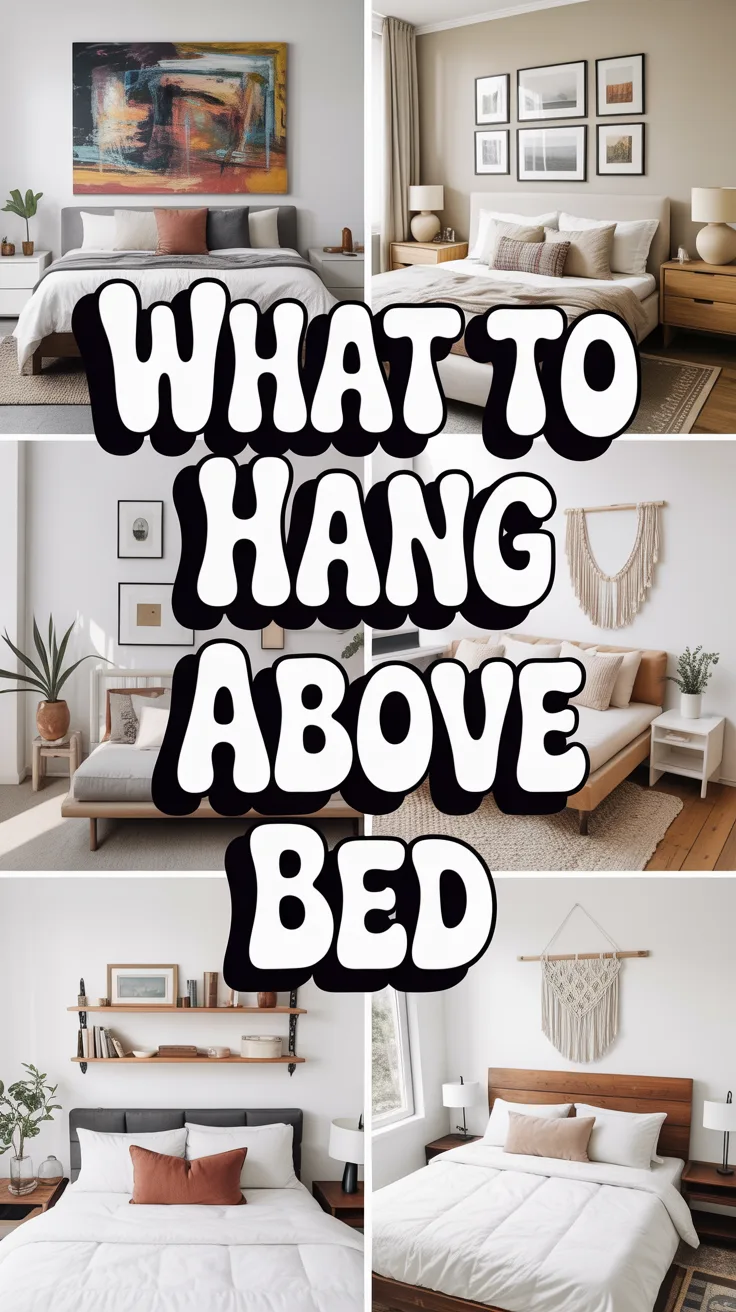
You can hang art, mirrors, textiles, plants, or a mix of personal items above your bed to make the space feel finished and reflect your style.
Choose pieces that match your room’s size and vibe, and secure them safely so they stay put and look intentional.
Think about what you want the area to do: add color, create texture, reflect light, or show personal meaning.
Small groupings, a single large statement piece, or layered items like a tapestry with framed photos all work depending on your space and taste.
Key Takeaways
- Pick decor that fits the wall size and complements your bedroom style.
- Mix textures and reflective elements to add depth and light.
- Prioritize secure placement and personal touches for a polished look.
Popular Art and Decor Ideas

Pick pieces that match your bedroom’s size, color palette, and mood.
Think about scale, hanging height, and whether you want a single focal piece or a mix of items that read as one unit.
Framed Artwork
Choose frames that match your room’s style—thin black or white frames for modern spaces, wood for warm or rustic rooms.
Measure the bed width and aim for artwork that is 50–75% of that width so the piece feels anchored above the headboard.
Use matting to give small prints more presence; a 2–4 inch mat creates breathing room.
Hang the center of the framed piece about 8–12 inches above the headboard, or place the bottom edge closer if you have a tall headboard.
Secure frames with wall anchors or picture-hanger studs, and use two hangers for wider pieces to keep them level.
Swap prints seasonally to refresh the look without buying new frames.
Canvas Prints
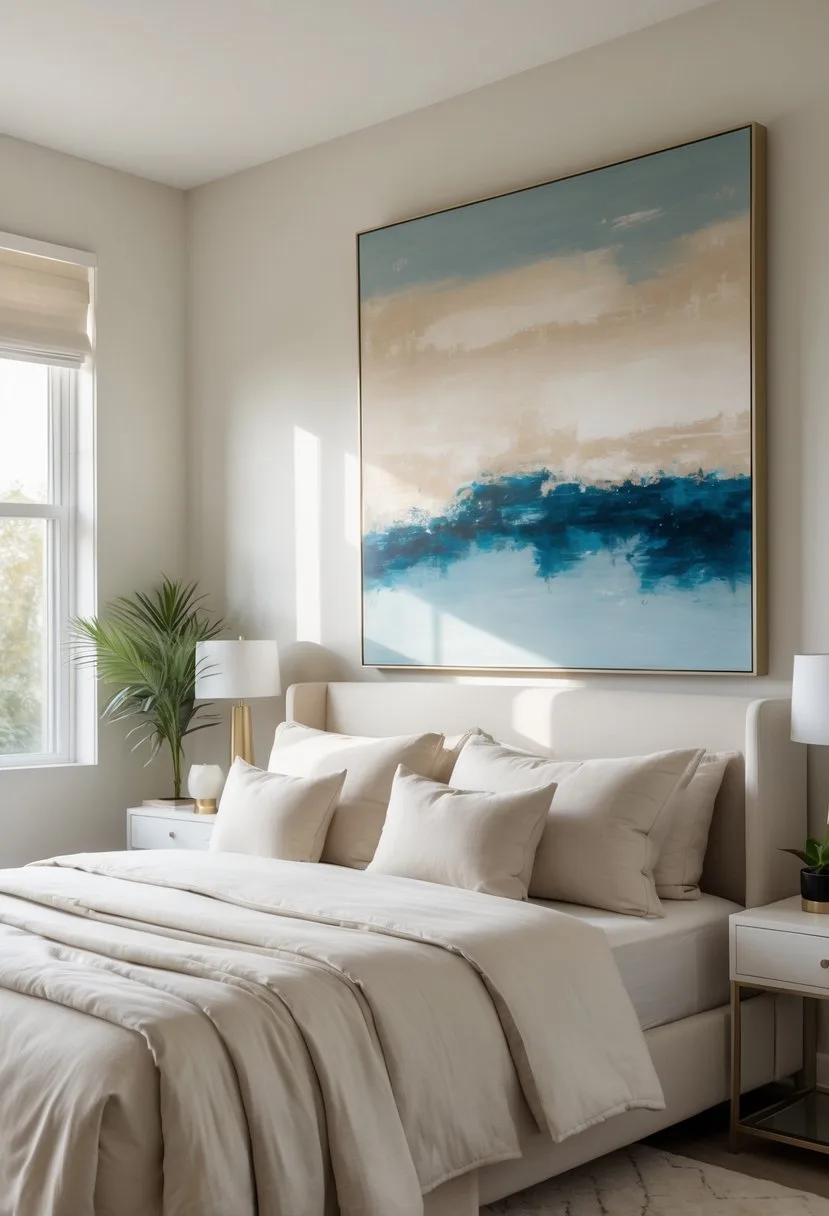
Canvas works well when you want a softer, more modern look without visible frames.
Large single canvases create a bold focal point and can span 60–100% of the bed width for a dramatic effect.
Stretch canvas over deep bars for a gallery-style edge, or choose a floater frame for a cleaner outline.
Consider an abstract or landscape in your main wall color to tie the room together.
Canvas is lighter than framed glass, so you usually need only one or two heavy-duty hooks.
If you hang multiple canvases, plan consistent spacing—2–4 inches between pieces keeps the arrangement tight and intentional.
Sculptural Pieces
Sculptural decor adds texture and depth.
Think metal wall sculptures, woven baskets, macramé hangings, or carved wood panels that introduce three-dimensional interest.
Groupings work well: arrange three baskets of different sizes or a symmetric pair of metal shapes.
Keep the materials consistent with other bedroom finishes—brass with warm hardware, matte black with industrial fixtures.
Mount heavier sculptures on studs and use appropriate anchors for hollow walls.
Aim for pieces that sit 6–12 inches above the headboard so they won’t interfere with pillows or reading lights.
Gallery Walls
A gallery wall lets you mix photos, prints, mirrors, and small shelves into one curated display.
Start by arranging frames on the floor or use paper templates taped to the wall to map spacing and alignment.
Choose a unifying feature—frame color, mat size, or a repeating motif—to make the collection read as a single composition.
For layout, center the arrangement above the bed and keep the bottom edge 8–12 inches above the headboard for balance.
Use a mix of hanger types but level each frame precisely.
Include at least one larger anchor piece and fill around it with smaller works, keeping 2–4 inches between frames for visual flow.
Textures and Fabrics
Choose pieces that add warmth, color, and scale to your wall.
Pick materials that match your room’s temperature, color palette, and how much maintenance you want.
Tapestries
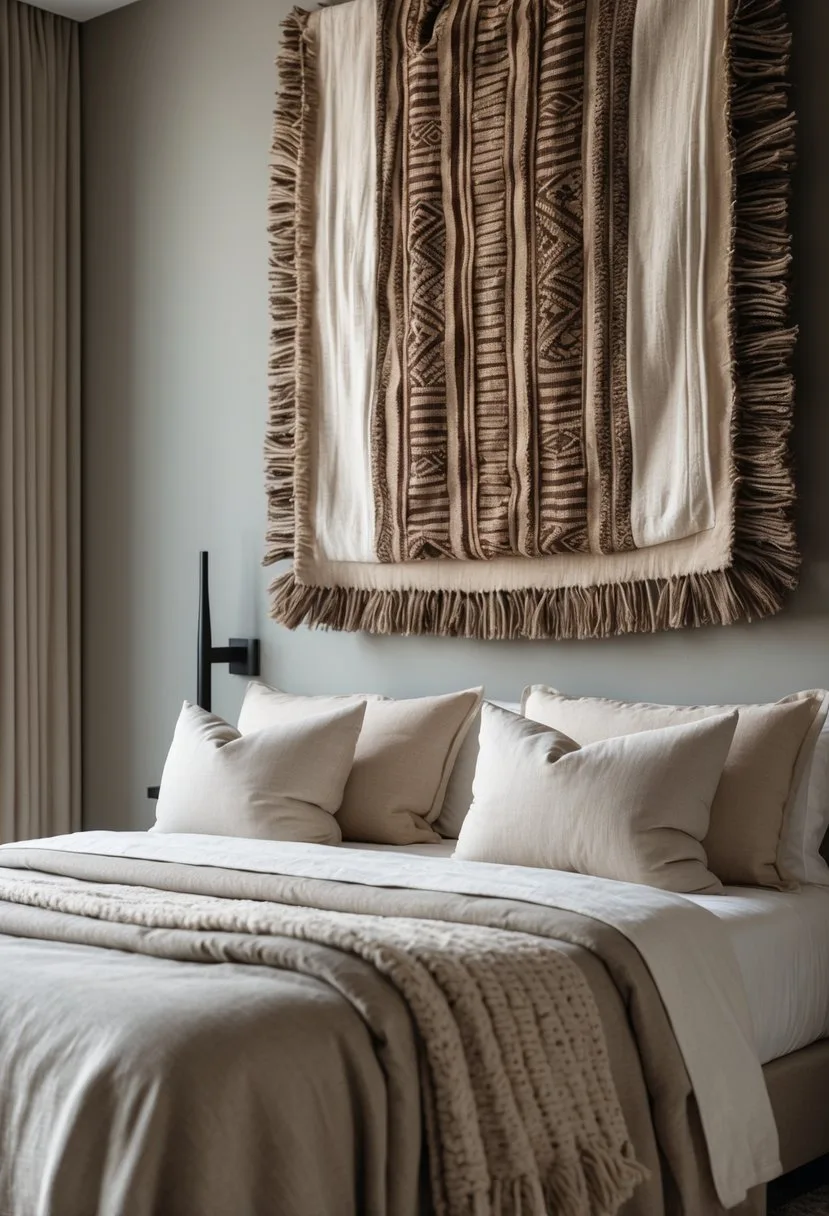
Tapestries give a lot of visual impact with little effort.
Pick a piece roughly half to three-quarters the width of your bed so it looks balanced without crowding the space.
Natural fibers like cotton and wool hang well and feel warm; printed or lightweight polyester tapestries are easier to clean and store.
Hang tapestries from a thin rod or a picture ledge to avoid visible nails.
If your ceiling is low, mount the top edge a few inches above the headboard to create the illusion of height.
For color choices, use the tapestry to repeat one or two accent colors already in your bedding.
Macramé Wall Hangings
Macramé adds texture and a handmade feel, working well in minimalist, boho, or coastal rooms.
Choose a size that complements your headboard: a narrow, long piece suits a tall headboard; a wide macramé works well above a low, wide bed.
Look for cotton rope in neutral tones for a soft, muted look, or mixed fibers for more contrast.
Mount macramé on a wooden dowel or driftwood for a natural edge.
Shake out and spot-clean according to fiber type; avoid heavy sprays or steam that can change knot tension.
Woven Baskets
Woven baskets bring shape and woven texture with low cost and low upkeep.
Use a single large basket centered above the bed for a simple focal point, or arrange a grid of three to five baskets for a more structured display.
Choose shallow baskets that hang flat to the wall; deeper baskets protrude and can look bulky.
Secure baskets with picture hooks or wall anchors and test the weight.
Natural materials like seagrass, rattan, and cane add warmth and work well with neutral palettes.
Mirrors and Reflective Accents
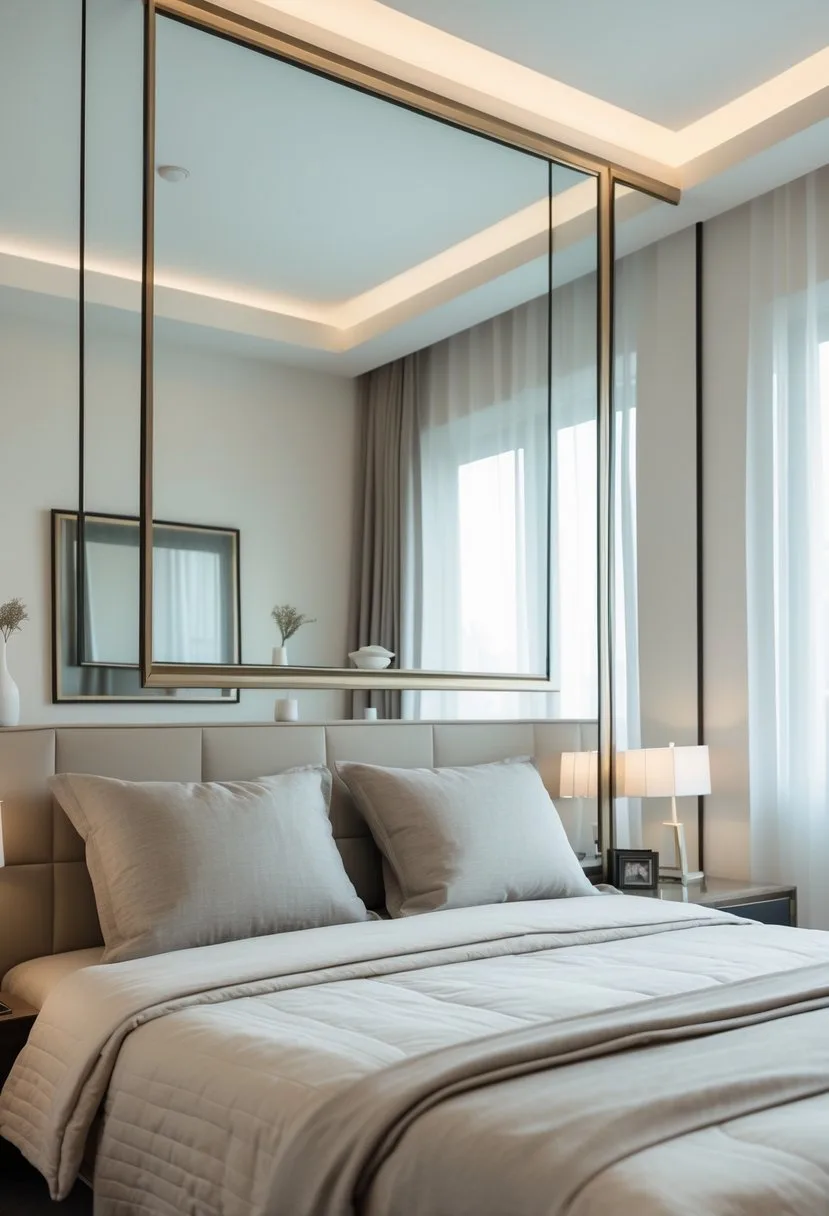
Mirrors add light, depth, and a focal point above a bed.
Choose size, shape, and placement that suit your room’s light and the bed’s scale.
Large Statement Mirrors
A single large mirror can make a room feel brighter and larger by reflecting natural light from windows.
Pick a mirror at least two-thirds the width of your headboard for balance, or use a tall oval to add vertical emphasis in a room with low furniture.
Mount the mirror so its bottom edge sits 6–10 inches above the headboard to avoid glare or accidental bumping.
Choose a sturdy hanging system and anchor into studs for safety.
Frame style matters: simple metal or wood frames keep the look clean, while a bold frame becomes the room’s centerpiece.
Consider the view the mirror will reflect.
Avoid placing it so it reflects clutter or an open closet.
If energy or privacy matters, place the mirror on a nearby wall instead of directly above the bed.
Clustered Small Mirrors
A cluster of small mirrors creates texture and visual interest without one heavy focal point.
Arrange 3–7 mirrors in a loose grid, staggered group, or organic scatter to complement the bed width and headboard shape.
Mix mirror shapes—round, hexagon, and small rectangles—for a dynamic look.
Keep spacing even, around 2–4 inches between mirrors, and mock the layout on the floor or tape on the wall before drilling.
Use picture-hanging strips for lighter mirrors or wall anchors for heavier pieces.
Clusters work well opposite windows to boost brightness, but check reflections so they don’t catch unwanted views.
Group frames with similar finishes for cohesion, or vary finishes for an eclectic feel.
Personal and Customized Displays
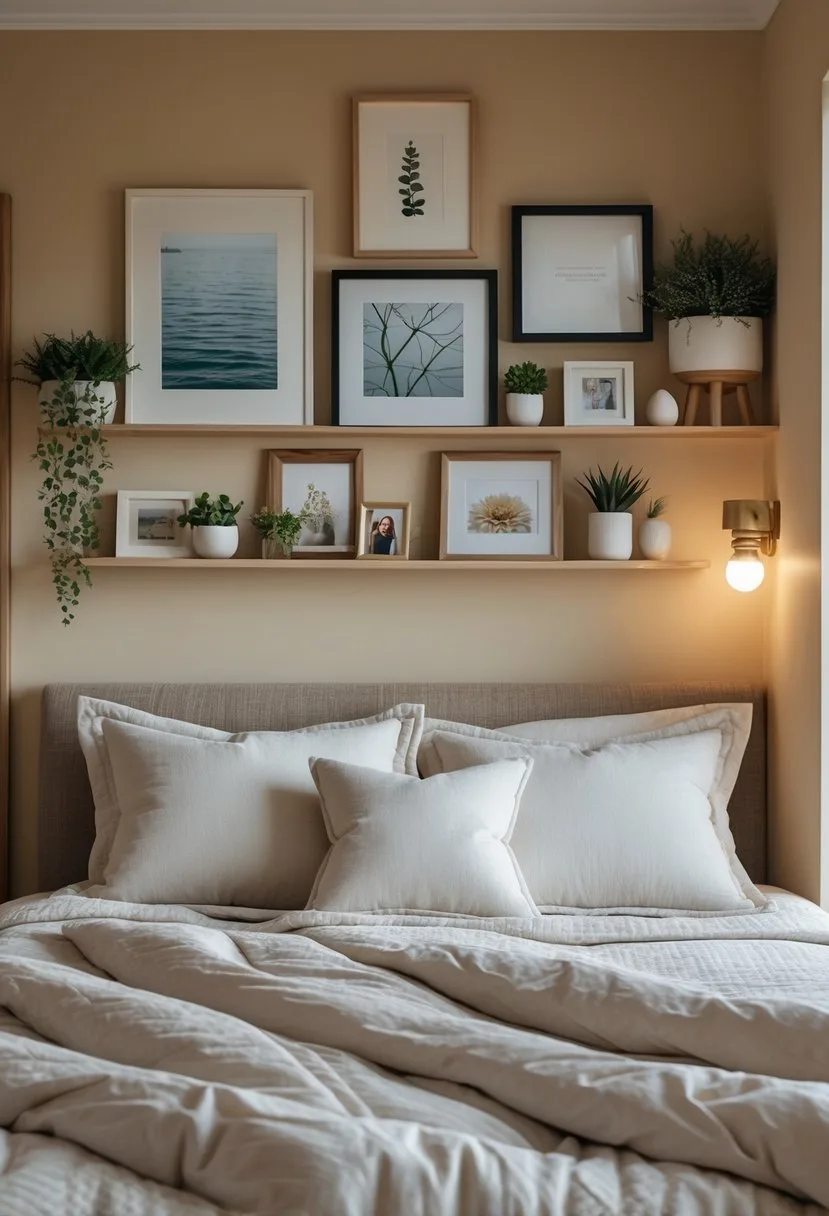
Choose pieces that reflect your life, look balanced above the bed, and suit your room’s scale and color.
Think about size, framing, and how often you’ll change the display so it stays meaningful and fresh.
Personal Photos
Hang a small gallery of framed photos to make the space feel like yours.
Use 3–5 frames in matching colors or mats to keep the look tidy.
Arrange them in a horizontal line or a loose cluster about 6–12 inches above the headboard so pillows don’t block the view.
Pick images that tell a story — travel, family, pets, or places that calm you.
Use archival or acid-free mats if the photos matter long-term.
For variety, mix one larger central frame with two smaller ones, or use identical frames for a uniform vibe.
If you want flexibility, use picture ledges or a rail.
That lets you swap photos without rehanging hardware.
Secure frames with wall anchors and consider museum wire for a level, safe installation.
Initials or Monograms
Monograms add a personal touch and work well above the bed when sized right.
Choose a single large initial (18–30 inches) for a bold look, or use two matching letters for couples.
Keep the finish simple — wood, metal, or painted MDF — to match your room’s texture.
Mount the monogram centered over the bed and about 8–12 inches above the headboard.
If your headboard is tall, reduce the gap to keep the eye connected.
For balance, pair a metal initial with small floating shelves or a narrow ledge underneath.
Think about scale and font: a chunky serif reads better at a distance, while a script font can feel delicate.
Secure hanging hardware rated for the weight and use wall anchors if you need extra support.
Custom Letter Boards
Letter boards let you change messages, quotes, or daily reminders easily.
Pick a board size that spans at least two-thirds of your bed width for visual balance.
Felt boards in 24×12 or 36×12 inches work well above twin or queen beds respectively.
Use short phrases, song lyrics, or daily goals.
Keep lines brief — 2–4 words per line reads cleanly from bed.
Swap messages seasonally or weekly to keep the display fresh without new hardware.
Mount the board with a French cleat or strong picture hangers for a flush look.
If you want softer lighting, place a slim picture light above it or hang small LED puck lights on either side.
Natural Elements and Greenery
Add living or nature-inspired pieces to bring texture and calm to your wall above the bed.
Choose pieces that match your room’s light, style, and your willingness to care for plants or change prints.
Botanical Prints
Botanical prints give you bold leaf shapes, delicate flower sketches, or vintage plant diagrams without upkeep.
Pick a single large print for a focal point, or a small gallery of three prints arranged horizontally to mirror your headboard width.
Frame prints in simple wood or black frames to match furniture and keep the look tidy.
Think about color and scale.
Use prints with green tones that echo your bedding or a muted palette if your room already has strong colors.
If you want a softer look, choose watercolor or faded vintage prints.
Hang them 6–12 inches above the headboard so they read as a unit with the bed.
Hanging Plants
Hanging plants add real texture and movement, and they work well when floor space is limited.
Use lightweight planters or wall-mounted shelves with trailing plants like pothos, philodendron, or string of hearts.
These plants tolerate lower light and recover from occasional missed waterings.
Anchor each planter with a secure hook or a small floating shelf.
Stagger heights for a layered look and keep pots shallow to avoid heavy loads on drywall.
If you worry about care, use faux plants that mimic the drape of real vines and still soften the wall above your bed.
Functional and Multi-Purpose Options
Choose pieces that add storage, light, or both, and match your room’s scale and safety needs.
Think about how each item will be used daily and how it affects reachability, wiring, and sleep comfort.
Shelving Units
Install floating shelves or a narrow ledge at least 6–12 inches above your headboard so items don’t feel crowded when you sit up.
Use shelves 6–10 inches deep for small plants, a book or two, and a small alarm clock.
Deeper shelves need sturdier anchors and should sit higher to avoid hitting your head.
Pick materials that suit weight and humidity: solid wood or metal brackets for heavier items; MDF or lightweight boards for decor only.
Secure with wall anchors or studs, and keep the top shelf for less-used items.
Consider a single long shelf instead of multiple small ones to keep a clean line and avoid visual clutter.
Pros:
- Adds display and storage.
- Easy to change decor.
Cons:
- Needs careful anchoring.
- Can collect dust; keep fragile items away from the sleep zone.
Accent Lighting
Mount wall sconces or LED picture lights on either side of the bed. This frees up bedside table space and gives you focused reading light.
Pick hardwired or plug-in fixtures based on your wiring access. Plug-in options need a tidy cord plan, so don’t forget to think that through.
Position sconces about 40–48 inches above the mattress surface. That way, the light hits your reading area without glaring into your eyes.
For flexible moods, try dimmable LEDs or a dual-switch setup—one for ambient glow, one for task light. Swing-arm sconces are great if you want to adjust the light for reading.
If you’ve got shelves above the bed, stick some thin LED strips under the shelf. That gives you soft uplight and highlights objects without harsh shadows.
Placement Tips and Safety Considerations
Hang art so its center sits about 8–12 inches above the headboard. If you don’t have a headboard, go for 20–36 inches above the mattress.
Use proportions that match your bed width. Artwork or groupings should cover about 50–75% of the bed width.
Anchor pieces to studs or use proper wall anchors for heavy stuff. Small nails work for lightweight frames, but use toggle bolts or molly bolts for mirrors and shelves.
Don’t hang sharp, heavy, or fragile objects directly over where you sleep. Lighter frames, textiles, or floating shelves with guard rails feel safer and look good.
If you have tall sleepers or kids who jump on beds, consider the hanging height. Mount items higher or use soft, unbreakable decor in those rooms.
Check for wiring and pipes before you drill. Use a stud finder that also detects live wires. Trust me, hitting a wire or pipe is a headache you don’t want.
Use picture-hanging hardware rated for your item’s weight. Label hardware weight limits and match them to your piece.
Styling for Different Bedroom Themes
Focus on shapes, materials, and scale that fit your furniture and lighting. Pick pieces that make the bed feel anchored and reflect how you use the space—sleep, reading, or just relaxing.
Modern Bedrooms
Go for clean lines and bold geometry. A large framed abstract print or a grid of three thin metal frames works well.
Stick to two or three colors that tie in with your bedding or rug. Mix materials like glass, metal, and lacquered wood.
Mount a slim floating shelf if you want a lamp or a small plant nearby. Picture lights or adjustable wall sconces keep your bedside uncluttered.
Hang art so its center is 8–12 inches above the headboard. If your bed’s low-profile, pick wider, shorter pieces. Tall headboard? Go for vertical artwork.
Bohemian Rooms
Try layered textures and a casual, collected vibe. Combine a woven wall hanging, a macramé piece, or a round rattan mirror above the bed.
Add a string of warm, low-wattage globe lights for cozy ambiance. Mix in small framed prints with handcrafted items like wooden masks or textile scraps.
Arrange items asymmetrically for a relaxed look. Use plants on floating shelves or hanging planters to add some greenery.
Pick warm, earthy colors and natural fibers. Let the scale and finish vary so the wall feels curated, not matchy-matchy.
Minimalist Spaces
Stick with one thoughtfully chosen item for a calm effect. Maybe a single monochrome canvas, a slim metal ledge with a small ceramic vase, or a simple wooden headboard extension.
Keep it neutral and uncluttered. Mount the item so it lines up with the bed’s centerline and sits 8–12 inches above the headboard.
If you need function, a low-profile shelf with an integrated reading light works well. Limit extras to a couple of small accents to keep things restful.
How to Choose the Right Decor for Your Space
Start by measuring the wall and the bed. Aim for decor that spans about 50–75% of the headboard width.
Think about scale and proportion. Large, simple pieces work in big, modern rooms, while small, grouped items feel better in cozy or eclectic spaces.
Match the style to your room’s vibe. If you love minimalism, pick clean lines and neutrals. For boho or cozy, go for textured textiles, woven art, or layered frames.
Consider color and contrast. Pull one or two accent colors from your bedding or rug to tie the decor into the room.
Check placement and safety before you hang anything. Place art 6–12 inches above the headboard for most beds. Use proper anchors for heavy items and avoid anything that could fall.
Quick checklist:
- Measure wall and bed width
- Match scale to room size
- Pick colors that link to your palette
- Choose materials that suit your style
- Confirm safe hanging hardware
Trust your eye, but test layouts first. Lay pieces on the floor or use paper templates on the wall to preview before you commit.
FAQs – What to Hang Above Bed
What are the best items to hang above a king-sized bed for aesthetic balance?
Go for art or objects that span about 50–70% of the bed width. For a king bed (about 76 inches wide), look for pieces or a group that measure roughly 38–53 inches across.
Try a single large piece, a triptych, or a balanced gallery of two or three items. Keep the center of the artwork about 18–24 inches above the headboard—unless your headboard is tall, then stick to 8–12 inches.
How do I select modern wall decor for the space above my bed?
Pick clean lines, simple shapes, and a limited color palette. Metal sculptures, framed abstract prints, or a single minimalist painting all work.
Match the scale to the bed and headboard. For a modern look, stick with one focal piece or a symmetrical pair instead of lots of small items.
What considerations should I take into account for Feng Shui when placing objects above my bed?
Don’t put heavy, sharp, or unstable items directly over your head. Those can make you feel uneasy.
Use calming images, rounded shapes, and balanced pairs for better rest and partnership vibes. Keep the wall uncluttered and place objects at a comfortable height above the headboard.
What are some popular wall decor ideas for couples to hang above their bed?
Choose pairs to symbolize balance—two framed photos, matching prints, or twin wall sconces. Symmetry helps create a shared focal point.
You could also go with a shared theme, like travel maps, a framed song lyric, or a joint gallery wall with equal weight on each side.
Can you suggest bohemian-style inspirations for decorating above my bed?
Layer textures and natural materials: think macramé wall hangings, woven tapestries, rattan mirrors, or a mix of framed prints with small plants. Warm, earthy tones and mixed patterns keep things relaxed.
Try combining a large textile piece with smaller items placed off-center. Add string lights or a hanging planter for a cozy, collected look.
What safety precautions should be considered when hanging items above a bed?
Anchor heavy pieces to wall studs, or grab some sturdy wall anchors that can actually handle the weight. It’s a good idea to check the hanging hardware now and then—tighten those screws before they get loose.
Skip hanging anything super heavy or breakable right over your sleeping spot. If you’ve got kids or live somewhere prone to earthquakes, stick with lightweight decor or use safety cables to keep things extra secure.

Ritchie Tokar is a talented interior designer and the author behind the sophisticated home styling content on Vivyro.com. With a keen eye for elegance, functionality, and modern trends, he shares inspiring design ideas, room transformations, color palettes, and practical tips to help readers create stunning, personalized living spaces that reflect their unique style.
As the creative voice of Vivyro.com, Ritchie curates visually captivating interiors, from cozy minimalist setups to bold, luxurious makeovers, drawing on years of expertise in blending aesthetics with everyday livability. His approachable guidance empowers homeowners and design enthusiasts to elevate their environments with confidence, turning ordinary rooms into extraordinary sanctuaries.