You can plant a bunch of herbs together if they like the same sunlight, water, and soil. Pair Mediterranean lovers like rosemary, thyme, and lavender in dry, sunny spots, and group moisture-loving herbs such as basil, cilantro, and chives in richer, damper soil.
This setup cuts work, boosts growth, and honestly just keeps your plants happier.
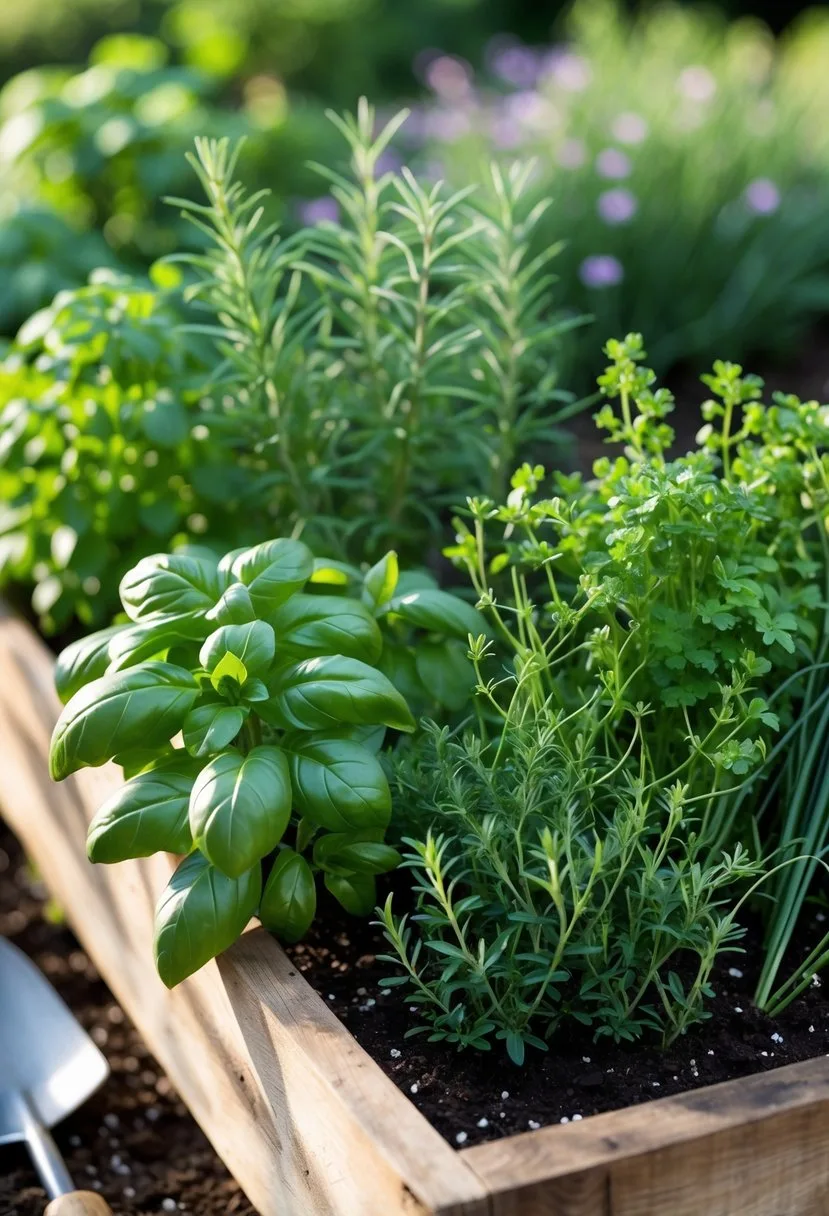
Mix herbs that fit your cooking style or garden space. Use pots for aggressive growers like mint or fennel so they don’t crowd out the rest.
Watch out for strong chemicals from certain plants and different water needs. That way, every herb gets a fair shot.
Key Takeaways
- Group herbs by similar light and water needs for easier care.
- Use containers to control invasive or incompatible herbs.
- Match herb pairings to your cooking and garden space.
Herb Companion Planting Basics
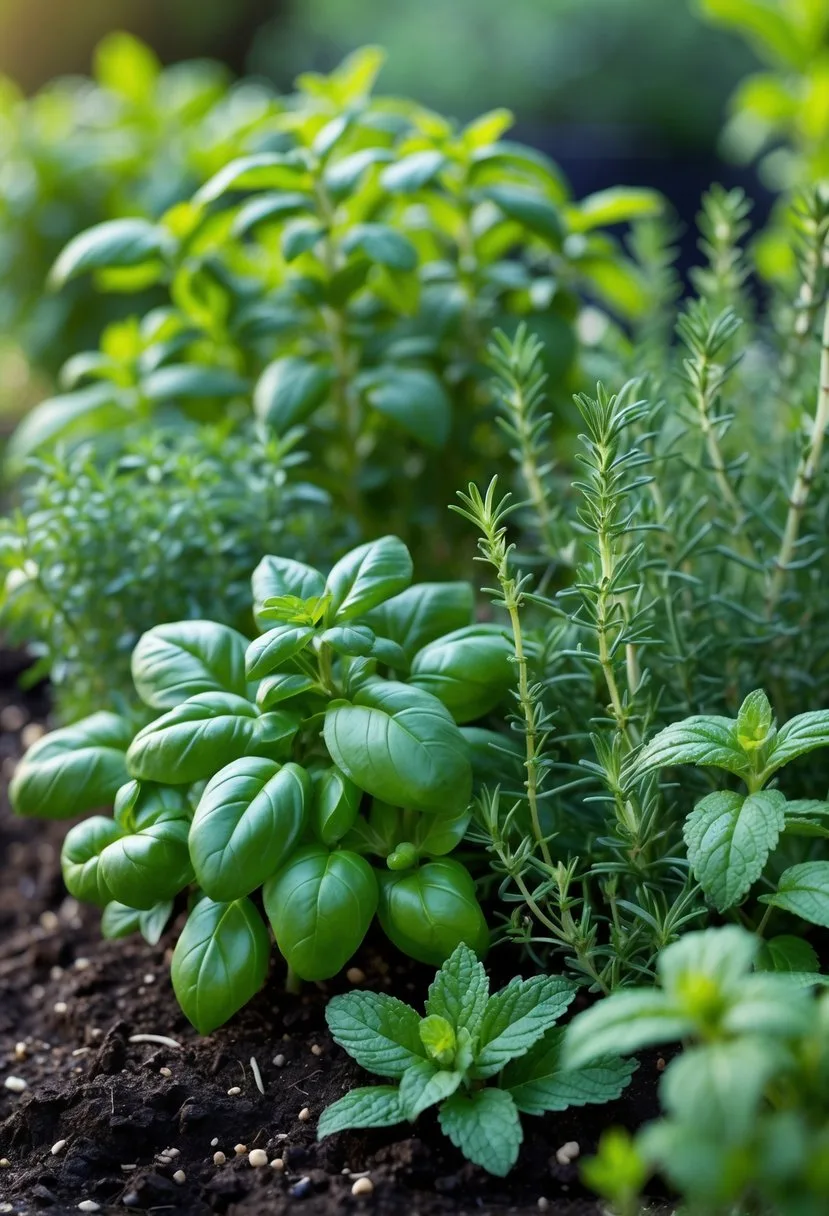
Try to group herbs by sunlight, water, and growth habits. Keep strong-smelling or spreading herbs apart if they compete for space or draw pests.
Understanding Herb Compatibility
Compatibility really comes down to light, water, and root behavior. Plant sun-lovers like basil, rosemary, and thyme together—they want 6–8 hours of sun and well-drained soil.
Shade-tolerant herbs like cilantro and parsley do better in cooler, partly shaded spots with a bit more moisture.
Check root habits. Shallow-rooted herbs (like chives and oregano) get along well with deeper-rooted ones (like dill). Upright plants (like sage) won’t shade out low-growers (like thyme) if you plan the layout.
Definitely avoid planting allelopathic or invasive herbs, like fennel or mint, near delicate neighbors.
General Rules for Planting Herbs Together
Stick to the basics: match light and water needs, control spreaders, and give each plant enough space.
- Group by light: full sun vs partial shade.
- Group by water: drought-tolerant (rosemary, lavender) vs moisture-loving (cilantro, parsley).
- Use containers for runners: keep mint and lemon balm in pots to stop them taking over.
- Space by mature size: basil needs 8–12 inches, rosemary 2–3 feet.
- Rotate or replace annuals each year to dodge soil-borne pests.
Label your beds and jot down notes on what works. It makes adjusting things next year way easier.
Common Mistakes to Avoid
Don’t mix herbs with totally different needs. Things go south fast: wilting, bad flavor, or pests.
Here are some classic missteps:
- Planting sun and shade lovers together.
- Letting mint roam without a barrier.
- Crowding plants—crowded herbs get mildew and weak stems.
- Pairing annuals with perennials without a plan.
- Growing allelopathic plants (like fennel) near sensitive herbs such as basil or cilantro.
Check your plants every week for stress. Move or thin them early—small fixes now save headaches later.
Best Herb Combinations
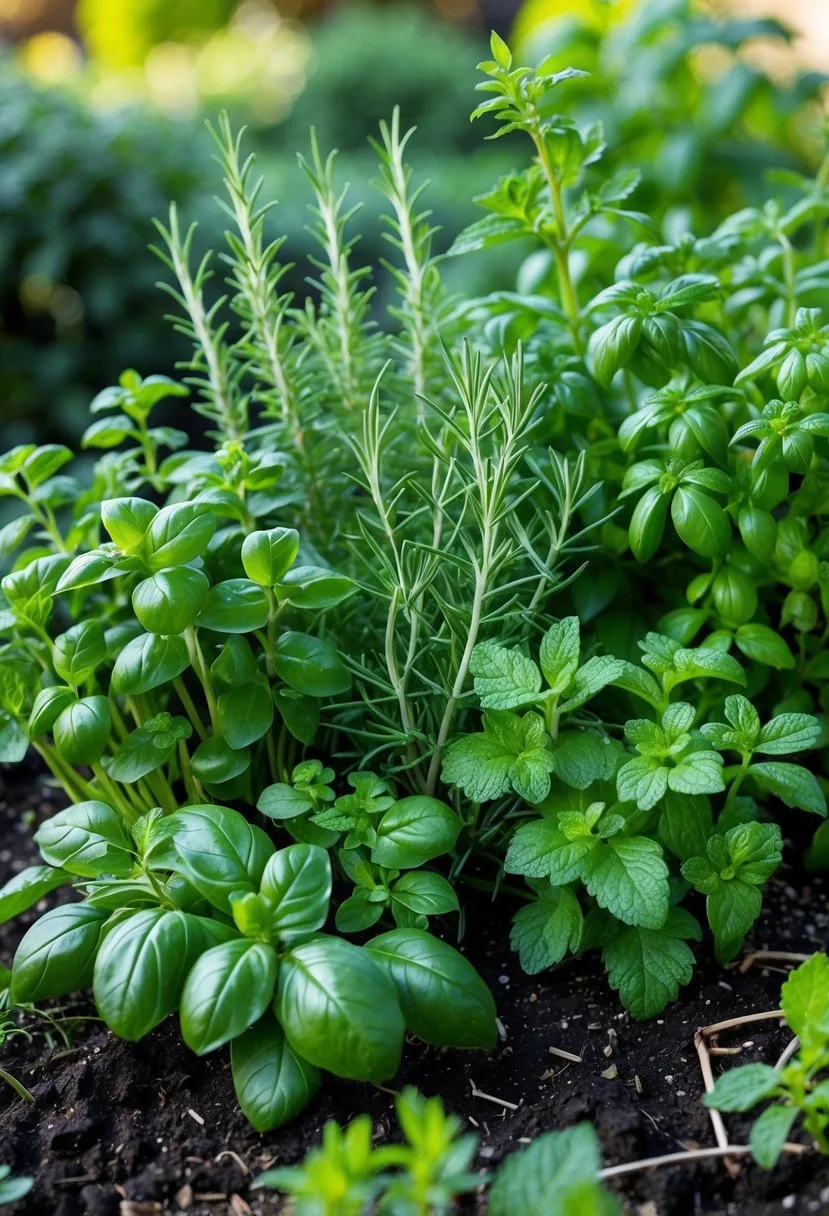
Plant herbs that like the same water, sun, and soil. Grouping this way just makes life easier and keeps everything healthier.
Classic Herb Pairings
Basil and tomato-friendly herbs are a classic combo. Basil loves full sun and regular water, so plant it with parsley or chives near tomatoes to boost flavor and shade the roots.
Don’t pair basil with rosemary—rosemary likes it much drier.
Rosemary and thyme are low-water buddies. Stick them together in a sunny, well-drained bed or even a rock garden. They both handle heat and poor soil without fuss.
Mint’s best in containers. It spreads like crazy and will crowd out other herbs if you let it loose. Mint and lemon balm do well together in a pot—they both like moist soil and you keep their roots in check.
Herbs That Thrive When Planted Together
Match herbs by water and sun needs for the best results. Mediterranean herbs—rosemary, oregano, thyme, and sage—love sunny, dry spots with gritty soil.
Leafy, moisture-loving herbs like parsley, cilantro, and basil do better together in richer soil with steady watering. They grow fast and won’t crowd out deep-rooted plants.
Herbs like dill, fennel, and cilantro attract pollinators. Plant them near your veggies to bring in helpful insects and improve pollination.
Examples of Productive Herb Groupings
Try these combos and tweak them for your own space:
- Mediterranean mix (full sun, dry): rosemary, thyme, oregano, sage.
- Moist-shade mix (partial sun, regular water): parsley, chives, cilantro, tarragon.
- Container combo (pots, regular water): mint + lemon balm; or basil + chives in a bigger pot.
- Pollinator patch (edge of veggie beds): dill, fennel, coriander.
Label pots and beds so you remember which needs what. Rotate fast-growers like basil every year to keep soil healthy.
Herbs That Should Not Be Planted Together
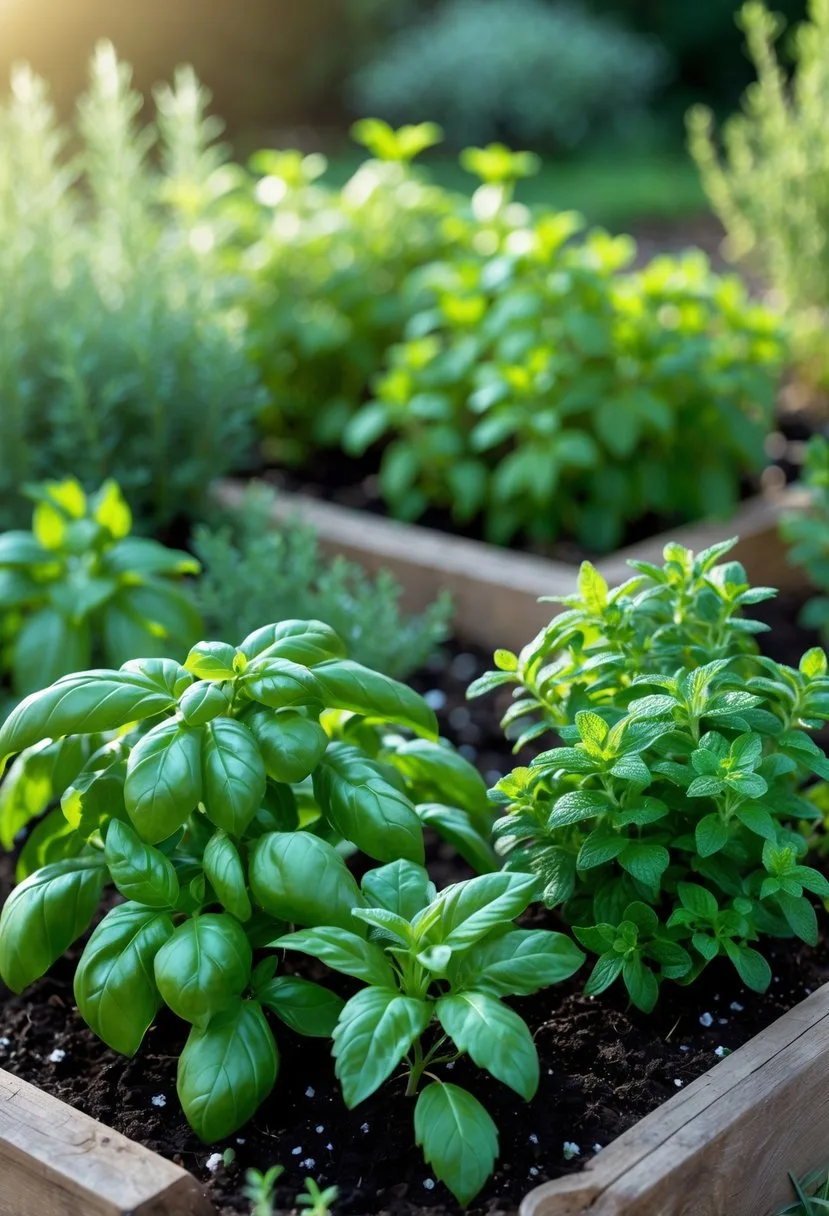
Some herbs just don’t get along—they’ll stunt each other, spread disease, or mess with flavors. You need to separate aggressive growers, allelopathic types, and those with totally different needs.
Incompatible Herb Pairings
Some pairs are just a bad idea: mint with most herbs, fennel with basil or cilantro, and dill near carrots.
Mint spreads by runners and will quickly crowd out chives, parsley, and thyme. Fennel releases chemicals that mess with the growth and flavor of nearby herbs like basil and cilantro.
Dill can attract pests that also go after carrot-family plants and may mess with the scent or cause bolting in nearby tender herbs.
Here’s a simple cheat sheet for problem pairs:
- Mint × chives, parsley, thyme
- Fennel × basil, cilantro, dill
- Dill × carrots, fennel
- Cilantro × fennel (flavor and growth issues)
Plant these in separate containers or distant beds to avoid shading, root crowding, or flavor loss.
Reasons to Separate Certain Herbs
Separate herbs for three main reasons: root competition, allelopathy, and different care needs.
Root competition happens when fast-spreaders like mint and oregano hog the water and nutrients. Allelopathy is when one herb releases chemicals that slow or stop another’s growth—fennel’s a classic culprit.
Some herbs just want different soil moisture or temperature. Lemongrass and rosemary like it dry, while basil and cilantro want steady moisture. If you mix them, one will always lose out.
Managing Competition and Allelopathy
Control aggressive herbs by using containers, root barriers, or raised beds. Sink mint’s pot into the soil or keep oregano and lemon balm in their own planters.
For allelopathic herbs like fennel, give them at least 3–4 feet of space or a separate bed.
Adjust watering and soil to fit each group. Put rosemary and sage in the dry section. Keep basil, parsley, and cilantro together where it stays moist.
Rotate herbs yearly and remove dead foliage to cut down on disease and chemical buildup in the soil.
Climate and Growth Requirements
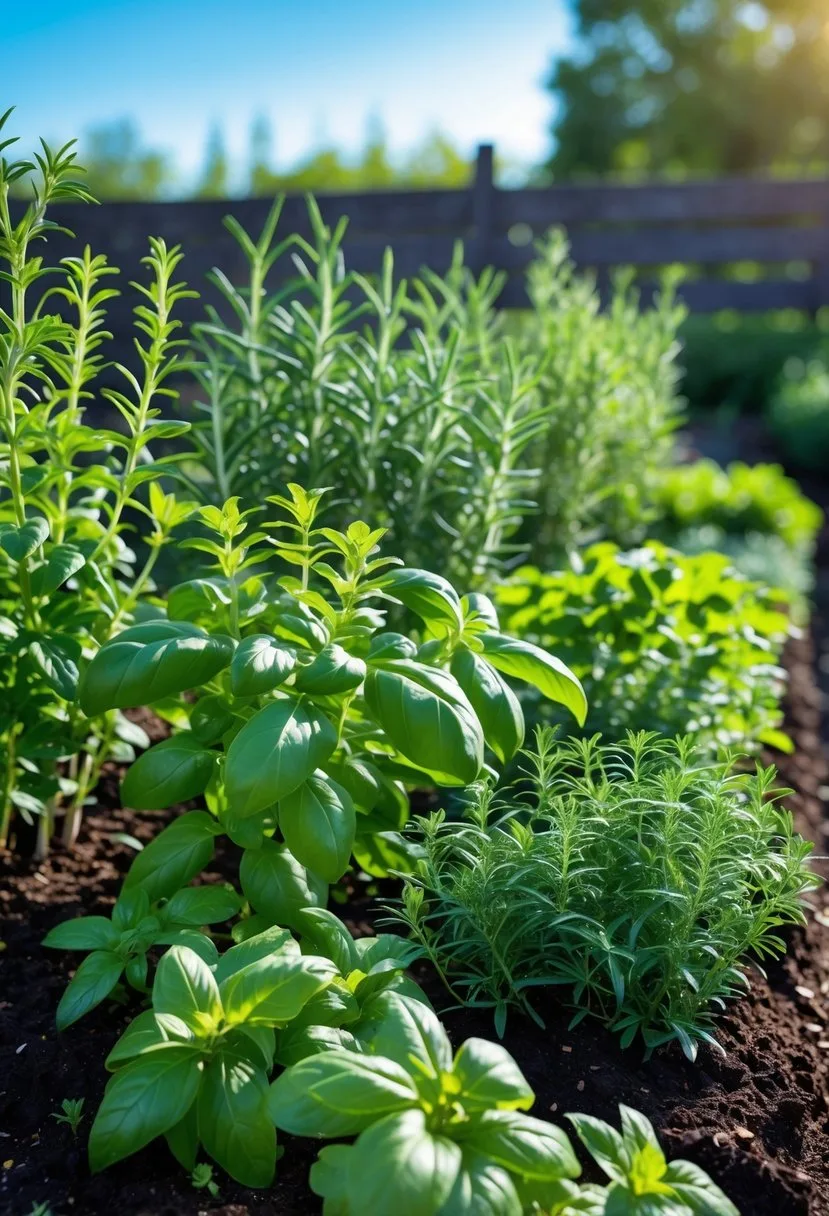
Match herbs based on sun, water, and soil needs so you don’t end up overwatering rosemary or crowding basil with thyme. Pair plants with the same light, irrigation, and soil pH to keep things healthy and reduce pest issues.
Sun and Shade Preferences
Most Mediterranean herbs—rosemary, thyme, oregano, and sage—want at least 6–8 hours of direct sun daily. Plant them together on the south or west side of your garden or in the sunniest container.
Tender annuals like basil, cilantro, and dill prefer 4–6 hours of sun and some afternoon shade when it’s hot. Give them morning sun and shield them from late-day heat to stop bolting.
Leafy herbs like parsley and chives handle light shade and do fine with 3–5 hours of sun. When mixing, put shade-tolerant herbs where they’ll get filtered light from taller, sun-loving herbs.
Watering Needs
Dry-soil herbs—rosemary, lavender, and thyme—like infrequent, deep watering and fast drainage. Let the top 1–2 inches of soil dry before watering again.
Moisture lovers—mint, parsley, cilantro, and basil—need regular water to keep soil moist but not soggy. In warm weather, check soil daily and water when the top inch dries out.
Group dry-soil herbs in raised beds or containers with gritty, fast-draining mix. Put moisture lovers in heavier, organic-rich soil or their own container with regular watering.
Soil and Fertility Matching
Most kitchen herbs like a neutral to slightly alkaline pH (6.0–7.5), but a few are pickier. Lavender and rosemary lean alkaline and need very well-draining, low-fertility soil. Skip the rich compost for these.
Basil, cilantro, and parsley want richer, loamy soil with steady organic matter and moderate fertility. Give them a balanced fertilizer every 4–6 weeks during high growth.
Test your soil for pH and nutrients. If you have herbs with very different needs, use separate containers or create soil zones—one side gritty and lean, the other richer and more moisture-holding.
Designing a Mixed Herb Garden
Pick plants that share light and water needs, keep aggressive types in check, and group herbs by how you use and harvest them.
Planning Your Herb Layout
Check your sun exposure first. Put Mediterranean herbs like rosemary, thyme, oregano, and lavender in the sunniest, driest spots.
Basil, parsley, cilantro, chives, and dill do better with partial shade and regular water.
Place tall or bushy herbs (rosemary, sage) at the back or center so they don’t block light from smaller plants (basil, thyme). Keep spreaders—mint, lemon balm, fennel—in pots or isolated beds. Leave 8–18 inches between plants, depending on size.
Try a simple grid or circular beds. Label each plant and note watering needs on a stake. It’s a small thing, but it helps you water right and harvest at the best time.
Using Containers for Mixed Herbs
Pick containers with drainage holes and at least 8–12 inches of depth for most herbs. Use a well-draining potting mix and toss in some perlite for rosemary and thyme.
For moisture lovers, use a mix that holds water better.
Group compatible herbs in one pot: Mediterranean types together, moisture lovers together. Never put mint or lemon balm with others in the same container. If you want flexibility, use individual pots on a tray.
Water containers more often than beds. Feel the soil—water when the top inch is dry for most herbs, but wait longer for dry-soil types. Rotate pots so every plant gets its share of sun.
Herb Companion Planting for Pest Management
Planting the right herbs together can keep pests down and attract helpful insects. You can use these practical pairings and tricks to cut pest problems without reaching for chemicals.
Natural Pest Repellents
Some herbs have scents that drive pests away. Plant basil near tomatoes—tomato hornworms and whiteflies really hate it.
Put mint in pots or along the garden edge to repel ants and flea beetles. Don’t let mint loose, though; it’ll take over before you know it.
Rosemary and sage work well near brassicas and beans. Their strong aromas help keep cabbage moths and bean beetles at bay.
Clump these repellent herbs in small groups beside vulnerable crops. Scattering them everywhere isn’t as effective.
Crush a few leaves on hot days to amp up the scent. Change up where you plant them each year—pests can get wise to the same setup.
Attracting Beneficial Insects
Some herbs actually attract predators and pollinators that help keep pests in check. Dill, fennel, and cilantro have those umbrella-shaped flowers that draw in ladybugs, lacewings, and parasitic wasps.
These good bugs eat aphids, caterpillars, and other garden troublemakers. Place flowering herbs in sunny spots close to crops that need protecting.
If you stagger bloom times with early and late varieties, beneficial insects will stick around for food all season. Skip the heavy pesticides—they wipe out the helpful bugs, too.
A small water dish and some low-growing plants give these insects shelter. That makes them more likely to hang around your garden.
Harvesting and Ongoing Care for Mixed Herbs
Pick herbs when the leaves are dry and plants are actively growing. Early morning, after the dew’s gone, gives you the best flavor and scent.
Grab sharp scissors or pruning shears and cut stems above a set of leaves. That way, you’ll get bushier growth.
Harvest often to keep culinary herbs like basil and mint from flowering. Pinch off flower buds—once they bloom, the leaves lose some punch.
Watering needs change depending on the mix. Mediterranean herbs like rosemary and thyme want drier soil, but parsley and cilantro are thirstier.
Touch the soil—if the top inch feels dry, it’s time to water for most herbs. Feed with a balanced, water-soluble fertilizer about once a month during the growing season.
Don’t overdo it with rosemary and thyme; they’re fine with leaner soil. Check leaves every week for spots, holes, or sticky residue.
If you spot problems, remove those leaves and try insecticidal soap or neem oil. Here’s a quick chart for harvesting and care:
| Herb type | When to harvest | Water need |
|---|---|---|
| Basil, mint, parsley | Before flowering; regular harvests | Moderate–High |
| Rosemary, thyme, oregano | Trim year-round; avoid heavy pruning in winter | Low–Moderate |
| Cilantro, dill | Harvest leaves early; cut whole stems for seeds | Moderate |
Every year or two, divide herbs that are getting crowded. Repot container herbs or thin out beds to keep roots healthy and airflow moving.
Frequently Asked Questions
You’ll find which herbs share light, water, and soil needs, plus some practical pairings for pots, indoors, raised beds, and which ones to keep apart. The answers give you quick combos and care tips you can actually use.
Which herbs flourish when planted together in containers?
Basil, parsley, and chives get along well in a sunny container with well-draining potting mix. They all want regular watering, but don’t drown them.
Thyme and oregano make a solid pair in a shallow pot—they like drier, leaner soil and loads of sun. Mint? Always in its own pot, or you’ll regret it.
What are ideal herb pairings for indoor gardens?
Basil and cilantro do fine on a bright windowsill—give them at least six hours of sun and steady moisture. Rotate the pot so both get their share of light.
Mint and lemon balm handle lower light and grow together on a kitchen counter. Keep them trimmed and let the air circulate.
Can you provide a guide to herb companion planting?
Group herbs by light needs—full-sun types like rosemary, sage, and lavender belong together. Moisture-lovers like basil and parsley do better with richer soil and their own group.
Don’t pack them in too tight. Airflow matters; it helps prevent disease.
Taller herbs like dill and fennel should go at the back of beds or containers so they don’t shade out the little guys.
Which herbs are suitable for co-planting in raised garden beds?
Rosemary, thyme, and oregano make a good Mediterranean trio in raised beds with fast-draining soil. They all have deep roots and don’t need much water.
Parsley, chives, and cilantro can share another spot—they want more moisture and richer soil. Mint only goes in a buried pot, or it’ll creep everywhere.
Are there any herbs that should not be planted in close proximity?
Keep fennel away from basil, cilantro, or parsley. It releases chemicals that slow their growth, which is just rude.
Also, separate mint from most other herbs unless it’s in a container. Otherwise, it’ll muscle in and hog all the space and nutrients.
What are some favorable herb combinations for garden synergy?
Basil works wonders with tomatoes and chives. It boosts flavor and helps keep pests away if you plant it nearby.
Just don’t crowd the basil against the tomato plants; give them a little breathing room.
Sage, rosemary, and lavender form a tough, drought-loving trio. They draw in pollinators and pretty much shrug off most pests.
Parsley plays well with carrots and chives. It handles shade and helps deter unwanted bugs.

Jen Moser is a skilled kitchen and bath designer at Wisconsin Building Supply in Appleton, WI, and the author behind the expert remodeling and design content on Vivyro.com. With years of hands-on experience in residential cabinetry, layout planning, and functional aesthetics, she shares practical tips, innovative ideas, and inspiring transformations to help homeowners create beautiful, efficient kitchens and bathrooms that suit their lifestyle and budget.
As the creative voice of Vivyro.com, Jen draws from her professional expertise to offer step-by-step guidance, trend insights, and real-world solutions for remodeling projects. Her approachable, detail-oriented style empowers DIY enthusiasts and homeowners alike to achieve professional-quality results in their own spaces.