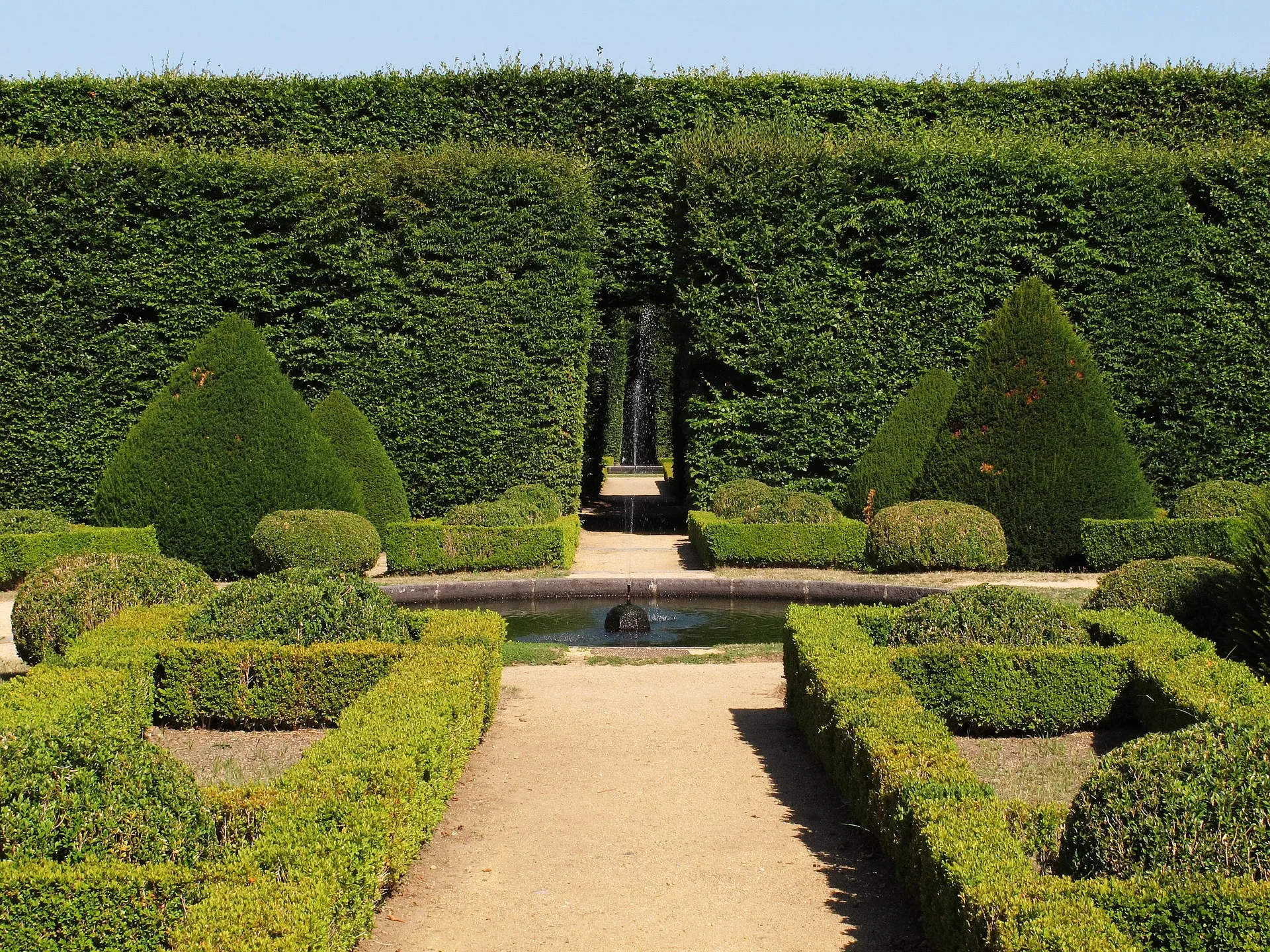
There is something effortlessly beautiful about a French garden. It can feel polished without being stiff, romantic without looking overly decorated, and luxurious without requiring a huge budget.
The secret isn’t filling your backyard with expensive furniture or rare plants. French-inspired gardens rely on structure, repetition, symmetry, weathered materials, soft colors, and carefully chosen details.
Whether you have a large backyard, a narrow side garden, or a small patio, you can borrow these ideas to create an outdoor space that feels elegant, timeless, and distinctly European.
1. Create a Formal Garden Axis
One of the easiest ways to make a backyard feel more sophisticated is to give it a clear visual axis. Instead of allowing paths, plants, and furniture to appear randomly placed, create a line that naturally draws the eye toward a focal point.

This could lead from your back door toward a fountain, garden bench, sculpture, mature tree, or beautiful planting bed.
The axis doesn’t need to be perfectly symmetrical in a residential garden. Even a simple straight pathway with matching planting beds on either side can immediately make the landscape look more intentional.

For a smaller yard, use a narrow gravel path rather than a wide paved walkway. The strong line creates the same sophisticated effect without taking up too much space.
2. Frame the Garden With Boxwood
Boxwood is one of the classic plants associated with formal European gardens because it creates crisp, architectural edges.

Use it to outline pathways, define flower beds, surround a fountain, or create geometric shapes within a lawn.
You don’t have to create elaborate parterres to get the effect. A simple rectangular bed edged with clipped greenery can look remarkably expensive.

If boxwood isn’t suitable for your climate, consider other locally adapted plants that tolerate regular trimming and naturally form a dense, neat border.
3. Add a Weathered Stone Fountain
Few features create a French garden atmosphere faster than a fountain.
Aged stone, limestone, or a weathered-looking concrete fountain can become the central focal point while adding movement and the gentle sound of water.

The fountain doesn’t need to be enormous. In fact, an oversized fountain can overwhelm a small backyard.

Choose a scale that leaves breathing room around the feature. Surround it with clipped greenery, lavender, roses, or low flowering plants to make it feel integrated rather than simply placed in the middle of the yard.
4. Use Gravel Instead of Ordinary Paving
Loose gravel is one of the simplest ways to introduce a French countryside feel.

It has a softer appearance than concrete and works beautifully with stone walls, greenery, vintage furniture, and informal flower planting.
Use gravel for pathways, seating areas, or even an entire small courtyard.

For walking areas, choose appropriately sized angular or compactable gravel that stays relatively stable underfoot. A properly prepared base and edging are also important because they prevent the gravel from gradually spreading into lawns and planting beds.
5. Plant Lavender Along the Path
Lavender instantly brings the feeling of a French countryside garden, particularly when planted in generous groups.

Rather than scattering individual plants throughout the yard, plant several together to create a stronger visual rhythm.
Plant lavender along pathways, around seating areas, or beside sunny walls where it can receive plenty of light.

Before planting, check whether your local climate and soil suit the particular lavender variety. Lavender generally dislikes constantly wet soil, so drainage is more important than simply adding more water.
6. Grow Roses Over an Arched Entrance
A rose-covered arch can make even a modest backyard entrance feel theatrical.
Position an arch at the beginning of a garden path or between two outdoor spaces so that it acts as a transition rather than simply a decorative object.

Choose climbing roses that suit your climate and provide a sturdy support structure from the beginning.
The most beautiful arches often aren’t perfectly covered. Allowing some of the structure to remain visible gives the garden a more natural, established character.

7. Create a Small Parterre Garden
If you want your backyard to look distinctly French, consider a simplified parterre.
Traditional parterres use geometric planting patterns, often outlined with clipped greenery. You don’t need to recreate an elaborate château garden to capture the idea.

For a residential version, create two or four symmetrical planting beds around a central lawn, pathway, or focal point.
Keep the pattern simple. Repeating the same shape and plant palette usually looks more luxurious than squeezing too many different designs into a small area.
8. Choose an Antique-Style Garden Bench
A garden bench gives the landscape somewhere to pause and admire the planting.

Look for designs with aged wood, wrought iron, painted metal, or stone-like finishes that appear as though they’ve been part of the garden for years.
Place the bench somewhere with a view rather than simply pushing it against a wall.

A bench facing a fountain, flowering border, mature tree, or garden axis becomes a destination within the landscape.
9. Mix Roses With Soft Cottage Flowers
French gardens can be formal in structure while remaining romantic in their planting.

Combine roses with plants that have softer shapes and different flowering seasons to keep the garden from feeling overly rigid.
Good combinations might include roses, lavender, salvias, foxgloves, catmint, hydrangeas, or other plants suited to your growing conditions.

Think about height as well as color. Taller plants toward the back and lower edging plants toward the front create depth without requiring an enormous garden.
10. Add Espalier Trees Against a Wall
An espalier-trained tree can turn a plain garden wall into a living architectural feature.
Fruit trees are particularly charming because their flowers can provide spring interest before the fruit develops later in the season.

Apple and pear trees are commonly trained this way, although the best choice depends on your climate.
The key is patience. Espalier takes regular training and pruning, but the result is highly structured and surprisingly space-efficient.
11. Install Wrought-Iron Garden Lighting
Lighting can completely change the atmosphere of a garden after sunset.

Instead of using many bright fixtures, choose a restrained collection of lanterns or warm-toned garden lights that highlight pathways, trees, walls, and architectural features.
Avoid lighting every plant equally. Selective illumination creates shadows and depth, which generally feels more sophisticated.

Keep outdoor electrical installations weather-rated and have permanent wiring installed according to local electrical requirements.
12. Use Stone Pots and Urns as Accents
Large planters and urns are useful when you want to introduce symmetry without rebuilding the entire landscape.

Place matching containers at an entrance, on either side of a pathway, or beside a staircase.
You can fill them with clipped evergreens for a formal look or soften them with trailing flowers.

For the most convincing effect, avoid placing too many decorative containers everywhere. A few substantial pieces usually have more visual impact than a collection of small pots.
13. Add a Romantic Outdoor Dining Area
A French-inspired garden should feel like somewhere you actually want to spend time.
Create a small dining area with a simple table, comfortable chairs, linen textiles, and plenty of greenery nearby.

A weathered wooden table can look just as beautiful as an expensive designer set when surrounded by thoughtful planting.
Position the dining area beneath a tree, pergola, or climbing plant where possible. The overhead layer makes the space feel more intimate.
14. Paint a Garden Gate in a Muted Color
A garden gate is a small feature that can make a surprisingly large difference.

Instead of bright white or glossy black, consider muted shades such as dusty green, soft gray, faded blue, or warm charcoal.
The slightly aged appearance works particularly well with stone, gravel, climbing roses, and weathered wood.

If you’re repainting an existing metal gate, use an exterior-rated coating appropriate for the material and prepare the surface properly first.
15. Let the Garden Look Slightly Aged
The most convincing French gardens don’t look as though everything was purchased yesterday.
Introduce materials that develop character over time: aged terracotta, weathered stone, old-looking metal, natural wood, gravel, and climbing plants.

This doesn’t mean allowing the garden to become neglected. The goal is controlled imperfection—formal structure combined with plants and materials that feel established.
That contrast is one of the reasons French-inspired gardens can look expensive without appearing overly polished.
How to Make a French Garden Look Expensive on a Budget
You don’t need to renovate the entire backyard at once.
Start by establishing one strong feature, such as a straight gravel path, symmetrical planting beds, or a small fountain. Then repeat a few materials and colors throughout the garden.
For example, use the same gravel around a pathway and seating area, repeat clipped greenery along multiple borders, and echo one flower color in different parts of the yard.
This repetition makes inexpensive elements feel intentional.
Choose a Limited Color Palette
A sophisticated garden usually benefits from restraint.
Try combining green foliage with soft white, lavender, blush pink, dusty blue, or muted yellow rather than planting every available flower color.
The exact palette can vary, but repeating colors throughout the garden creates visual continuity.
Don’t Overdecorate
French garden style isn’t about filling every empty corner with ornaments.
Leave some areas intentionally quiet. A simple lawn bordered by clipped greenery can provide more elegance than a crowded collection of statues, pots, signs, and accessories.
Focus on Structure First
Plants change throughout the year, but the garden’s underlying structure remains.
Invest your initial effort in paths, borders, seating areas, walls, hedges, and focal points. Once those elements are established, seasonal flowers can be changed without redesigning the entire backyard.
Best Plants for a French-Inspired Garden
The ideal plant palette depends heavily on your climate, soil, sunlight, and water availability.
Popular French-inspired choices include:
- Lavender
- Roses
- Boxwood or suitable alternatives
- Hydrangeas
- Climbing plants
- Fruit trees
- Salvias
- Catmint
- Herbs
- Ornamental grasses
- Seasonal annual flowers
Don’t choose plants simply because they appear in photographs of French gardens. A beautiful plant that struggles in your climate will require more maintenance and may never produce the lush appearance you’re trying to achieve.
Final Thoughts
A beautiful French garden is less about copying a particular château and more about capturing the feeling of deliberate elegance.
Use strong geometry, restrained colors, gravel paths, clipped greenery, romantic flowers, weathered materials, and one or two memorable focal points.
Most importantly, design the garden for real life. Add somewhere to sit, create a comfortable dining area, provide useful lighting, and choose plants you can realistically maintain.
When structure and softness work together, even an ordinary backyard can take on the romantic, collected character of a timeless French garden.