A sofa is usually the largest piece of furniture in a living room, so getting it right can completely change how the space looks and feels. The best modern sofas aren’t simply beautiful—they are comfortable enough for everyday life, proportioned correctly for the room, and versatile enough to survive changing decorating trends.
Modern sofa design has moved well beyond the rigid, boxy furniture associated with minimalist interiors. Today, you can find softly curved silhouettes, deep lounge seating, tailored modular designs, natural fabrics, sculptural shapes, and classic neutral colors that feel contemporary without looking dated.
If you’re replacing an old sofa or furnishing a living room from scratch, these 10 modern sofa ideas will help you choose a piece that looks stylish today while still making sense years from now.
1. Choose a Soft Curved Sofa
Curved sofas bring an immediate sense of softness to a modern living room. Their rounded backs and flowing silhouettes can make a space feel less rigid, especially when the rest of the furniture has straight edges.

A curved sofa works particularly well in open-plan rooms because it creates a subtle visual boundary without completely closing off the space. It can also become a natural conversation area when positioned opposite two occasional chairs.

Make the shape practical
Before buying one, measure the sofa’s widest points rather than relying only on the listed width. Curved furniture can occupy more visual and physical space than a similarly sized rectangular sofa.
Keep the surrounding furniture relatively simple so the curved silhouette remains the star. A round coffee table can reinforce the shape without making the room feel overly coordinated.
2. Try a Deep-Seated Lounge Sofa
If comfort is your priority, a deep sofa can transform the living room into a genuine place to relax rather than simply a room that looks good.

Deep seats give you room to curl up, stretch out, or sit casually with your feet tucked underneath you. They’re particularly appealing in family rooms and relaxed contemporary interiors.

Check the seat depth carefully
A deeper seat isn’t automatically more comfortable for everyone. Shorter users may find their feet don’t reach the floor comfortably.
If multiple people will use the sofa, sit on a similar-depth model in person whenever possible. Comfort depends on seat height, cushion firmness, depth, and back angle—not depth alone.
3. Go for a Timeless Neutral Sofa
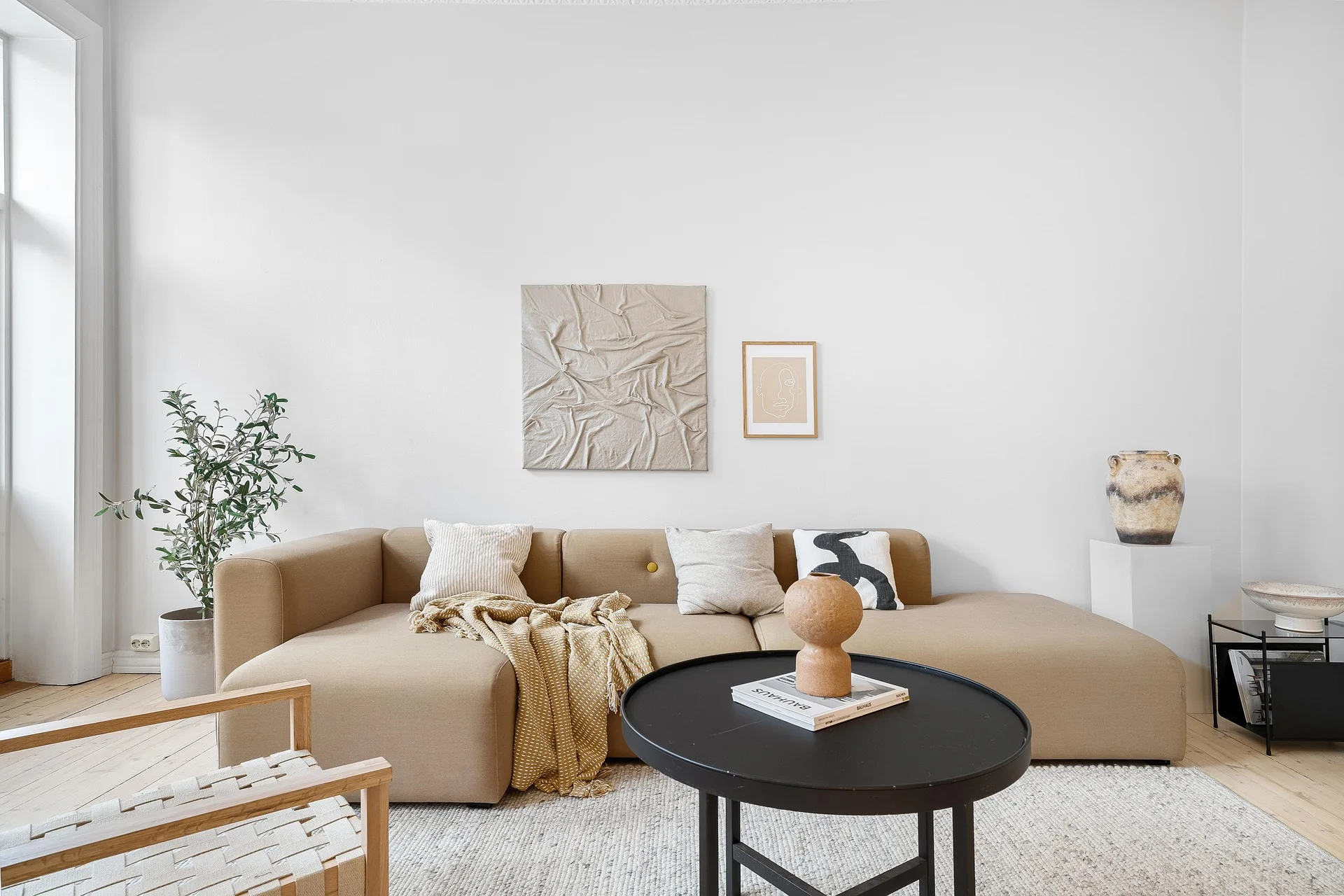
A neutral sofa is one of the safest choices if you like changing your décor regularly. Shades such as warm ivory, oatmeal, beige, taupe, and soft gray can work with numerous color palettes.

Instead of relying on the sofa itself to provide all the visual interest, use cushions, throws, artwork, rugs, and accent chairs to introduce seasonal or personal color.

Don’t choose neutral blindly
Look at fabric samples in the actual room before ordering. A beige that appears warm in a showroom may look gray or yellow under your home’s lighting.
Also consider how the fabric will behave with children, pets, food, and everyday use. A beautiful light sofa is only a good choice if you’re comfortable maintaining it.
4. Add a Low-Profile Sofa
Low-profile sofas create a relaxed, architectural appearance by sitting closer to the floor. Their horizontal proportions can make a modern room feel grounded and visually uncluttered.

They work especially well with large windows, open floor plans, contemporary architecture, and low furniture arrangements.

Think about the entire room
A low sofa pairs best with other furniture that respects its scale. A very tall coffee table or oversized high-back chair can make the seating arrangement feel unbalanced.
If getting up from a low seat is difficult, choose a slightly higher model rather than sacrificing everyday comfort for appearance.
5. Consider a Modular Sofa
Modular sofas are designed around separate sections that can be arranged in different configurations. This makes them particularly useful when a room needs flexibility.

You might create an L-shaped arrangement today and rearrange the modules later if the room’s purpose changes. Some designs can also accommodate chaise sections or additional seats.

Measure beyond the sofa
Don’t just measure the wall. Check doorways, staircases, elevators, hallways, and tight corners before ordering.
One of the biggest furniture-buying mistakes is discovering that a perfectly sized sofa for the living room cannot physically get through the front door.
6. Bring in a Textured Bouclé Sofa
Bouclé remains popular because its nubby texture adds warmth to otherwise simple modern furniture. A sculptural sofa upholstered in this material can make a neutral room feel considerably richer without introducing a bold color.

The texture is especially effective in rooms dominated by smooth surfaces such as glass, polished stone, metal, or sleek cabinetry.

Use it strategically
Because textured upholstery already attracts attention, keep the surrounding palette restrained. Pair it with natural wood, wool rugs, linen curtains, or subtle stone surfaces.
Before purchasing, check the manufacturer’s cleaning instructions and durability information. Texture can look beautiful while still requiring more careful maintenance.
7. Choose a Modern Leather Sofa
Leather can give a modern living room a sophisticated foundation without making it feel overly formal. Contemporary leather sofas often use slimmer arms, cleaner lines, and softer cushions than traditional leather furniture.

Brown, cognac, tan, and deep neutral shades can introduce warmth into rooms filled with white, cream, gray, or natural wood.

Think about how leather ages
One advantage of quality leather is that it can develop character over time. However, different leather finishes behave differently, so don’t assume every leather sofa will age in exactly the same way.
Ask about the leather grade, protective finish, maintenance requirements, and warranty before making a substantial investment.
8. Use a Sculptural Sofa as the Room’s Focal Point
Sometimes the sofa can function almost like a piece of art. Sculptural designs with unusual arms, rounded corners, dramatic proportions, or architectural bases can give a simple living room a memorable identity.

This approach works best when the rest of the room is intentionally edited rather than filled with competing statement pieces.

Let one piece lead
If your sofa has a strong shape, resist the temptation to surround it with equally dramatic furniture.
Instead, use simple side tables, restrained artwork, and a subtle rug. The result feels curated rather than chaotic.
9. Try a Compact Apartment Sofa
Small living rooms don’t necessarily require uncomfortable furniture. A compact sofa with narrow arms and an efficient frame can provide generous seating without consuming the entire room.

Look for designs with a smaller overall footprint, elevated legs, and visually light proportions. These details can make the room feel more spacious.

Measure the walking space
Don’t plan your sofa around the empty rectangle on the floor. Consider how people will actually move through the room.
Leave comfortable circulation around major furniture and make sure doors, drawers, windows, and heating or cooling equipment remain accessible.
A slightly smaller sofa that leaves the room functional is usually a better investment than a huge one that makes every movement awkward.
10. Invest in a Classic Tailored Sofa
Trends come and go, but a well-proportioned tailored sofa can remain relevant for many years. Look for balanced arms, a comfortable seat, quality upholstery, and a silhouette that doesn’t depend on one particular trend.

A classic sofa also gives you freedom to change the room around it. You can replace the rug, paint color, artwork, or accent chairs without having to replace the main seating.

Spend money where it matters
If you’re investing in a sofa intended to last, pay attention to the frame construction, suspension, cushion filling, upholstery quality, and warranty—not just the appearance.
A sofa can look luxurious in photographs while feeling uncomfortable after 20 minutes. Whenever possible, test the actual model before committing to a major purchase.
How to Choose the Right Modern Sofa for Your Living Room
The right sofa should fit both your room and your lifestyle. Start with measurements, then think about how the furniture will actually be used.
A formal sitting room may benefit from a structured sofa, while a family room might need deep cushions and performance-oriented upholstery. A small apartment has completely different requirements from a large open-plan house.
Measure Before You Shop
Measure the wall where the sofa will sit, but also measure the room’s doors and access routes.
Record the maximum sofa width, depth, and height that can work. If you’re considering a sectional, map its footprint on the floor with painter’s tape before ordering.
This simple trick lets you see whether the sofa will overwhelm the room without moving heavy furniture.
Consider Sofa Seat Height
Seat height affects how the sofa feels as much as cushion softness does. A low sofa can look relaxed and contemporary, while a higher seat can be easier to get in and out of.
Think about who will use the sofa most frequently. A design that looks perfect online may be uncomfortable if its proportions don’t suit the people sitting on it.
Pick Upholstery Based on Real Life
A beautiful fabric isn’t necessarily the best fabric for every household. Consider pets, children, food, sunlight, and how frequently the sofa will be used.
Ask the retailer about cleaning codes, stain resistance, fabric composition, colorfastness, and replacement cushion covers before buying.
Don’t Forget the Sofa’s Frame
The hidden structure matters enormously. A sofa’s frame, joinery, suspension system, and cushion construction affect how it feels and how well it holds up over time.
When comparing expensive sofas, look beyond marketing descriptions and ask specific questions about the frame material, joinery, suspension, cushion filling, and warranty.
Match the Sofa to the Room’s Scale
A sofa can technically fit into a room and still look completely wrong because of its proportions.
Large rooms can usually accommodate deeper or longer designs, while smaller rooms benefit from narrower arms, raised legs, and visually lighter silhouettes.
Create a Balanced Seating Arrangement
A sofa rarely works alone. Think about the relationship between the sofa, coffee table, rug, side tables, chairs, and lighting.
The goal isn’t perfect symmetry. Instead, create enough visual weight on each side of the room that the sofa doesn’t look like an oversized object dropped into an otherwise empty space.
How to Make a Modern Sofa Look More Expensive
You don’t need an extravagant sofa to create a high-end living room. Styling and proportion often make a bigger difference than the price tag.
Start with a properly sized rug that anchors the seating arrangement. Add cushions in a few complementary textures rather than covering the sofa with too many decorative pillows.
A substantial coffee table, layered lighting, curtains hung at an appropriate height, and carefully selected artwork can make even a relatively simple sofa feel sophisticated.
Common Modern Sofa Buying Mistakes
One of the most common mistakes is choosing a sofa based entirely on appearance. Online photographs can hide seat depth, cushion firmness, arm height, and the actual scale of the piece.
Another mistake is buying the largest sofa that fits the wall. A sofa should leave enough room for circulation and other furniture rather than filling every available inch.
Finally, don’t ignore maintenance. A pale boucle sofa might be beautiful, but it may not be the most practical choice for a household with pets, young children, or frequent entertaining.
Are Modern Sofas Still Comfortable?
Absolutely. Modern design no longer means sacrificing comfort for clean lines.
Many contemporary sofas combine streamlined silhouettes with generous cushions, supportive foam or fiber blends, deep seats, and softer upholstery. The important thing is to judge comfort by the actual construction rather than the sofa’s appearance.
Final Thoughts
The best modern sofa ideas balance three things: style, comfort, and longevity.
A curved sofa can soften a room, a modular design can provide flexibility, a neutral tailored sofa can survive changing décor, and a textured or leather option can add personality.
Before buying, measure the room and access route, test the seating position, investigate the upholstery, and consider how the sofa will be used every day.
A sofa is too important to choose simply because it looks good in a photograph. Choose one that fits your space, supports your lifestyle, and still feels like something you’d happily sit on five years from now.
That is what turns a trendy living room into a comfortable, stylish, and genuinely timeless home.