You want your bed to feel anchored and the floor soft underfoot. For most king beds, a 9×12 rug hits the sweet spot for coverage and proportion. An 8×10 works in smaller rooms, and a 10×14 fits really big spaces.
Pick a rug that extends about 2–3 feet beyond the sides and foot of the bed. That way, you step onto something cozy instead of cold floor.
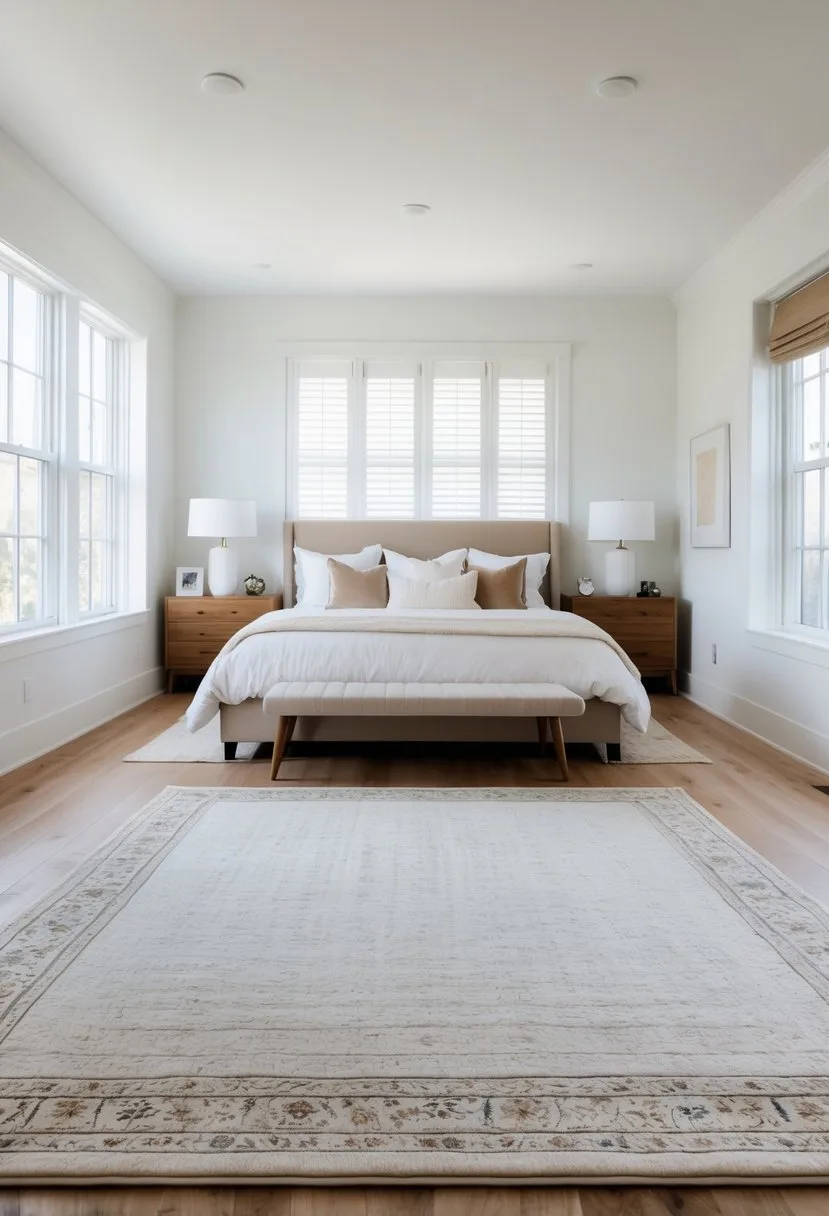
Room layout and furniture—think nightstands, dressers, walking space—change what size will actually work. Check out these quick rules, placement ideas, and common sizing mistakes so your rug looks and feels right.
Key Takeaways
- Choose a rug that extends 2–3 feet beyond the bed for comfort and balance.
- Use 9×12 for most king bedrooms, 8×10 for tighter rooms, and 10×14 if you’ve got lots of space.
- Consider furniture layout and walking paths when picking rug size.
Standard Rug Sizes for a King Bed
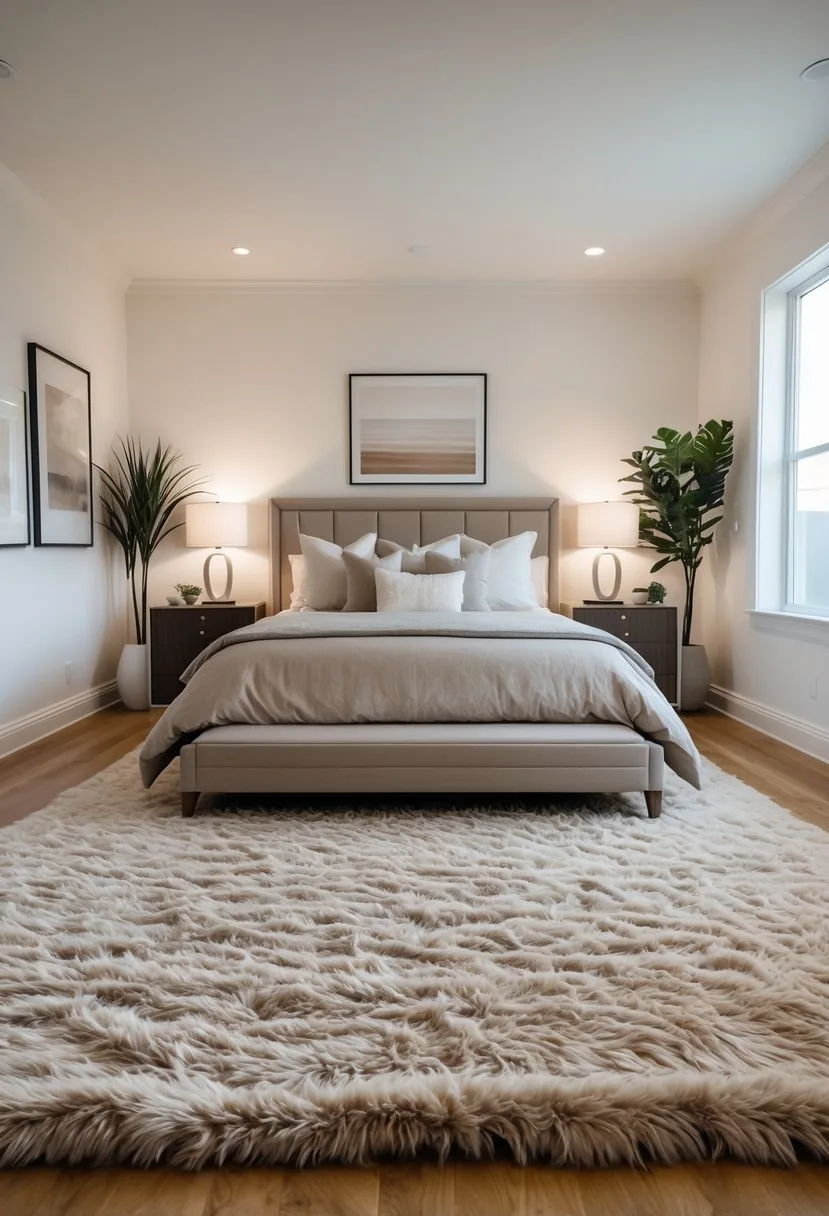
A rug should stretch beyond the bed edges and fit the room so furniture looks balanced. Grab a tape measure—check your bed, nightstands, and open floor before you buy.
Recommended Rug Dimensions
For a standard king (76″ × 80″), a 9×12 foot rug is usually the go-to. That gives you about 18–24 inches of rug showing on each side and at the foot if you start the rug just in front of the nightstands.
If your room’s tight, you can make an 8×10 work by pulling it forward so the lower two-thirds of the bed sit on it. For a California king (72″ × 84″), a 9×12 or 10×14 rug covers the sides and foot nicely.
If you use a bench or extra seating at the foot, add 12–18 inches of rug past those pieces. Don’t bother with rugs smaller than 6×9 under a king—they just look lost and leave too much floor exposed.
Common Rug Placement Techniques
Place the rug so its top edge sits just under the nightstand legs or starts 6–12 inches in front of them. That way, the rug feels anchored and you get something soft underfoot when you get up.
You can also center a 9×12 so the bed sits fully on the rug with equal space on both sides. If your room’s narrow, try two 3×5 or 4×6 runners—one on each side. Make sure each runner goes from the bed foot to about 2 feet past where you step down.
Always use rug pads to keep things from slipping and to help your rug stay flat in busy spots.
Choosing the Right Rug Size
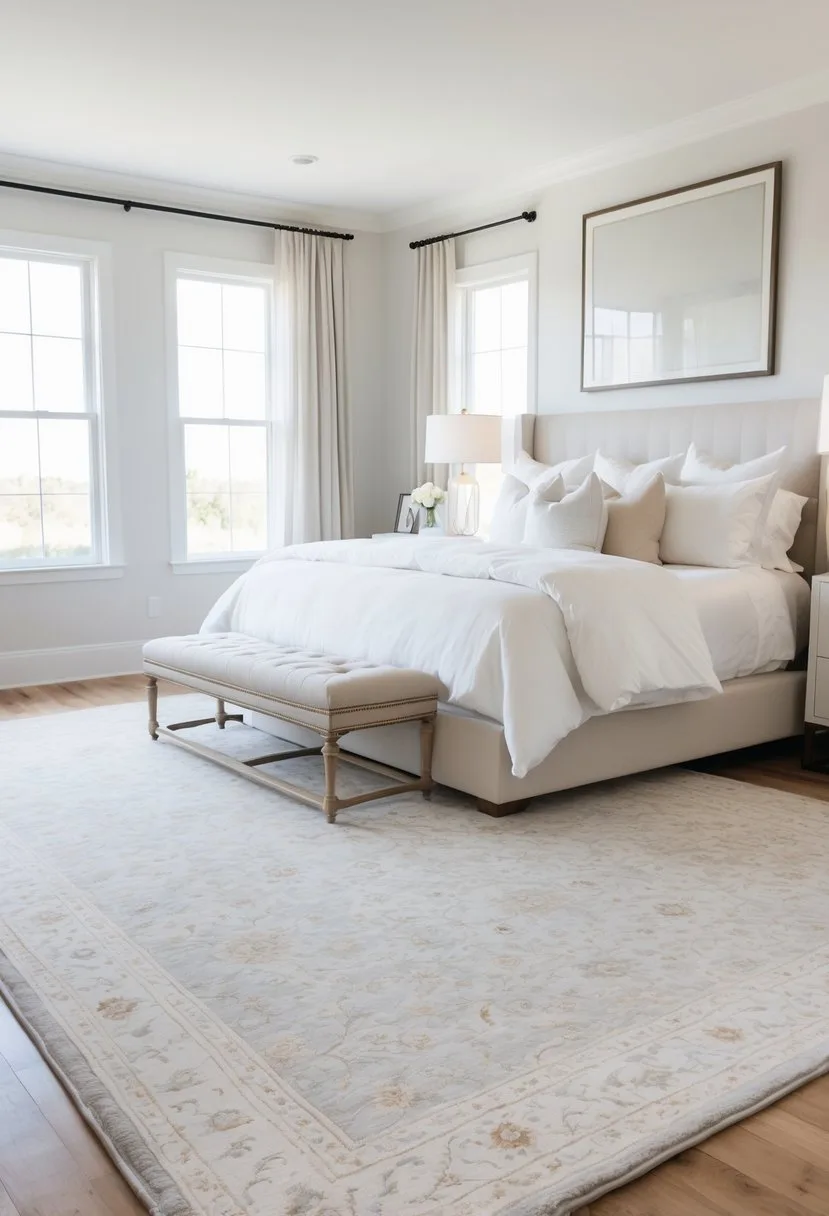
Pick a rug that leaves visual breathing room, fits your bed and nightstands, and gives you at least a foot of soft surface to step onto. The right rug makes the whole room feel intentional and comfy.
Room Dimensions and Layout
Measure your bedroom before you shop. Try to leave 12–24 inches of floor showing between the rug edge and the wall on the sides and foot.
If your room’s narrow, go for an 8×10 so it fits under the bed and nightstands without crowding the walls. Bigger rooms? A 9×12 or 10×14 gives more coverage and helps the bed feel grounded.
Watch out for door swings, closets, and walking paths. Leave 24–36 inches of clear space around doors and between furniture. If the rug stops before a bench at the foot, make sure it still goes at least halfway under the bed.
Bed Frame Types and Proportions
Figure out your bed width and frame style first. A standard king is 76″ × 80″.
For platform beds with low clearance, let the rug extend 18–24 inches past the sides and foot. Higher sleigh or canopy beds look more balanced with a bigger rug—think 9×12 or 10×14.
If you’ve got nightstands, put the rug under them so both sit fully on the rug, or at least get their front legs on it. For frames with chunky rails or footboards, pick a rug that clears the footboard by a few inches so it doesn’t bunch up.
Don’t be afraid to use tape or rulers to visualize different rug sizes before you buy.
Functional Considerations
Decide how you’ll use the space—warmth, noise reduction, or just decor. If you step out of bed onto the rug every morning, make sure it extends at least 24 inches past each bedside edge so you land on something soft.
Just want a runner feel? Two side rugs (2’–3′ wide) can work but might not feel as unified.
Think about cleaning and safety too. Big rugs cushion your step but can be a pain to move and clean. Use a non-slip pad, especially on hardwood.
If you have a bench or trunk at the foot, make sure the rug lets that piece sit flat and stable.
Popular Rug Placement Ideas
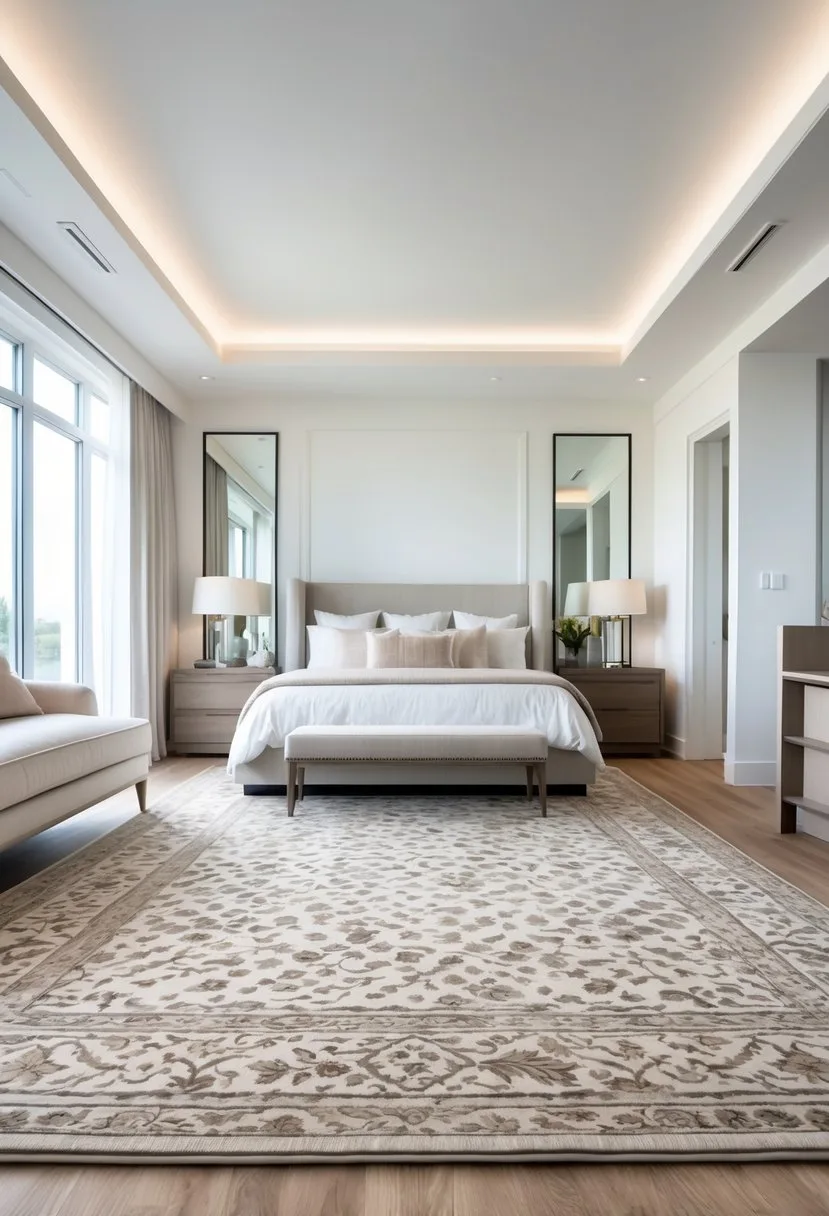
Pick a rug that fits the bed and works with how you move around the room. Decide how much floor you want covered at the sides and foot, and how the rug affects walking and the overall vibe.
Full Coverage Under Bed
Put a big rug (usually 9×12 for a king) so it starts well in front of the nightstands and extends beyond the foot. This way, your feet always land on soft flooring and the sleeping area feels unified.
The rug should go at least 18–24 inches past each side and 24–36 inches past the foot. In a really big room, a 10×14 or even 12×15 can work to keep things proportional.
Definitely use a rug pad underneath to prevent slipping and protect your floors. This setup works best if you have space to spare and want a single, clean focal area.
Don’t try to squeeze a massive rug into a small room—the edges shouldn’t be jammed up against dressers or desks.
Partial Rug Placement
Lay a rug so it covers the lower two-thirds of the bed and extends past both sides. Usually a 6×9 or 8×10 works if you want soft spots for your feet but not full coverage.
Start the rug under the lower two-thirds of the bed and let it reach 18–24 inches past the sides. This keeps the headboard off the rug and shows more floor at the edges.
It’s a good option for medium rooms where a 9×12 would feel crammed. You can pair a smaller rug with a runner at the foot for extra texture or warmth.
Just make sure the rug edges don’t get chopped off by furniture. Adjust as needed to balance floor and rug area.
Runners on Each Side
Place runners from near the head of the bed to just past the foot. Two 2–3 foot wide runners give you a soft walking lane on each side.
Each runner should go at least to the foot of the bed and ideally 12–24 inches beyond. This works for low-profile beds or when a full rug won’t fit.
Use non-slip pads for safety. Match runner length to the bed plus that extra foot or two so it looks intentional.
Runners also let you play with patterns or colors without committing to one big rug. Keep both sides even so the room feels balanced.
Visual Impact and Style Tips

Choose a rug that fits your bed, room layout, and color palette. The right rug can anchor the space or add contrast, depending on what you’re after.
Balancing Rug Size with Room Decor
Aim for equal floor borders on the sides and foot of the bed if you can. For a standard king (76″ x 80″), a 9×12 rug usually leaves 18–24 inches of floor around the edges; an 8×10 works in smaller rooms but shows less border.
Match the rug’s scale to your other furniture. Big patterns look great in roomy, minimal bedrooms. Smaller, busier patterns fit best in rooms with lots of accents.
Try pulling a color from your bedding or curtains into the rug for cohesion. If you’ve got bold wall art, maybe go simple with the rug to avoid visual chaos.
If you want to layer rugs, keep the top one smaller and more basic so things don’t look crowded. Anchor nightstands on the rug when you can—it really ties the bed area together.
Enhancing Space Perception
Use rug placement to tweak how the room feels. Putting a big rug under the whole bed and nightstands can make the sleeping area feel wider.
To make a short room seem longer, lay a long rug parallel to the bed and show at least 18 inches at the foot. For narrow rooms, pick a rug that leaves more border on the long sides to fake extra width.
Light-colored rugs can open up dark rooms. Textured or low-pile rugs add depth without feeling heavy.
Runners beside the bed create walking lanes and lead the eye, making the room seem longer or just more organized.
Mistakes to Avoid When Selecting Rug Size
Pick a rug that supports the bed and walking paths, and avoid making the room feel cramped or weirdly balanced. Pay attention to how far the rug extends past the bed and whether it leaves clear space around your furniture.
Choosing an Undersized Rug
A too-small rug makes your bed look like it’s floating and breaks up the flow. If the rug stops short of the nightstands or just covers the bed’s foot, you lose that comfy landing spot for your feet.
Shoot for at least 18–24 inches of rug showing on each side and at the foot for a king. Anything less just looks off.
Small rugs also slide around more, create annoying tripping edges, and don’t offer much warmth. If your room’s big, go for an 8×10 or 9×12 so the rug reaches under the nightstands and pulls the whole sleeping area together.
Overwhelming the Room
A rug that’s too big can swallow up your furniture and make the space feel smaller. If the rug goes right up to the walls or covers almost all your floor, the room might feel heavy and kind of flat.
Leave at least 12–18 inches of floor showing around the rug in smaller rooms to keep things airy.
Watch how you place furniture—don’t force everything to float awkwardly on a giant rug. Keep at least the front legs of dressers and chairs on the rug, but don’t cover baseboards or block door swings. That keeps traffic easy and the space balanced.
Caring for Your Rug Under a King Bed
Put a rug pad under your rug to prevent slipping and cut down on wear. It also protects your floor and keeps the rug’s shape.
Vacuum at least once a week, especially where your feet land most. Use a vacuum without a beater bar if your rug has delicate fibers.
Blot spills right away to avoid stains. Start from the edge, use a clean cloth, and try not to rub—rubbing just spreads the mess.
Rotate the rug every 6–12 months to even out fading and wear. That keeps the pile and color looking good.
For deep cleaning, always check the manufacturer’s instructions. You might need to shampoo, steam clean, or call in a pro, depending on the rug.
Slip furniture cups or coasters under heavy bed legs to prevent deep dents. That helps preserve the rug’s surface.
Keep the room aired out to cut down on moisture and odors. If your rug sits on hardwood, lift it sometimes to let both surfaces breathe.
Quick care checklist:
- Vacuum weekly
- Blot spills fast
- Rotate every 6–12 months
- Use a rug pad and furniture cups
- Follow fiber-specific cleaning instructions
FAQs – What Size Rug for King Bed
Here are clear, specific size recommendations and placement rules for king beds. Each answer gives you exact dimensions and practical tips to help you pick a rug that actually fits your room and furniture.
How large should a rug be to fit comfortably under a king size bed?
You’ll want a rug that extends at least 18 inches past the sides and foot of your king bed. That way, there’s a soft spot to land when you get up in the morning.
Usually, that means an 8×10-foot rug works, but honestly, a 9×12 feels a bit more generous if you like seeing more of the rug around the bed.
What are the dimensions for a rug that goes under a king size bed in centimeters?
Here are some common rug sizes in centimeters for king beds:
- 244 × 305 cm (8×10 ft)
- 274 × 365 cm (9×12 ft)
- 305 × 427 cm (10×14 ft)
Try measuring your room and aim for about 45–60 cm of rug sticking out beyond the bed edges. That usually gives you good coverage.
Is an 8×10 rug suitable for placement under a king size bed?
An 8×10 rug can work, especially if your bedroom isn’t huge. You’ll get about 18 inches (45 cm) of rug along the sides and foot if you center the bed.
Keep in mind, though, the nightstands probably won’t fit on the rug with this size.
Can a 9×12 rug be accommodated under a king size bed effectively?
A 9×12 rug usually fits under most king beds and can hold both the bed and nightstands. That wider border around the bed just looks more balanced, especially in medium or large bedrooms.
What are the general rules for selecting a rug size for a king bed?
Try centering the rug under the bed and leave at least 18 inches (45 cm) of rug showing at the sides and foot. If you want your nightstands on the rug, you’ll need a 9×12 or bigger so all the main furniture sits on it.
Would a 6×9 rug be an appropriate choice to place under a king size bed?
A 6×9 rug usually feels too small under a king bed. Most of the time, it just sits at the foot of the bed or leaves awkward, skinny strips on the sides.
That setup looks kind of unbalanced. Plus, you barely get any soft surface to step on when you get out of bed.

Ritchie Tokar is a talented interior designer and the author behind the sophisticated home styling content on Vivyro.com. With a keen eye for elegance, functionality, and modern trends, he shares inspiring design ideas, room transformations, color palettes, and practical tips to help readers create stunning, personalized living spaces that reflect their unique style.
As the creative voice of Vivyro.com, Ritchie curates visually captivating interiors, from cozy minimalist setups to bold, luxurious makeovers, drawing on years of expertise in blending aesthetics with everyday livability. His approachable guidance empowers homeowners and design enthusiasts to elevate their environments with confidence, turning ordinary rooms into extraordinary sanctuaries.