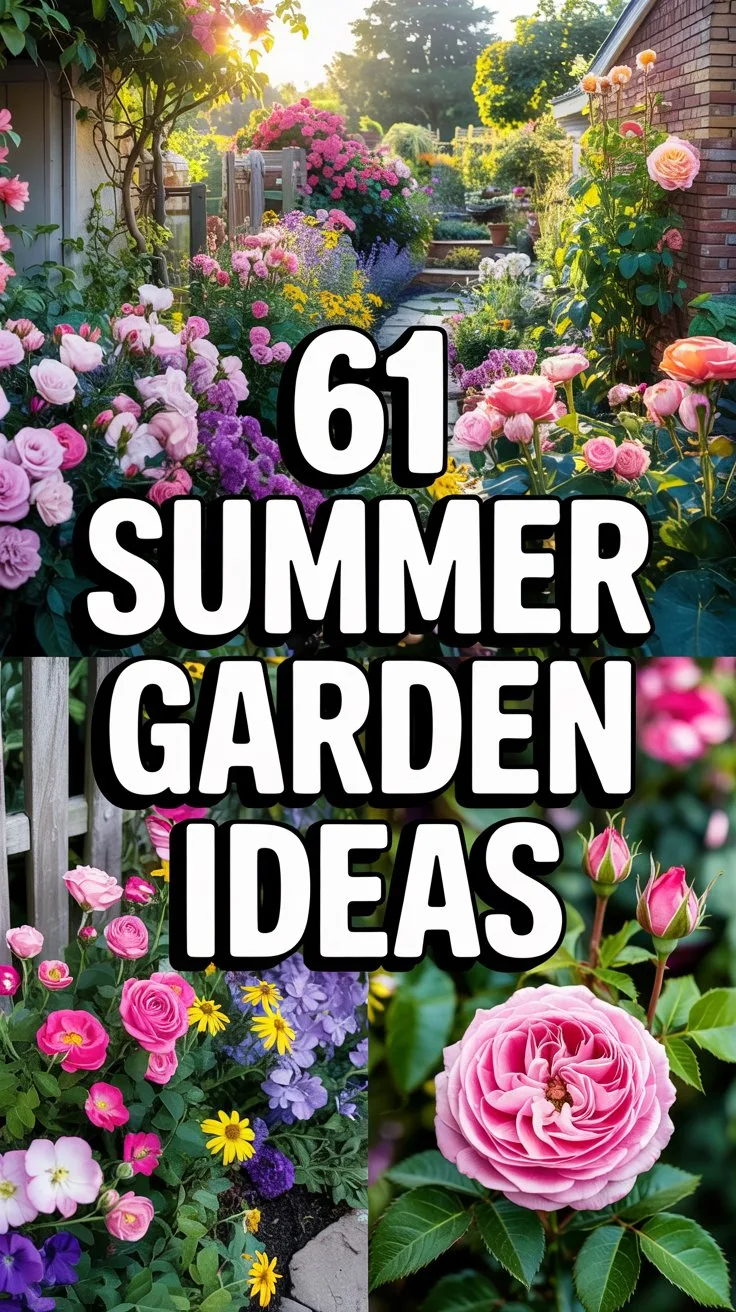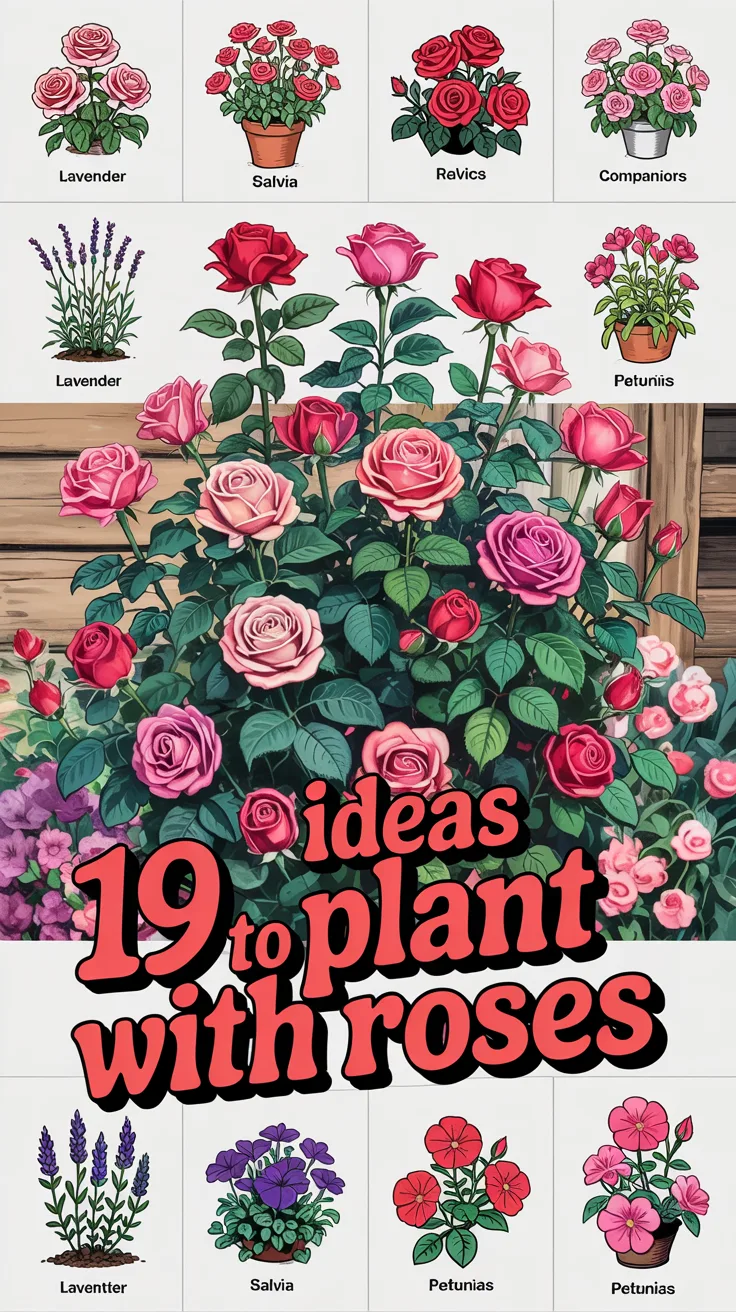
You want roses that look fantastic and stay healthy. Picking the right companions makes that a whole lot easier.
Go for plants that like the same sun, water, and soil as your roses. You’ll see more blooms, fewer pests, and get some extra color and texture in those empty spots.
Plant lavender, catmint, salvia, and low-growing herbs or groundcovers near roses to boost health, attract helpful pollinators, and keep pests at bay.
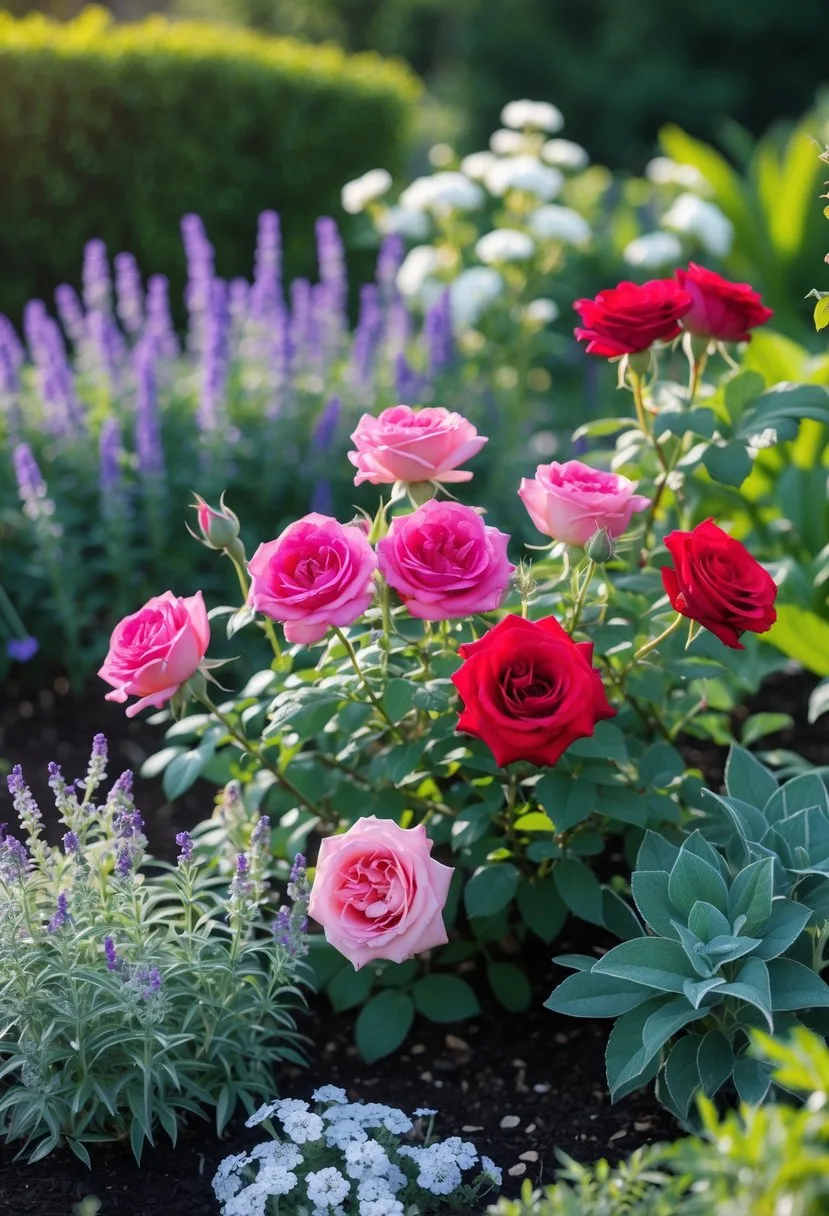
Mix in some tall perennials or shrubs for structure. Add small herbs or annuals for color.
Skip anything that craves heavy shade or hogs water. With a few simple pairing rules, you can build a rose bed that looks intentional and blooms longer.
Key Takeaways
- Pick companions that match roses’ sun, soil, and water needs.
- Use a mix of flowers, herbs, and shrubs to support blooms and structure.
- Avoid plants that compete for moisture or prefer shade.
Benefits of Companion Planting With Roses

Companion plants cut down on pests, boost soil and root health, and make your rose beds look better. You can pick plants that repel bugs, attract pollinators, add nutrients, or fill in color and texture gaps.
Improved Pest Control
Plant strong-scented herbs like lavender, rosemary, or garlic near roses. Their scents help hide your roses from aphids and beetles.
Marigolds and nasturtiums trap or repel nematodes and sap-suckers when you plant them along the bed’s edge.
A mix of flowering companions draws in ladybugs and lacewings. These insects gobble up common rose pests like aphids.
Flat-faced flowers like calendula give predators a spot to land and hunt. Keep plants spaced out for airflow and less disease.
Enhanced Growth and Health
Add nitrogen-fixing legumes to nearby beds or rotate in annuals that add nitrogen for the roses. Clover as a living mulch or beans in a veggie plot both work.
Pick deep-rooted perennials or herbs, like lavender and catmint, so they don’t fight roses for water and nutrients.
Use organic mulches or groundcovers like thyme or chamomile. They hold moisture, block weeds, and break down to feed the soil.
Aesthetic Appeal in the Garden
Pair roses with plants that differ in height, form, or bloom time. Beds stay interesting all season.
Low mounds like thyme or sedum tidy up the base. Tall spires like salvia add some drama.
Cool-toned perennials—think blue catmint or purple salvia—make pink and red roses pop. White, yellow, or silver-foliaged plants brighten up darker roses.
Group plants in odd numbers for a natural look. Stagger bloom times so you always have something happening, even when roses aren’t at their best.
Best Flowers to Plant With Roses
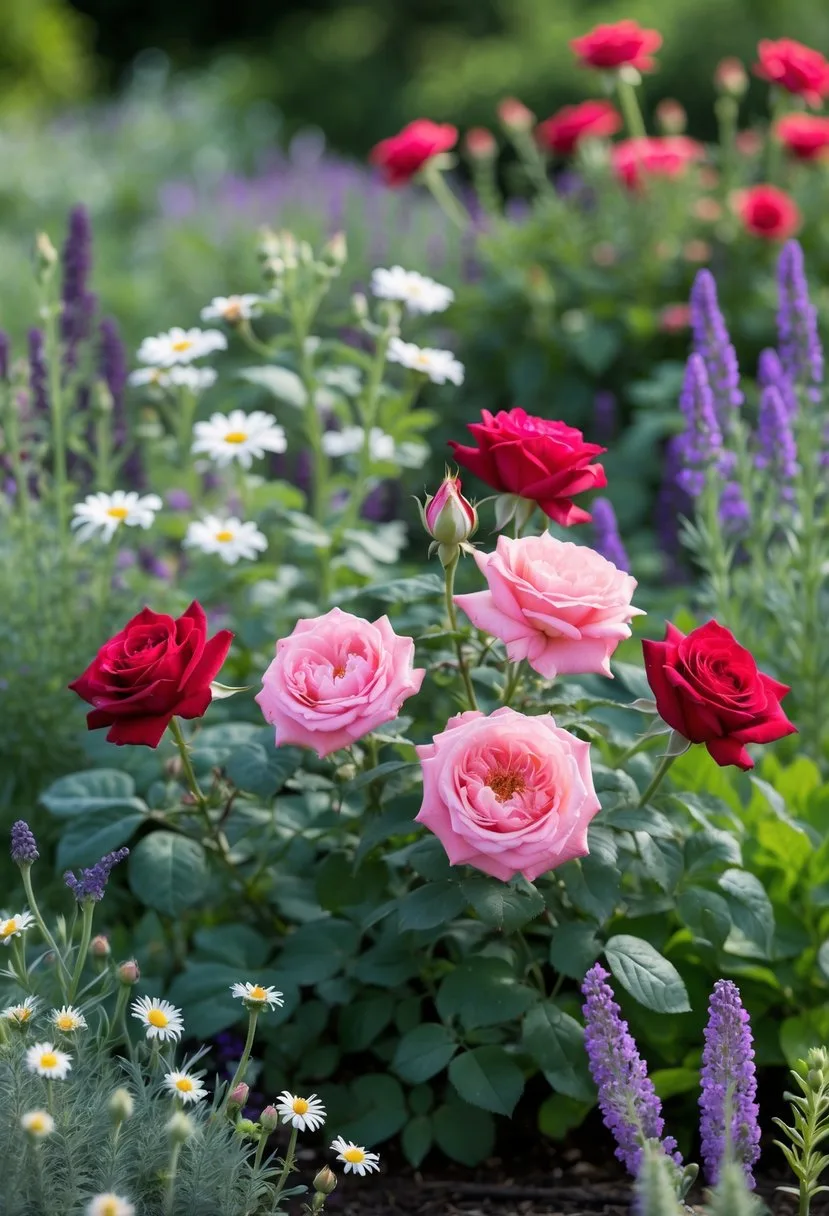
Choose companions that love full sun and well-drained soil, just like roses. Go for plants that help with pests, lure in pollinators, or fill space without shading rose canes.
Lavender
Lavender thrives in full sun and dry, well-drained soil—right up roses’ alley. Plant it 12–24 inches from the rose base so roots don’t compete and air can move.
Lavender’s scent deters aphids and pulls in pollinators. Prune lightly after flowering to keep it tidy and upright.
Stick with English or French lavenders (Lavandula angustifolia or Lavandula x intermedia). They’re hardier and stay compact.
Don’t overwater—lavender hates soggy feet and can suffer if you water roses too much.
Marigolds
Marigolds act as a short-season barrier against nematodes and soft-bodied pests. Plant French marigolds (Tagetes patula) at the bed’s edge or in gaps for nonstop bloom from late spring to frost.
Space them 6–12 inches apart so they don’t crowd rose roots. Deadhead to get more blooms and better pest protection.
Marigolds like full sun and are fine with the same soil as roses, though they’re happier with leaner soil and less fertilizer.
Catmint
Catmint (Nepeta) forms a low, airy mound that fills space at the base of roses. Its long bloom pulls in pollinators and beneficial bugs.
Plant catmint 12–18 inches from the rose crown. Cut back by half after the first bloom for a second flush and a neater plant.
Try ‘Walkers Low’ for a strong scent and long bloom time. It bounces back from pruning and handles dry spells.
Top Herbs to Plant With Roses
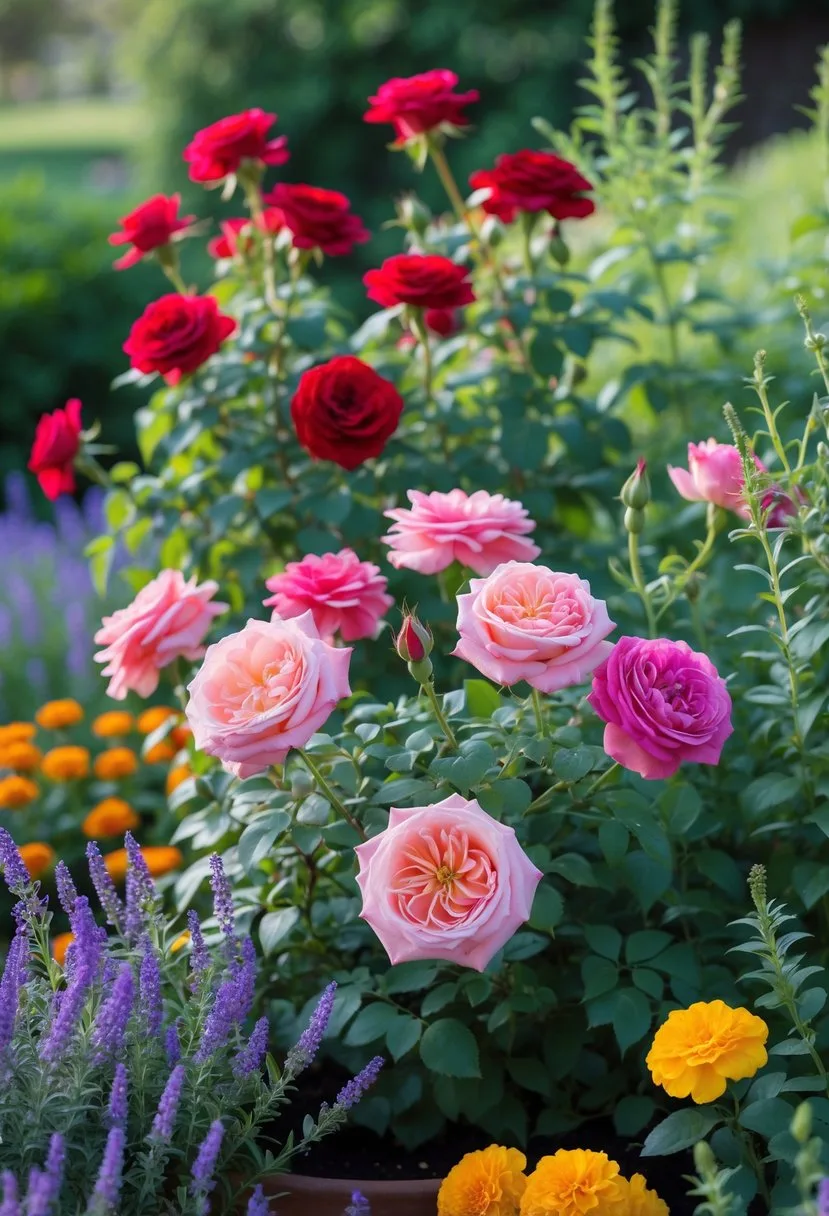
These herbs keep pests away, bring in pollinators, and need the same sun and soil as most roses. Plant them near rose beds with good drainage and airflow.
Sage
Sage loves full sun and lean, well-drained soil—just what roses want. Plant sage 1 to 2 feet from rose stems so roots don’t tangle, but leaves still help repel beetles and caterpillars.
Prune sage lightly after flowering to keep it compact and stop shading lower rose canes. Its strong scent covers rose scents that attract pests, and the blooms attract bees.
Don’t overwater; sage hates wet feet, and that helps fight fungal disease near roses.
Thyme
Thyme makes a low, spreading groundcover that cools the soil and blocks weeds. Tuck it between roses or along paths for a tidy, fragrant edge.
Go for English or creeping thyme for the best coverage. Plant in full sun with great drainage; thyme handles poor soil and wants less fertilizer than roses.
Trim after flowering to keep it fresh and not too woody. The small blooms feed bees, and its compact form helps air move at the rose base.
Chives
Chives play nice with roses since they grow in clumps and want similar conditions. Plant chives about 6–12 inches from the rose base so roots don’t get in each other’s way.
Chive flowers draw pollinators and helpful insects, and the oniony scent deters aphids.
Cut blooms before they go to seed to keep chives productive and prevent them from popping up everywhere. Chives like regular water but don’t let them get soggy.
They make a handy living mulch to reduce weeds and keep the soil surface drier.
Ideal Shrubs and Perennials for Rose Gardens
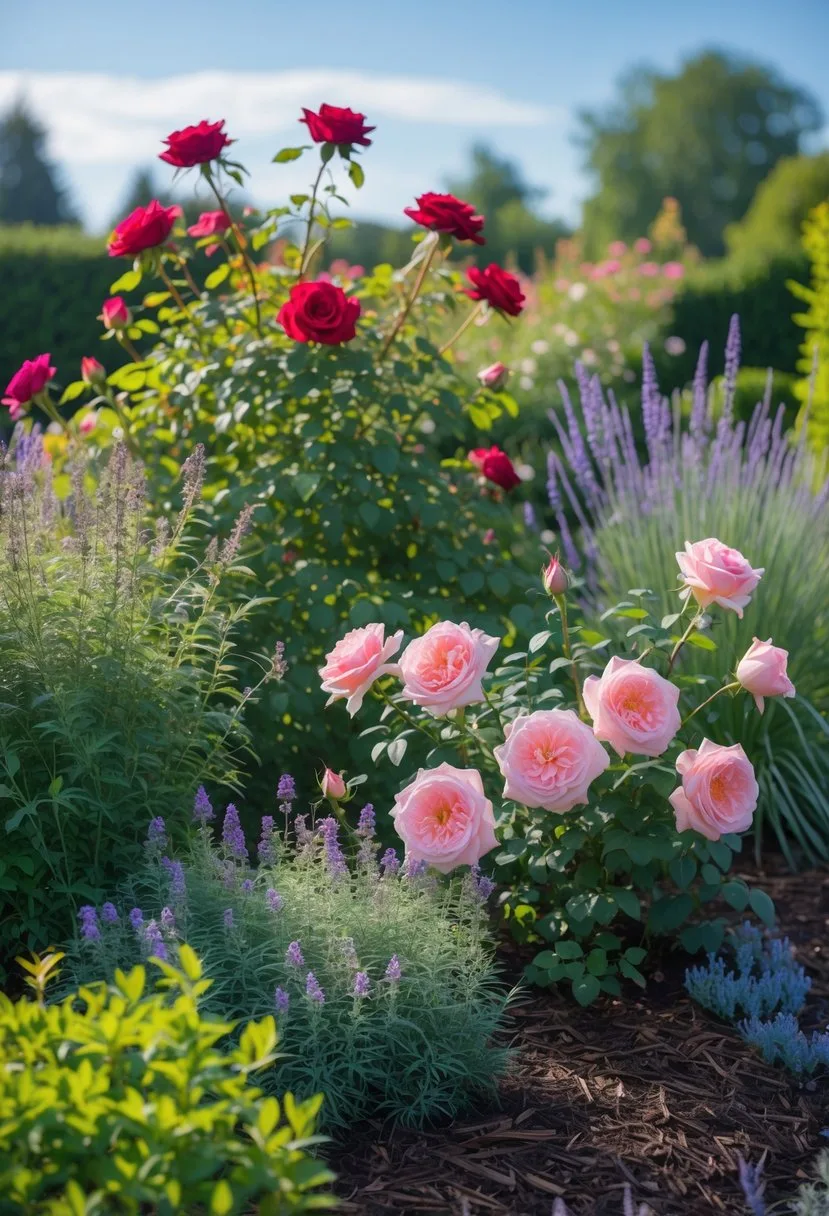
Pick plants that share roses’ sun and soil needs, bring in contrasting forms or textures, and help with pests or mildew. Choose species that behave near rose roots and bloom when roses take a break.
Salvias
Salvias give you tall, spiky flowers that stand out next to rose blooms and attract bees and hummingbirds.
Go for Salvia nemorosa or S. x sylvestris—18–30 inch spikes that won’t swallow the roses.
Plant salvias in full sun with well-drained soil, about 12–18 inches from the rose base. Deadhead spent spikes for more flowers and cut back by a third in late summer to keep things tidy.
Salvias handle drought once settled in, which suits roses that dislike soggy soil. Watch for powdery mildew in sticky climates; pick mildew-resistant types and keep air moving between plants.
Nepeta
Nepeta (catmint) forms a soft mound with gray-green leaves and long lavender-blue spikes. Use Nepeta × faassenii as a low hedge or underplanting, spacing 18–24 inches apart.
Its long bloom plays well with early and late rose flushes and hides bare rose stems. Nepeta shrugs off poor soil and dry spells, so you’ll water less.
Cut it back by about a third after the first bloom to get more flowers. Deer and rabbits usually steer clear of nepeta, which might save your roses from nibblers.
Geraniums
Hardy geraniums (cranesbills) offer rounded leaves and mounds that fill in gaps and block weeds. Try perennial types like Geranium sanguineum or G. macrorrhizum for low-maintenance groundcover and color from spring through summer.
Plant geraniums 12–18 inches from rose crowns so their roots stay shallow and don’t compete much. The foliage shades soil, slows evaporation, and keeps rose roots cooler.
Prune dead flowers and divide every few years to keep them vigorous. Many geraniums handle partial shade, so you can tuck them under roses that get strong morning sun and cooler afternoons.
Vegetables That Grow Well With Roses
Pick vegetables that help with pests and like the same sun, soil, and water as roses. Go for low-growing, well-drained crops that won’t hog root space or shade the roses.
Garlic
Garlic chases off aphids, Japanese beetles, and some fungal diseases when you plant it near roses. Stick cloves in 2 inches deep and 4–6 inches apart in full sun; bulbs are ready in about 90–120 days.
Garlic’s strong smell hides rose scents that attract pests. It doesn’t need much feeding, so it won’t steal nutrients from roses if you balance fertilizer for both.
Benefits:
- Repels pests (aphids, beetles).
- Can help with some fungal issues when you pull bulbs at harvest.
Tip: Plant garlic in fall for the biggest bulbs. Mulch lightly for winter, then pull mulch off in spring to let soil warm up.
Onions
Onions want the same light and soil as roses and help deter pests. Set transplants or sets 4–6 inches apart in a sunny, well-drained spot. They’re ready in 90–120 days, depending on variety.
Onion leaves grow upright and won’t crowd rose roots, so they make good edge or inter-row plants. Their sulfur compounds chase off thrips and beetles.
Care points:
- Keep soil moist during bulbing.
- Don’t overdo nitrogen or you’ll get too much leafy growth and not enough bulbs (plus, it can push roses to grow too fast).
Plant onions in spring for summer harvest, or in fall in mild areas for earlier spring growth.
Choosing Plants for Pest Management
Planting the right neighbors keeps pests down and supports helpful insects. Go for species that either repel common rose pests or draw in predators and parasitoids.
Plants That Repel Aphids
Aphids love tender new rose growth. Plant strong-scented herbs and flowers that aphids dislike: garlic, chives, and chervil near the rose crown, and marigolds along the bed’s edge.
These plants put out odors that mess with aphids’ ability to find your roses.
Use dense, low plantings so the repellent plants form a barrier but don’t shade rose canes. Replace or trim annuals each year to keep scents fresh.
Combine these with regular inspection: blast aphids off with water or prune away infested tips if you see a problem.
Plants That Attract Beneficial Insects
You want predators like ladybugs, lacewings, and hoverflies working for you. Plant dill, fennel, cilantro, yarrow, and alyssum to supply nectar and pollen for adult beneficials.
These plants have open flowers or small umbels that make food easy to access. Place flowering herbs and perennials in small clusters 1–3 feet from roses to draw beneficials into the bushes.
Stagger bloom times—from early spring to late summer—so predators and parasitic wasps stick around when pests show up. Skip broad-spectrum insecticides; they’ll wipe out the helpful bugs you just attracted.
Designing a Balanced Rose Garden
Match color and texture to enhance your roses while keeping plant heights and bloom times steady. Pick companions that don’t hog light, water, or space from your roses.
Complementary Colors and Textures
Choose colors that make your roses pop. For red roses, try blue or purple salvias or catmint for a cool contrast.
Pink roses look great with white daisies or pale lavender—keeps the bed soft and elegant. With white or cream roses, deep blue agastache or dark foliage like Heuchera adds a bit of drama.
Balance textures to avoid visual chaos. Put fine-textured plants like thyme, lavender, or ornamental grasses at the front for a tidy edge.
Medium-textured perennials like salvias or geraniums work well mid-bed. Large or tall textures—think delphinium, foxglove, or climbing roses—go in the back or on supports.
Repeat at least two colors and two textures for a sense of unity. It’s not a rule, but it does help everything look intentional.
Plant Spacing Considerations
Check the mature widths before planting anything. Space hybrid teas and floribundas 2–3 feet apart, shrub roses 3–5 feet, and climbers based on their support.
For companions, give them their full spread so air moves freely and leaves dry out fast. Here’s a quick guide:
- Front row: low growers 6–12 inches apart
- Middle row: medium perennials 12–24 inches apart
- Back row: shrubs and climbers 3–5 feet apart
Leave 18–24 inches of open soil around rose crowns for mulch and watering. That way, roots don’t compete and you can reach plants for pruning or pest checks.
Plants to Avoid Near Roses
Pick companions that won’t steal water, nutrients, or sunlight—or bring along the same diseases. Avoid plants with aggressive roots or those that share pests and pathogens with roses.
Competitive Root Systems
Skip large shrubs or aggressive perennials right next to roses. Plants like lilac, bamboo, and mature hydrangeas have big root systems that compete for water and nutrients.
That kind of competition shrinks blooms and weakens roses over time. Avoid groundcovers that spread by runners or rhizomes, like mint and creeping thyme, when they’re close to the rose crown.
Mint can take over fast and choke out young roots. Grasses with thick root mats, such as mondo grass, also crowd roots and mess with irrigation.
If space is tight, keep 2–3 feet of clear soil around the rose base or use root barriers. You can try container planting for aggressive species, but you’ll need to monitor water and feed roses separately.
Plants Prone to Disease
Keep tomatoes, peppers, and other nightshades away from roses. They can carry fungal diseases like black spot and early blight that also hit roses.
If you plant them together, you’re raising the risk of disease spreading during wet weather. Steer clear of plants that often get powdery mildew or rust, like lilacs and some phlox, if your roses are susceptible.
If you must plant disease-prone stuff nearby, space them for better air flow, water at the base, and remove infected leaves fast. Staying on top of sanitation and monitoring helps keep problems from spreading.
Seasonal Planting Guide for Roses and Companions
Plan your plantings so roses get steady sun, good air flow, and reliable moisture. Choose companions that match your rose’s water and soil needs, and fill gaps in bloom time or pest protection.
Spring Combinations
Plant bulbs and early perennials near roses for color before the roses bloom. Tulips, daffodils, and grape hyacinth perk up winter-weary beds and don’t compete for roots, since bulbs die back after flowering.
Low-growing perennials like lungwort or sweet alyssum help protect soil and cut down on weeds. Here’s a quick spacing and timing chart:
- Bulbs: plant 6–8 inches deep, bloom early spring
- Low perennials: set 6–12 inches from rose canes
- Nutrient tip: add compost in planting holes, but skip heavy fresh manure near roots
Cut back bulb foliage only after it yellows. Mulch 2–3 inches deep to hold moisture and suppress weeds, but keep mulch 2–3 inches away from rose crowns.
Summer Pairings
Go for heat-tolerant, airy plants that won’t shade roses or trap moisture. Lavender, catmint, and santolina work well; they all love full sun and well-drained soil and help repel some pests.
Plant annuals like zinnias or marigolds in the front for bright color and easy deadheading. Water deeply once or twice a week instead of daily sprinkling.
Deadhead roses and annuals to keep blooms coming. Prune lower rose leaves to boost air flow and cut down on fungus; keep companion foliage trimmed 6–12 inches from the ground.
Frequently Asked Questions
Here you’ll find plant choices that protect roses from pests, fit in containers, or should be avoided. The answers include practical options, spacing and care tips, and ideas for bouquets and vegetable beds.
Which companion plants can help deter pests from rose gardens?
Plant garlic and chives near rose stems to repel aphids and some beetles. These bulbs give off sulfur compounds that many pests can’t stand.
Marigolds and nasturtiums act as trap crops for whiteflies and aphids. Put them around the border so pests go for them instead of your roses.
Lavender and rosemary attract beneficial insects like hoverflies and predatory wasps. Those predators eat common rose pests, which helps keep infestations down.
What are the recommended plants to grow with roses in containers?
Go for low-growing, shallow-rooted plants such as sweet alyssum, creeping thyme, or dwarf lavender. They won’t hog root space and add color and fragrance.
Try herbs like basil or chives in bigger containers with roses—they like the same sun and water. Keep the soil well-drained and water more often than you would for roses in the ground.
Don’t crowd tall, deep-rooted shrubs in the same pot. They’ll take up too much room and tip the container.
Are there specific plants that should not be planted alongside roses?
Don’t plant black walnut or anything near trees that make juglone. That chemical stunts roses and other sensitive plants.
Watch out for big, thirsty plants like bamboo or fast-growing shrubs. They steal water and nutrients and crowd rose roots.
Skip heavy feeders that need totally different soil pH or fertilizer than roses. Mismatched care just leads to poor growth all around.
Can evergreen plants be good companions for roses, and if so, which ones?
Absolutely. Low evergreen shrubs like dwarf boxwood, Japanese holly, or yews give winter structure and a steady background.
They make rose blooms stand out and support the garden’s shape year-round. Choose slow growers that won’t shade the roses.
Place evergreens so they don’t crowd roots or block sunlight. It’s easy to forget how big they’ll get, so plan ahead.
Which varieties of flowers can be paired with roses for an appealing vase arrangement?
Lisianthus, ranunculus, or alstroemeria have long vase life and similar bloom size. Their stems and textures mix nicely with roses.
Add fillers like waxflower, baby’s breath, or statice for volume and contrast. Foliage like eucalyptus gives scent and a modern vibe.
Cut stems in the morning and drop them in clean water right away for longer vase life.
How can roses be effectively integrated into a vegetable garden?
Try planting roses along the edge of the garden, or maybe train them up a trellis at one end. That way, you won’t end up shading your vegetable beds.
Give roses a little breathing room—keep them at least 2–3 feet away from your veggie rows. This helps cut down on root competition.
You could tuck in companion herbs like basil or chives between the beds. They don’t hog space, and they might help keep pests at bay.
Set up separate watering zones if you can. Roses and vegetables often need different amounts of moisture, so this makes things a lot easier.

Ritchie Tokar is a talented interior designer and the author behind the sophisticated home styling content on Vivyro.com. With a keen eye for elegance, functionality, and modern trends, he shares inspiring design ideas, room transformations, color palettes, and practical tips to help readers create stunning, personalized living spaces that reflect their unique style.
As the creative voice of Vivyro.com, Ritchie curates visually captivating interiors, from cozy minimalist setups to bold, luxurious makeovers, drawing on years of expertise in blending aesthetics with everyday livability. His approachable guidance empowers homeowners and design enthusiasts to elevate their environments with confidence, turning ordinary rooms into extraordinary sanctuaries.