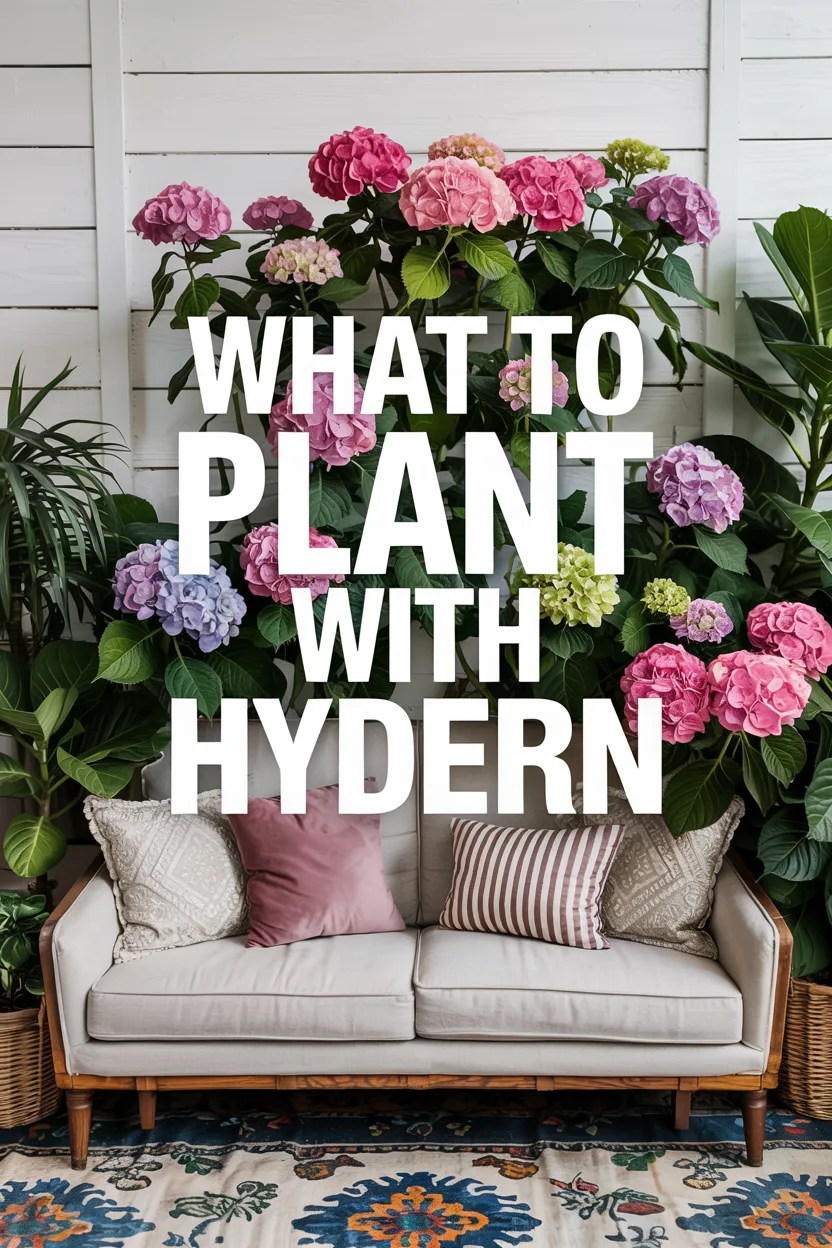
You want hydrangeas that look fuller and bloom longer. Pair them with plants that share their light and soil needs, add texture, and fill spaces without stealing moisture.
Choose companions that either echo hydrangea colors or provide contrast to make the flowers pop.
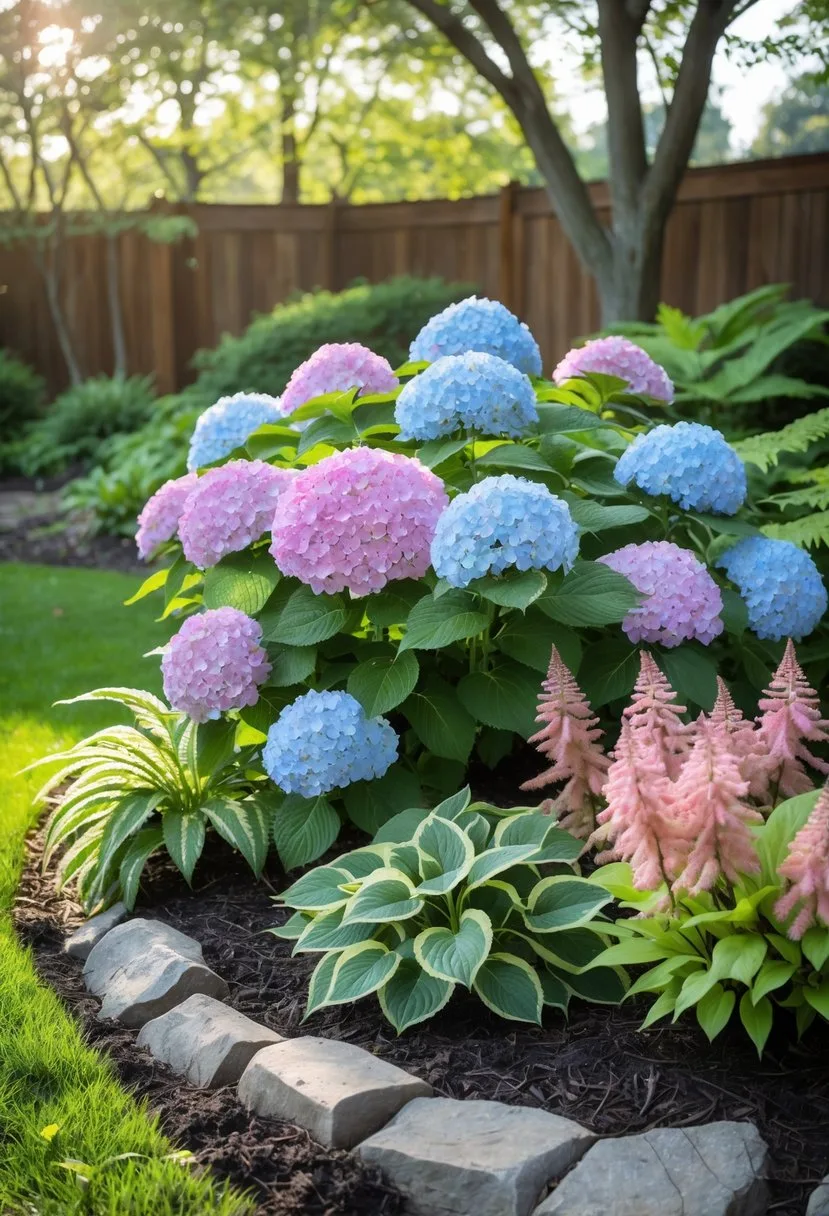
Go bold with plant choices that match shade and moisture, like ferns, astilbes, and shade-loving shrubs. That way, you get healthy growth and a balanced garden look.
Pick companions that thrive in the same conditions. Look for contrasting shapes, heights, or colors to really make your hydrangeas stand out.
You’ll find quick design tips, what not to plant, and some easy swaps for different hydrangea types. With just a little planning, your borders, beds, or containers can look intentional and last through the seasons.
Key Takeaways
- Match companion plants to hydrangea light and soil needs.
- Use contrasting textures and heights to highlight blooms.
- Avoid plants that compete for moisture or light.
Best Companion Plants For Hydrangeas
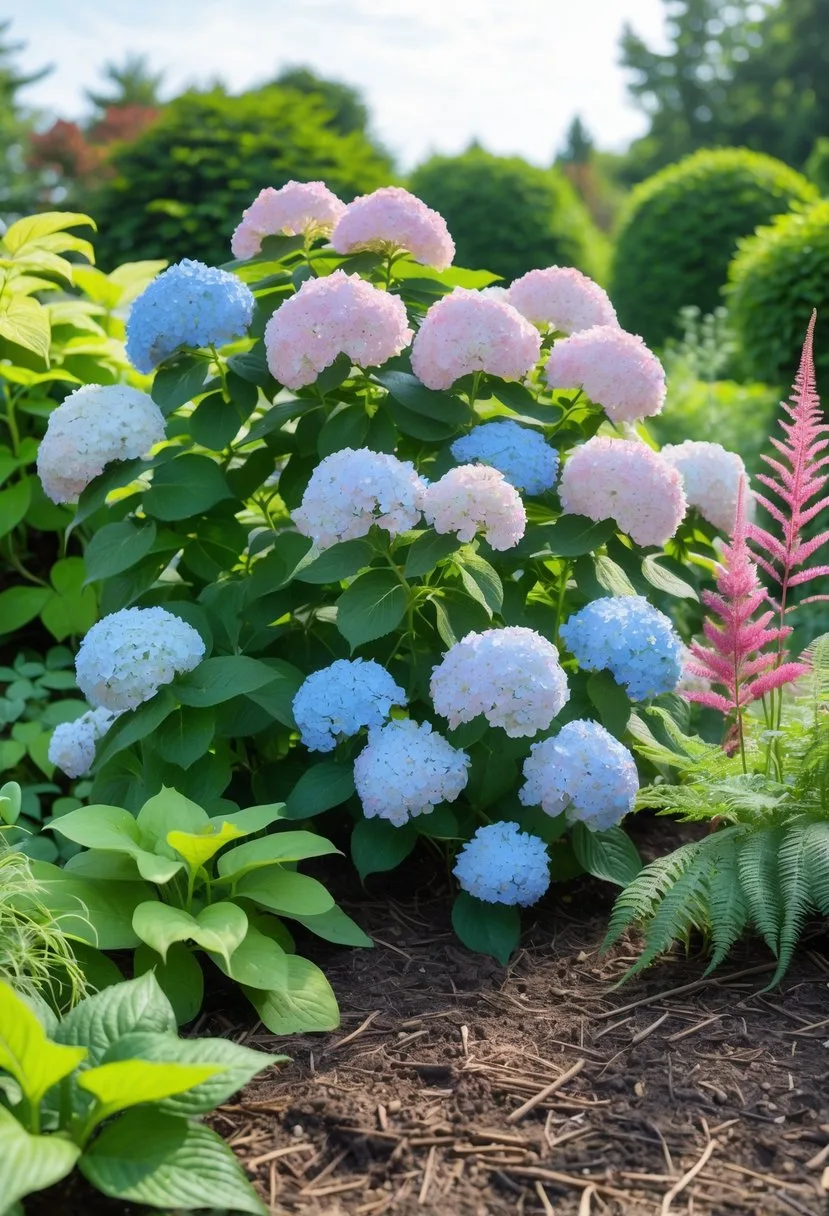
Choose plants that match your hydrangea’s light, soil, and water needs. Pick shade-loving perennials for cool roots and flowers that contrast or echo hydrangea colors.
Textured foliage helps frame those big blooms.
Shade-Loving Perennials
Plant hostas, astilbes, and ferns where hydrangeas get morning sun or dappled shade. Hostas give large, cooling leaves near the base—pick upright varieties so they don’t crowd stems.
Astilbe adds feathery plumes in pink, white, or red that rise above lower foliage. They won’t shade hydrangea blooms, which is a nice bonus.
Ferns like Japanese painted fern or lady fern supply fine texture and stay low, protecting roots and keeping soil cool. Most of these perennials want consistently moist, well-drained soil.
Space plants so air circulates and you’ll cut down on mildew. Mulch 2–3 inches to retain moisture and keep roots cool.
Color-Complementing Flowers
Use flowers that either contrast or echo your hydrangea’s bloom color. For blue or pink mopheads, plant white hardy geraniums or lamium for a clean border.
For pinks, coral bells (Heuchera) or bee balm will amplify warm tones. Blue hydrangeas pair nicely with purple salvia or catmint for a cool, harmonious palette.
Stagger bloom times—add spring bulbs (tulips, daffodils) for early color and late-summer sedum for a second show after hydrangeas fade. Keep heights varied: low groundcovers in front, mid-height perennials beside the shrub, and taller accents behind.
This layered look keeps hydrangea blooms visible and balanced.
Foliage Plants That Enhance Hydrangeas
Go for foliage plants with contrasting leaf shape, color, and texture. Variegated hostas and euonymus brighten shady borders and highlight blooms.
Bigleaf plants like Rodgersia add bold, dramatic leaves that echo hydrangea massing without blocking flowers. Fine-textured plants such as carex or liriope provide a grassy edge and help define beds.
Evergreen shrubs like boxwood or dwarf holly give year-round structure and make summer blooms pop. Match mature sizes and root habits so you don’t end up with a tangle.
Plant larger-leaved species at least 2–3 feet from hydrangea stems to avoid root competition.
Shrubs That Thrive With Hydrangeas
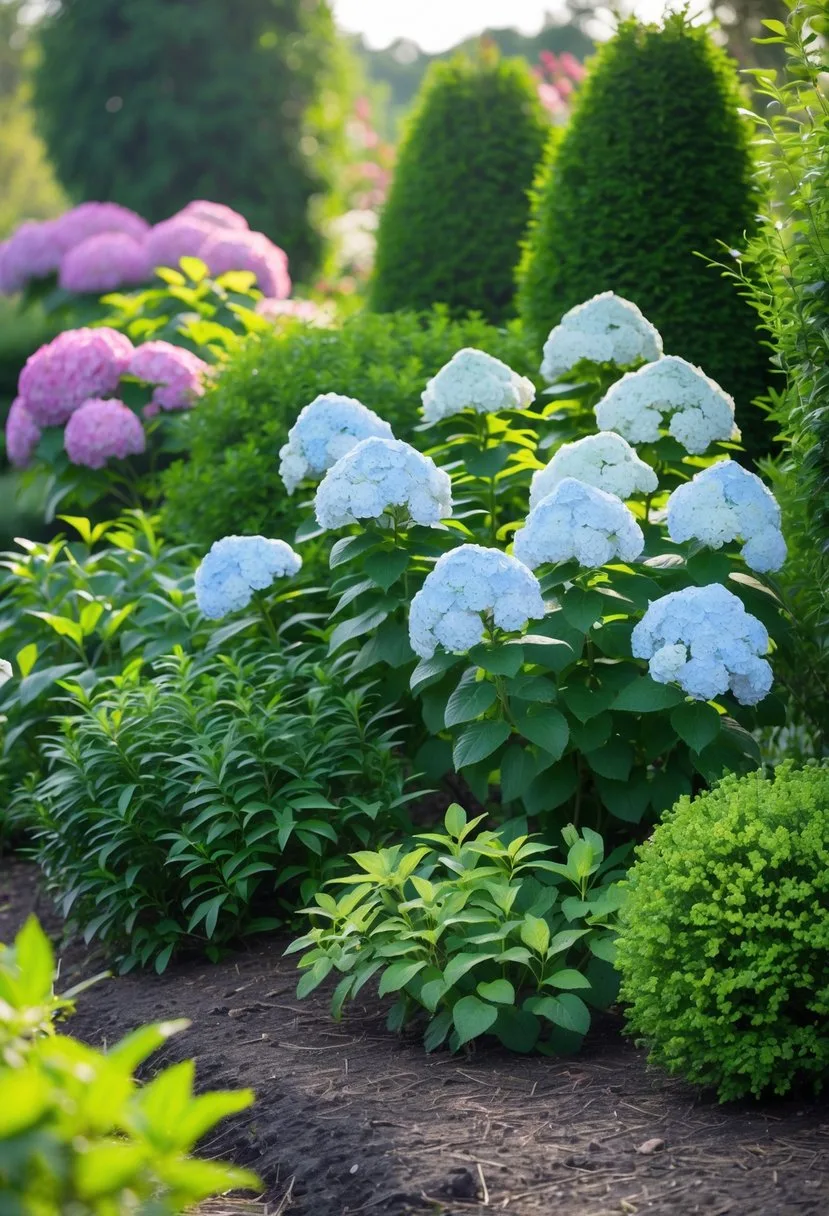
Add shrubs that share hydrangeas’ love of moist, well-drained soil and partial shade. That builds structure and year-round interest.
Pick plants that match your hydrangea’s mature size and soil pH. You’ll avoid crowding and keep roots healthy.
Azaleas And Rhododendrons
Azaleas and rhododendrons like acidic, humus-rich soil, which often lines up with many hydrangea types. Plant azaleas and smaller rhododendron varieties where they get dappled morning sun and afternoon shade.
That spot prevents leaf scorch and helps both bloom well. Mulch root zones 2–3 inches deep with shredded bark to retain moisture and cool roots.
Space azaleas at least 3–4 feet from hydrangea stems. Rhododendrons need 4–6 feet, depending on mature width.
Prune right after flowering to shape them up without cutting off next year’s buds. If your hydrangea needs low pH for blue flowers, test soil and amend with sulfur or ericaceous mulch so both shrubs stay happy.
Boxwoods And Evergreens
Boxwoods and other broadleaf evergreens give form and winter structure near hydrangeas. Go for slow-growing boxwood cultivars for borders.
Try small evergreen hollies or yews for taller, narrow accents that won’t shade hydrangeas too much. Plant evergreens on the north or back side of hydrangeas so they act as a windbreak and backdrop.
Keep a 2–4 foot gap for boxwoods and more for larger evergreens to prevent root competition. Water deeply during dry spells and skip heavy summer pruning that could stress hydrangea roots.
Most boxwoods like neutral to slightly acidic pH, so match amendments to suit both plants.
Ground Covers And Border Options
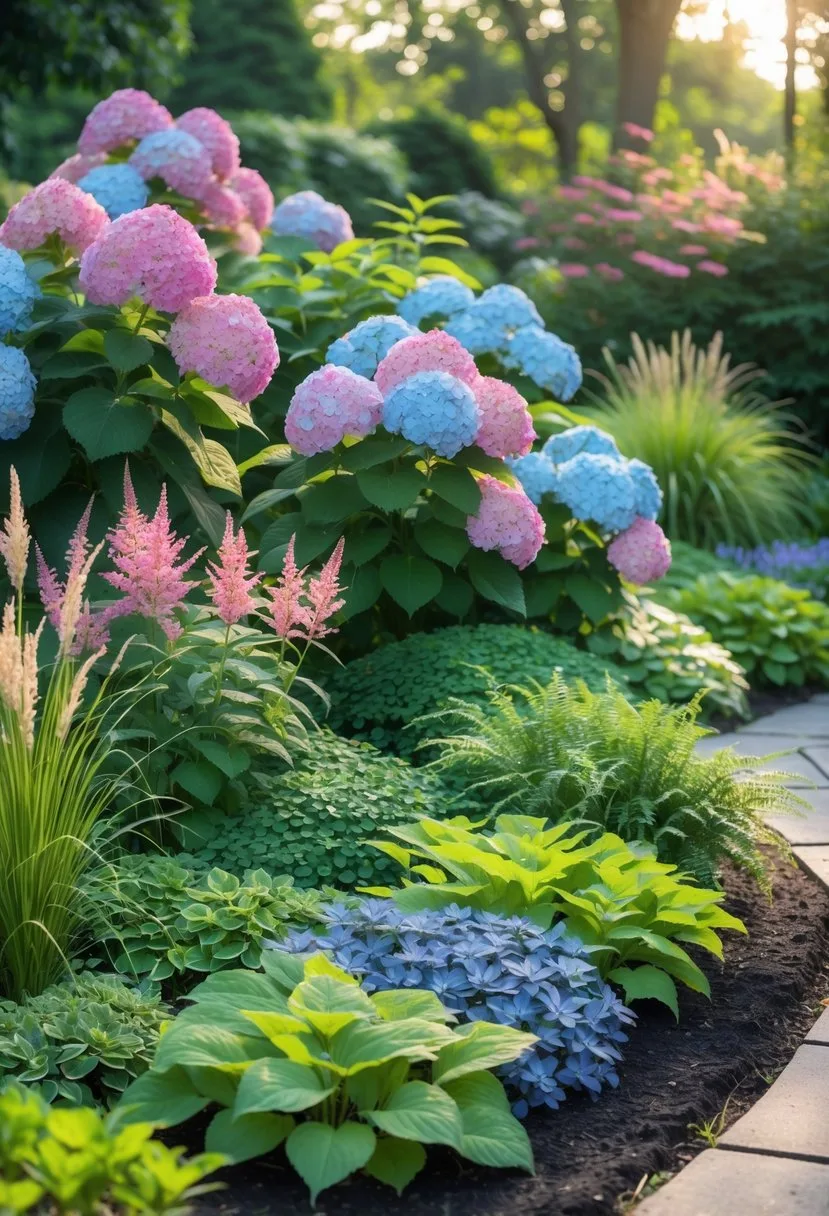
Pick plants that match your hydrangea’s light and soil. Choose shade-loving species for woodland settings and sun-tolerant options for bright borders.
Think about leaf color, height, and spread to keep the base tidy and cut down on weeds.
Hostas For Shaded Borders
Hostas thrive in the same dappled shade many hydrangeas prefer. Select varieties with large, blue-green leaves like ‘Sum and Substance’ for a bold look.
Variegated types such as ‘Patriot’ can brighten dark corners. Space them 18–36 inches apart, depending on mature spread, so they don’t crowd hydrangea stems.
Hostas need rich, moist, well-drained soil. Mulch 2–3 inches to hold moisture and keep roots cool.
Slugs and deer can be a problem, so use barriers or bait if you need to. Pair shorter hostas in front and larger ones behind for layered texture that frames hydrangea blooms.
Heucheras For Texture And Contrast
Heucheras (coral bells) bring colorful foliage and a low mound that complements hydrangea trunks. Choose deep purple varieties like ‘Palace Purple’ for contrast against pink blooms.
Lime-green types like ‘Lime Marmalade’ can really lift shady beds. Plant heucheras 12–18 inches apart to form a dense carpet that suppresses weeds.
They like part shade and evenly moist soil with good drainage. Trim flower stalks after bloom to keep the foliage tidy.
Use heucheras along walkways or at the hydrangea dripline for a clean edge and continuous seasonal interest.
Ornamental Grasses And Structural Accents
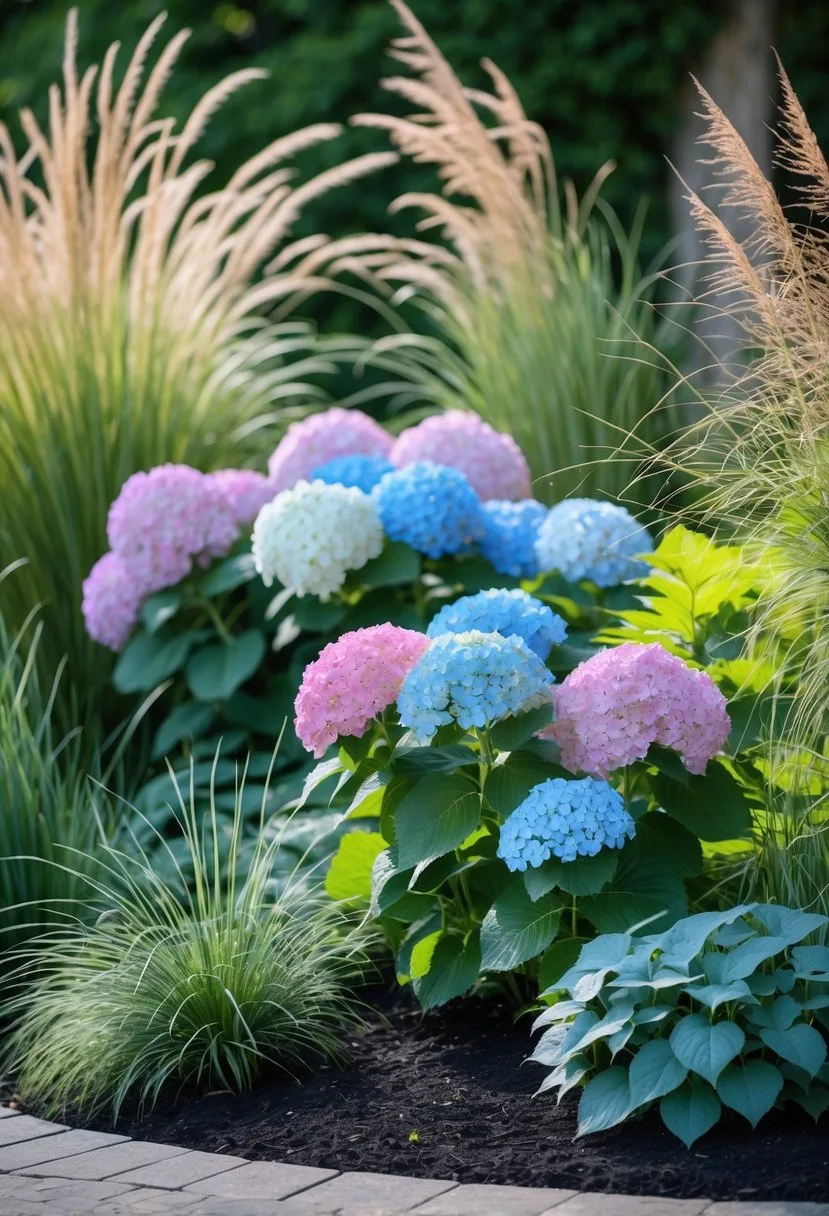
Ornamental grasses add texture, movement, and contrast while keeping maintenance low. Architectural plants give height and shape, balancing hydrangea mounds and anchoring beds.
Softening Edges With Grasses
Use low, mounding grasses to soften the hard line between lawn and hydrangea beds. Blue fescue (Festuca glauca) and carex species work well at the front of borders.
Their fine blades and compact habit create a gentle transition and won’t compete for space. Plant grasses 6–12 inches from hydrangea crowns for air flow and to reduce moisture buildup.
Choose varieties that match light levels—blue fescue for sun, carex or small Japanese forest grass (Hakonechloa) for part shade. Cut back in late winter to reveal fresh spring growth.
Benefits:
- Texture contrast to broad hydrangea leaves
- Low trimming needs
- Ground-level visual interest that frames blooms
Architectural Plants For Depth
Add taller, structural plants behind or between hydrangeas for vertical layers. Ornamental grasses like Miscanthus or Calamagrostis reach 3–6 feet and create a backdrop of movement.
Evergreen or semi-evergreen shrubs such as dwarf hollies or small boxwood provide year-round form. Place taller plants 2–4 feet behind hydrangeas so blooms stay visible.
Match soil and moisture needs—many tall grasses prefer well-drained soil, while oakleaf hydrangeas tolerate more moisture. Use a mix of heights: tall grasses at the rear, mid-height shrubs, then hydrangeas, with low grasses at the front.
Choosing Plants For Specific Hydrangea Types
Pick companions that match light, soil, and size needs. Think about bloom time, leaf contrast, and how much space the hydrangea will take as it grows.
Companions For Mophead Hydrangeas
Mophead hydrangeas have large, rounded flower heads and like partial shade and consistently moist, rich soil. Plant low, textured foliage in front—think hostas and heucheras—to show off the blooms and hide bare stems.
Pick colors that contrast: deep green or purple leaves make blue or pink mopheads pop. Add spring bulbs like tulips or daffodils for early color before the hydrangea fills in.
Keep shrubs with similar moisture needs nearby, like azaleas or small boxwoods, but leave mopheads room for air circulation. Give at least 3–4 feet of space from other large plants.
Mulch to retain moisture and keep roots cool.
Pairings For Panicle Hydrangeas
Panicle hydrangeas handle more sun and drier soil than mopheads. They often bloom later into fall.
Use taller perennials behind or between plants, like ornamental grasses or Russian sage, to complement the cone-shaped flower clusters and add vertical interest. Select plants that handle full to part sun and won’t compete for moisture.
Good options: salvia, rudbeckia, and sedum; they extend the color season and attract pollinators. Space panicles at least 4–6 feet apart to account for vigorous growth.
Prune selectively to maintain shape and airflow.
Pairing Based On Color And Bloom Time
Plan plant choices so your garden has color across months and strong visual contrast at peak bloom. Pick companions that flower before or after your hydrangeas.
Choose foliage or flower colors that either match or make the hydrangea color stand out.
Creating Seasonal Interest
Choose early, peak, and late bloomers to stretch color from spring into fall. Plant azaleas or camellias for spring color before hydrangeas open.
Add daylilies, coneflowers, or sedums to carry color through mid and late summer after hydrangeas fade. Use foliage that stays attractive when blooms are gone.
Hostas, heucheras, and ferns keep texture and color in shady beds. Ornamental grasses add movement and seedheads in fall.
Stagger bloom times in groups of three to five plants. That way, you get reliable color patches instead of empty spots when hydrangeas stop blooming.
Color Harmonies And Contrasts
Match or contrast color based on the hydrangea color you grow. For blue hydrangeas, choose white or pale yellow companions—white astilbe or yellow daylilies make blues look even cleaner.
For pink hydrangeas, use purple salvias or magenta geraniums to deepen warm tones. Foliage color can be a neutral or a highlight.
Silver-leaved artemisia or chartreuse heuchera lifts darker blooms. Dark-leaved plants like black mondo grass or purple-leaved heuchera create dramatic contrast.
Soil pH affects bloom color. If you want blue tones, pair with acid-loving plants like azaleas.
Prefer pink? Combine with plants that handle slightly alkaline soil.
Hydrangea-Friendly Herbs And Edibles
You can definitely plant herbs and edibles near hydrangeas—just make sure they like the same soil and light. Hydrangeas love moist, well-drained soil and partial shade.
Pick shade-tolerant herbs like mint, chives, and lemon balm for these spots. They handle some shade and help keep soil moist.
But watch out—mint spreads like crazy, so pop it in a pot or use a barrier if you don’t want it everywhere.
Leafy greens such as salad greens and baby spinach thrive in the dappled shade beneath hydrangeas. They grow fast in spring and fall.
If you avoid heavy feeding, these greens won’t compete with hydrangea roots. That’s always a bonus.
Stick to smaller, low-growing plants to keep hydrangea roots happy. Try these:
- Thyme (best at the sunnier edge)
- Parsley (fine with partial shade)
- Edible flowers like pansies—they add color and attract pollinators
Mulch and water carefully for both hydrangeas and edibles. Mulch keeps soil cool and moist.
Hand-water during dry spells so those shallow-rooted herbs don’t dry out. It’s easy to forget, but they’ll thank you.
Skip big, deep-rooted veggies that hog water and nutrients. Keep a 12–18 inch clear ring around the hydrangea crown if you’re planting heavier feeders nearby.
Plants To Avoid Near Hydrangeas
If you plant something that needs totally different soil or water next to hydrangeas, you’re just making life harder. Avoid drought-tolerant or sun-loving plants that want dry, alkaline soil.
They’ll suffer if your hydrangeas need rich, moist, acidic conditions. It’s just not a good match.
Don’t plant big trees or shrubs that cast deep, constant shade. They compete for root space, light, and water.
Hydrangeas can get leggy and bloom less if they’re fighting for resources.
Steer clear of plants that release strong root chemicals (allelopathy) or drop a ton of leaf litter. Black walnut and certain eucalyptus species come to mind.
Those can really stunt or damage hydrangea growth. It’s not worth the risk.
Aggressive spreaders and thick groundcovers can smother young hydrangea shoots. Mint, ivy, and some pachysandra run wild if you let them.
They make maintenance a headache and can hide pests or disease. No thanks.
Also, avoid plants with totally different feeding or pruning needs. Annual veggies, heavy-feeding roses, and early-spring bulbs often clash with hydrangea care.
You’ll just end up with a crowded, uneven mess.
- Plants to avoid: black walnut, eucalyptus, mint, invasive ivy, aggressive groundcovers, sun-loving xerophytes.
- Instead: pick companions that like the same moisture and soil so everyone gets along.
Design Tips For Mixed Hydrangea Beds
Think about layers—texture, color, bloom time. Match up plants with similar soil and light needs.
Put taller plants where they won’t block the shorter ones. It’s all about balance.
Arranging Heights And Layers
Put the tallest plants—panicle or tree hydrangeas—at the back or in the center of island beds. They make a great backdrop.
Use mid-height mophead and lacecap hydrangeas in the middle. That way, you get a nice steady eye level.
At the front, go with low perennials or groundcovers like white alyssum or low sedums to edge the bed.
Stagger heights in groups of three or five for a more natural vibe. Repeat your favorite colors and textures every few feet to draw the eye through the planting.
Leave space for things to grow—shrubs need at least 2–3 feet of clear space on each side unless they’re a compact variety.
Spacing And Light Considerations
Check what kind of sun your hydrangea wants before you plant. Most mopheads like morning sun and afternoon shade, but panicle hydrangeas can handle more sun.
Space your plants so the blooms don’t rub together—3–6 feet apart is usually good, depending on how big they get.
Aim for rich, well-drained soil that stays moist. Mulch 2–3 inches deep to hold in water and keep roots cool.
If your spot gets hot afternoon sun, put in heat-tolerant companions like boxwood or sedge. They’ll help protect roots and ease stress.
Frequently Asked Questions
Here are some quick answers to help you pick plants that get along with hydrangeas. Light, soil, water—these are the big ones.
Which plants thrive alongside hydrangeas in full sun?
If your hydrangea gets 6–8 hours of sun, go for sun-loving shrubs and perennials that like heat and steady moisture. Rose campion, catmint (Nepeta), lavender, and ornamental grasses all work if you keep the soil evenly moist.
Daylilies, salvia, and coreopsis handle sun and bloom a long time without shading hydrangeas. Small sun-tolerant shrubs like spirea or dwarf potentilla add layers but don’t hog water.
Are there plants that should not be paired with hydrangeas?
Skip deep-rooted trees and big shrubs that steal water and shade, like mature oaks or fast-growing maples. Plants that want dry, sandy soil—like most succulents—won’t do well with hydrangeas.
Aggressive spreaders like mint or running bamboo can take over the bed and stress hydrangea roots. It’s just not worth the hassle.
What are suitable companion plants for hydrangeas in containers?
Pick shallow-rooted or compact plants that like moist, well-drained soil. Heuchera, coleus, small ferns, and annuals like impatiens or begonias fit nicely in pots with hydrangeas.
Use a big enough container so roots don’t get crowded. Water regularly and feed monthly during the growing season.
Which flowers complement hydrangeas in floral arrangements?
Try flowers that match hydrangea size and texture—roses, peonies, lisianthus, and ranunculus all look great with those big hydrangea heads.
Add fillers like baby’s breath or waxflower for a delicate touch. Foliage accents such as eucalyptus or salal give structure.
Try to match stem lengths so the blooms sit at similar heights for a balanced bouquet.
What are the best plants to grow with hydrangeas in shady areas?
In part shade to full shade, look for plants that handle less sun and moist soil. Hostas, bleeding heart (Dicentra), astilbe, and shade-tolerant ferns all make solid companions.
Spring bulbs like bluebells or woodland crocus add early color before hydrangeas leaf out. That keeps the bed interesting for more than one season.
How should I landscape with hydrangeas for appealing winter interest?
Try planting evergreen or structural companions for extra shape and color in winter. Boxwood, dwarf holly, and ornamental grasses hold their form and texture even after hydrangea blooms disappear.
I like to leave dried hydrangea flower heads on the stems through winter for natural interest and a bit of seed cover. Mulch helps, too—plus, a ring of low evergreen groundcover can define the bed and protect those roots.