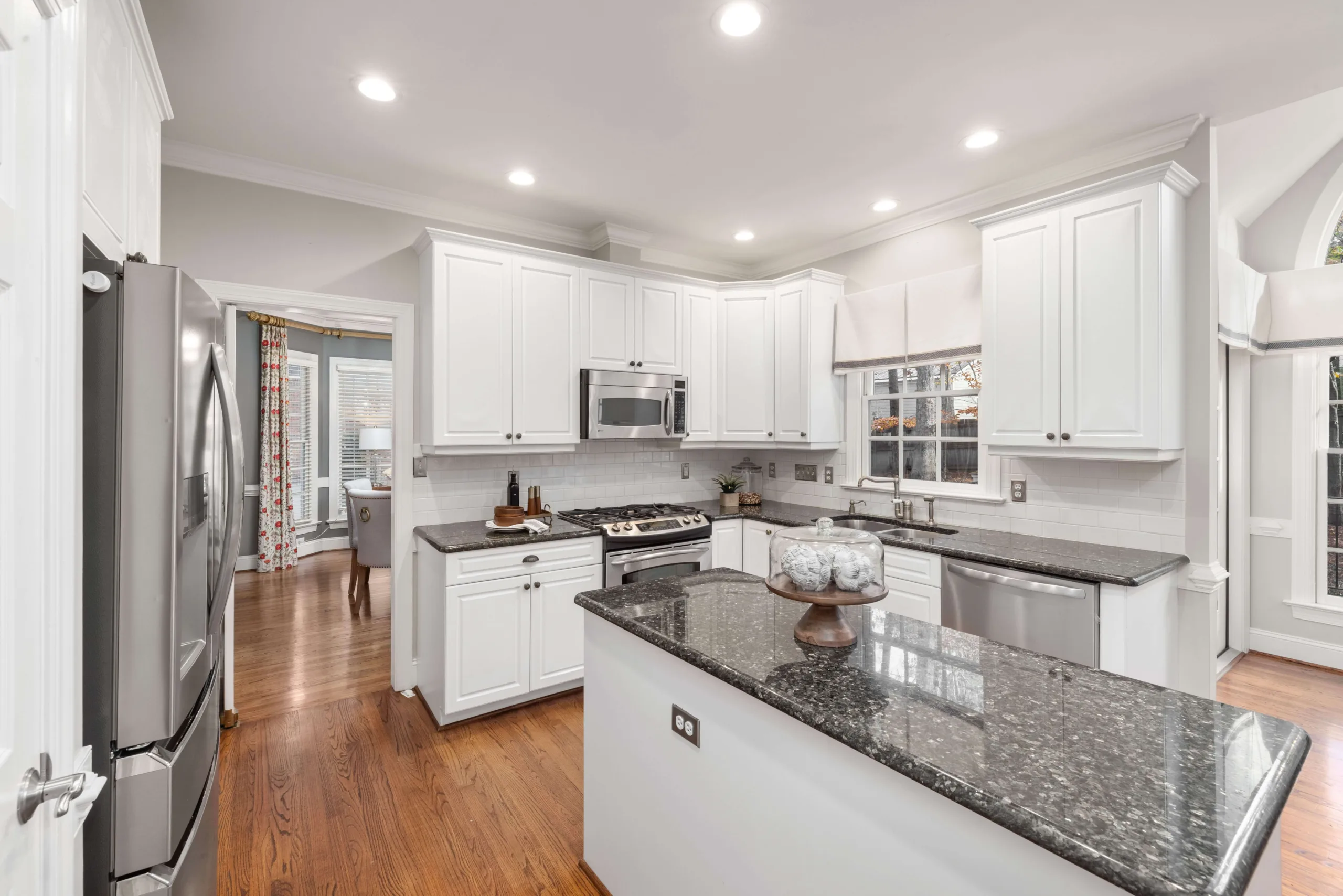
A beautiful kitchen can still be frustrating if every cabinet is packed, countertops are constantly covered with appliances, and you have to move three things just to reach the one you actually need.
The problem usually isn’t a lack of space.
It’s poorly used space.
Many kitchens contain surprisingly large amounts of unused storage hidden behind deep cabinets, awkward corners, narrow gaps, and oversized drawers. The right upgrades can transform those forgotten areas into practical storage that makes everyday cooking noticeably easier.
And you don’t necessarily need a complete kitchen renovation to get there.
Some of the best kitchen storage upgrades are relatively simple additions, such as pull-out organizers, vertical dividers, drawer inserts, under-sink systems, and cabinet-door storage. Others—such as a redesigned pantry, appliance garage, or custom island—make more sense during a remodel.
The key is to design storage around how you actually use your kitchen, rather than simply adding more cabinets.
Below are 15 smart upgrades that can help you reclaim wasted space, reduce countertop clutter, and create a kitchen that feels more organized without sacrificing style.
1. Install Pull-Out Pantry Shelves


Deep pantry cabinets can hold an impressive amount of food, but they’re notorious for creating a frustrating problem: things disappear into the back.
Pull-out shelves solve this by bringing the contents toward you.
Instead of reaching behind cans and boxes, you can slide an entire shelf forward and see everything at once.
What to store
Pull-out pantry shelves work particularly well for:
- Canned goods
- Pasta
- Rice
- Baking ingredients
- Snacks
- Sauces
- Breakfast foods
- Small appliances
- Food-storage containers
Why it’s worth it
The biggest benefit isn’t simply additional capacity.
It’s visibility.
When you can see what you have, you’re less likely to buy duplicates or forget ingredients until they expire.
Upgrade tip
If you’re remodeling, consider several shallower pull-out shelves instead of a few extremely deep ones. Shallow storage is often easier to organize and access.
2. Turn a Blind Corner Into Useful Storage


Corner cabinets are some of the most frequently wasted spaces in a kitchen.
The classic deep corner cabinet may technically provide storage, but reaching the back can be so inconvenient that homeowners simply stop using it.
Instead, consider a purpose-built corner storage system.
Depending on your cabinet configuration, possibilities include:
- Swing-out shelves
- Pull-out shelves
- Rotating organizers
- Corner drawers
- Kidney-shaped shelves
- Appliance storage systems
Best things to store
Use corner storage for larger items that don’t need daily access, such as:
- Serving bowls
- Small appliances
- Baking equipment
- Stockpots
- Specialty cookware
A good corner system can turn one of the kitchen’s most awkward spaces into genuinely useful storage.
3. Add Deep Drawers Instead of Lower Cabinets


If you’re planning a kitchen remodel, think carefully before automatically choosing traditional lower cabinets.
For many items, deep drawers are simply easier to use.
Instead of kneeling down and reaching into the back of a cabinet, you can pull the entire drawer toward you.
Deep drawers are excellent for:
- Pots
- Pans
- Mixing bowls
- Plates
- Food containers
- Small appliances
- Heavy cookware
They also make it easier to see everything at once.
A particularly useful configuration
Consider a combination of:
Shallow top drawer + medium drawer + deep bottom drawer.
The shallow drawer can hold utensils while the deeper drawers handle cookware and dishes.
4. Create a Dedicated Spice Drawer


Spice cabinets often become chaotic because small jars are stored behind one another.
A dedicated spice drawer can be a surprisingly transformative upgrade.
Instead of standing jars vertically, arrange them so the labels face upward.
This lets you quickly scan the entire collection.
Organize spices by frequency
Keep everyday spices toward the front:
- Salt
- Black pepper
- Garlic powder
- Paprika
- Cinnamon
- Chili flakes
Place specialty spices farther back.
Don’t forget expiration dates
Spices don’t necessarily become unsafe when they’re old, but their flavor and aroma can deteriorate over time.
A simple labeling system with purchase or replacement dates can help keep the collection under control.
5. Add a Vertical Tray and Cutting Board Divider

Baking sheets, chopping boards, serving trays, cooling racks, and cutting boards are awkward to stack horizontally.
The bottom item is always the hardest to reach.
A vertical divider transforms that stack into an easy-to-access filing system.
Ideal location
A narrow cabinet section near the oven is particularly useful.
You can organize:
- Baking sheets
- Cutting boards
- Pizza trays
- Cooling racks
- Serving platters
- Roasting pans
Small-space advantage
This upgrade can make excellent use of a narrow cabinet that might otherwise be difficult to use efficiently.
6. Build an Appliance Garage


Countertop appliances are useful, but they can quickly make a kitchen look cluttered.
An appliance garage creates a dedicated area for frequently used equipment while keeping it visually contained.
It can house:
- Coffee maker
- Toaster
- Blender
- Espresso machine
- Food processor
- Electric kettle
A well-designed appliance garage allows the appliances to remain plugged in and ready to use while keeping them out of sight when the doors are closed.
Design tip
Don’t make the cabinet too shallow.
Measure your appliances—including their cords and handles—before finalizing the dimensions.
Also consider ventilation requirements for appliances that produce heat.
7. Use the Back of Cabinet Doors

Cabinet doors offer valuable storage real estate that is frequently ignored.
Slim organizers attached to the inside of doors can hold lightweight items without taking up the main cabinet shelf.
Useful possibilities include:
- Measuring spoons
- Wraps
- Cleaning supplies
- Sponges
- Small spices
- Pot lids
- Kitchen towels
One important rule
Don’t overload the door.
Heavy organizers and excessive weight can strain hinges or prevent the cabinet from closing properly.
Always check the cabinet manufacturer’s recommendations before adding hardware.
8. Create a Hidden Trash and Recycling Center


Nobody wants a beautiful kitchen dominated by visible garbage bins.
A pull-out waste station can hide trash and recycling inside a cabinet while keeping it close to the areas where food preparation happens.
Ideal location
Place it near:
- The sink
- Prep area
- Dishwasher
This makes food cleanup more efficient.
If space permits, divide the system into separate containers for:
- General waste
- Recycling
- Compost
Small kitchen tip
Even one concealed pull-out bin can make a small kitchen feel noticeably cleaner and more streamlined.
9. Add a Dedicated Baking Station


If you bake regularly, ordinary kitchen storage may not work particularly well.
A dedicated baking station can keep ingredients and equipment together.
Consider storing:
- Flour
- Sugar
- Baking powder
- Cocoa
- Measuring cups
- Rolling pins
- Mixing bowls
- Decorating supplies
A deep drawer can hold baking tools, while nearby pull-outs can store dry ingredients.
Mixer storage
If you have a heavy stand mixer, consider a reinforced appliance shelf or lift mechanism.
That can save significant counter space while making the appliance easier to access.
10. Install a Peg Drawer for Utensils


Deep drawers aren’t just for pots.
An adjustable peg system can turn a large drawer into a flexible storage area for plates, bowls, and serving pieces.
The pegs prevent items from sliding around whenever the drawer opens.
This is especially useful for:
- Dinner plates
- Serving platters
- Bowls
- Cutting boards
- Specialty dishes
Why it’s better than fixed dividers
The pegs can be repositioned when your storage needs change.
That flexibility becomes particularly useful if you regularly change dishes or cookware.
11. Take Advantage of the Space Under the Sink


The area under the sink is often one of the messiest cabinets in the entire kitchen.
Plumbing pipes make it awkward, but that doesn’t mean the space has to be wasted.
Use adjustable organizers designed around the plumbing.
Store:
- Dishwashing supplies
- Sponges
- Cleaning products
- Dishwasher tablets
- Garbage bags
- Replacement brushes
Safety consideration
Keep cleaning chemicals away from food and food-preparation items.
If children are present, use appropriate child-resistant storage where needed.
12. Build a Dedicated Coffee Station


If your morning routine revolves around coffee, give it its own home.
A dedicated coffee station can include:
- Coffee machine
- Grinder
- Cups
- Coffee beans
- Filters
- Syrups
- Spoons
- Small refrigerator drawer
A cabinet with pocket doors can conceal the entire station when it isn’t being used.
This is particularly effective in open-plan kitchens where countertop clutter is highly visible.
13. Add a Narrow Pull-Out Cabinet


7
Those narrow spaces between cabinets are easy to overlook.
A slim pull-out cabinet can transform an otherwise awkward gap into useful storage.
It works especially well for:
- Cooking oils
- Vinegars
- Sauces
- Spices
- Baking supplies
- Cleaning products
Placement matters
If you’re storing oils and sauces, position the pull-out close to the cooking zone.
If you’re using it for cleaning supplies, keep it away from food storage.
14. Create an Integrated Pantry Wall


If you have the space, a full-height pantry wall can dramatically increase kitchen storage.
Instead of spreading food storage throughout numerous cabinets, consolidate it into one highly organized zone.
A well-planned pantry wall can include:
- Adjustable shelves
- Pull-out drawers
- Appliance storage
- Bulk-food storage
- Beverage storage
- Cleaning supply section
- Small appliance area
Make it flexible
Avoid designing every shelf around one specific product.
Adjustable shelving gives you the ability to change the configuration as your household’s needs evolve.
15. Turn the Kitchen Island Into a Storage Powerhouse


The kitchen island is often the largest piece of furniture in the room, so it makes sense to use it strategically.
Depending on the layout, the island can provide storage for:
- Pots and pans
- Plates
- Cutlery
- Baking equipment
- Small appliances
- Cookbooks
- Serving dishes
- Food containers
If the island faces the living room, consider using the outward-facing side for less frequently accessed items.
The working side can hold the things you use every day.
An even smarter idea
If your island includes seating, don’t waste the space beneath the overhang.
Shallow drawers or cabinets can sometimes be incorporated into the non-seating side without interfering with legroom.
How to Decide Which Kitchen Storage Upgrades You Actually Need
You don’t need to install all 15 ideas.
The best storage plan starts with identifying your kitchen’s biggest problems.
Walk through your kitchen and ask:
What do I constantly struggle to find?
Which cabinet do I avoid using because it’s inconvenient?
What is always sitting on my countertop?
Where do I repeatedly stack things?
Which items are difficult to remove without moving other objects?
Your answers will reveal where your storage system needs improvement.
For example:
- Constant countertop clutter → appliance garage
- Messy pots and pans → deep drawers
- Expired food → pull-out pantry
- Chaotic spices → spice drawer
- Awkward trays → vertical dividers
- Cluttered sink cabinet → under-sink organizer
- Limited pantry → full-height pantry wall
- Wasted corners → corner storage system
This approach is much more effective than adding storage simply because a feature looks good in a showroom.
Kitchen Storage Zones: The Secret to Better Organization
One of the smartest principles in kitchen design is zoning.
Instead of storing items randomly, organize your kitchen according to the activities you perform there.
Prep Zone
Keep nearby:
- Cutting boards
- Knives
- Mixing bowls
- Measuring tools
- Prep utensils
Cooking Zone
Store:
- Pots
- Pans
- Cooking utensils
- Oils
- Spices
- Oven mitts
Cleaning Zone
Keep:
- Dishwashing supplies
- Cleaning products
- Trash
- Recycling
- Towels
Baking Zone
Store:
- Flour
- Sugar
- Baking tools
- Mixer
- Baking sheets
Beverage Zone
Keep:
- Coffee
- Tea
- Cups
- Glasses
- Beverage equipment
The goal is simple:
Store things as close as possible to where you use them.
How to Make Kitchen Storage Look Beautiful
Functional storage doesn’t have to make your kitchen look utilitarian.
In fact, some of the best luxury kitchens hide the majority of their organizational systems behind beautiful cabinetry.
Use consistent hardware
Matching handles and pulls create visual cohesion.
Keep countertops intentionally edited
Don’t display every appliance you own.
Use drawer organizers
Even beautiful cabinets look messy when utensils are thrown together.
Choose quality interior hardware
Smooth, reliable drawer slides and pull-outs make storage feel significantly more premium.
Add lighting
Under-cabinet lighting can make storage areas easier to use while creating a warm atmosphere.
Use labels sparingly
Labels can be helpful inside pantries, but not every container needs a label.
Kitchen Storage Mistakes to Avoid
Making Every Cabinet Deep
Deep cabinets may appear spacious, but they can actually reduce accessibility.
Forgetting Small Appliances
Measure coffee machines, mixers, air fryers, and other appliances before designing storage.
Ignoring Electrical Requirements
An appliance garage needs appropriate electrical planning.
Overloading Cabinet Doors
Heavy organizers can stress hinges.
Creating Fixed Storage for Everything
Your needs will change. Adjustable systems offer much more flexibility.
Putting Everyday Items Too Far Away
The best storage isn’t necessarily the largest storage.
It’s the storage that’s convenient.
Which Kitchen Storage Upgrades Are Worth the Investment?
If you’re remodeling and need to prioritize your budget, I’d focus on the upgrades that solve everyday frustrations.
Highest-priority upgrades
1. Deep drawers
Excellent for cookware and dishes.
2. Pull-out pantry shelves
Improve visibility and accessibility.
3. Corner storage
Reclaim difficult-to-use cabinet space.
4. Waste and recycling pull-outs
Reduce visual clutter.
5. Appliance storage
Keeps countertops clear.
6. Vertical dividers
Perfect for trays and cutting boards.
7. Well-designed island storage
Makes one of the largest kitchen structures work harder.
You can always add decorative accessories later.
The expensive part of kitchen storage is often not the organizer itself—it’s the construction, cabinetry, and hardware required to accommodate it. That’s why it makes sense to plan these systems early if you’re renovating.
Frequently Asked Questions
What is the best kitchen storage upgrade?
For many kitchens, deep drawers and pull-out storage provide some of the biggest everyday improvements because they make frequently used items easier to access.
However, the best upgrade depends on the specific problem you’re trying to solve.
How can I add storage without remodeling my kitchen?
Try drawer organizers, shelf risers, cabinet-door organizers, pull-out inserts, vertical dividers, under-sink systems, and freestanding pantry furniture.
These can provide meaningful improvements without replacing your cabinets.
How do I organize a small kitchen?
Prioritize vertical space, pull-out storage, narrow cabinets, wall-mounted storage, deep drawers, and multifunctional furniture.
Avoid storing rarely used items in prime-access areas.
How can I reduce kitchen countertop clutter?
Create dedicated storage for appliances, mail, food packaging, utensils, and frequently used equipment.
An appliance garage can be particularly useful if several appliances permanently occupy the countertop.
Are kitchen drawers better than cabinets?
Not always, but drawers are often easier to access for cookware, dishes, food containers, and other heavy or frequently used items.
Cabinets remain useful for tall objects, appliances, cleaning supplies, and items that require vertical storage.
Final Thoughts
The best kitchen storage upgrades aren’t necessarily the most complicated ones.
They’re the upgrades that eliminate small frustrations you experience every day.
A pull-out pantry can save you from digging through deep shelves. A drawer organizer can stop utensils from becoming a tangled mess. A hidden appliance garage can reclaim valuable countertop space. A dedicated tray divider can make baking sheets instantly easier to access.
And when several of these improvements work together, the difference can be surprisingly dramatic.
Before buying another storage container or adding another cabinet, take a closer look at the space you already have.
Your kitchen may not need more space—it may simply need smarter space.
Plan storage around your routines, prioritize accessibility, and choose flexible systems that can adapt as your needs change. The result will be a kitchen that isn’t just more organized, but easier, calmer, and more enjoyable to use every single day.